TL;DR
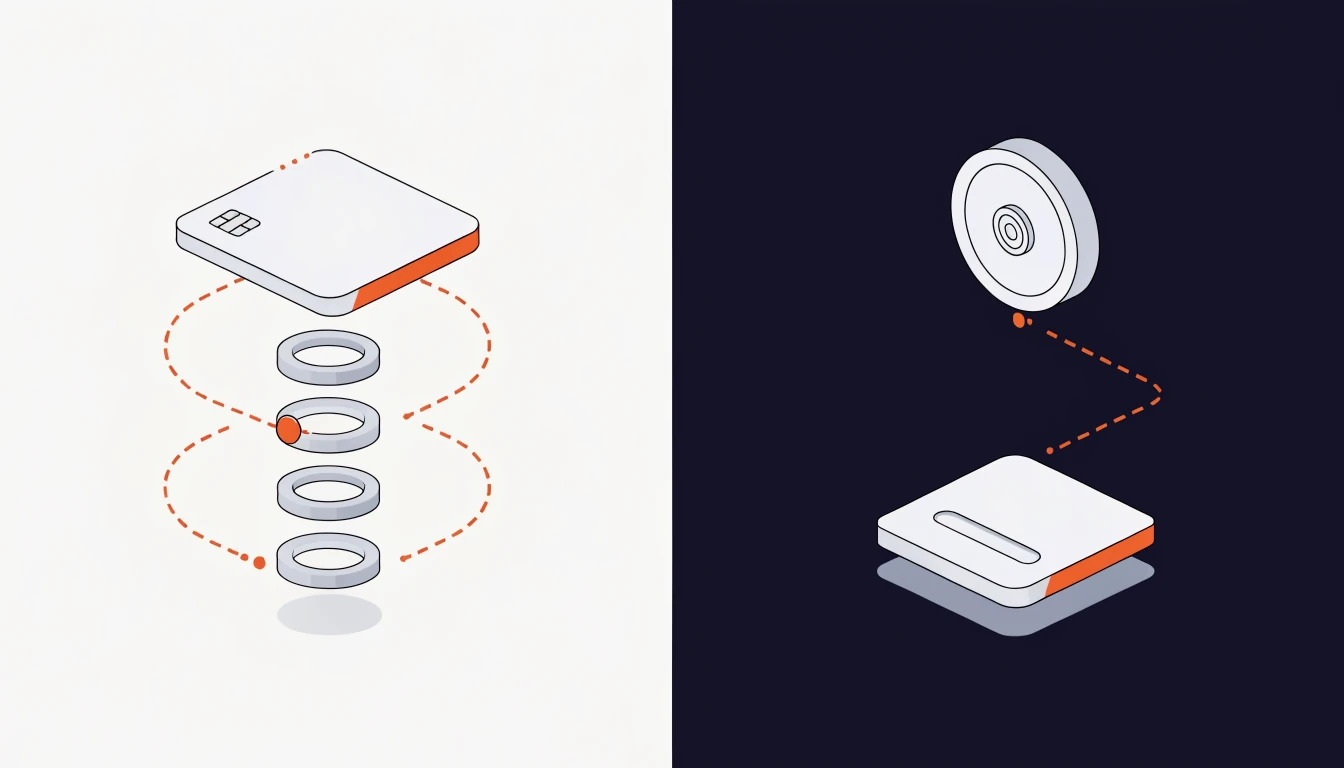
The processing fee sits with the merchant unless a project says otherwise. Each Paymos project carries one share, from 0% to 100%, that decides how much of the fee is added to the payer's amount: at the 0% default the merchant carries all of it, at 100% the payer carries all of it and the merchant receives the original invoice amount, and a value between the two splits it. The rate itself does not move — the share decides which side of the invoice it lands on. At every setting the payer sees one final amount in the asset they chose, with no separate fee line under it.
By default, the merchant pays the Paymos processing fee. Every project carries one setting for it — the share of that fee added to the payer's amount. At 0%, the default, the merchant carries all of it. At 100% the payer carries all of it and the merchant receives the original invoice amount. Anything between the two splits it.
The payer's side never changes shape. Whatever the share, one final amount appears in the asset they chose, with no Paymos fee itemized beneath it. Nobody paying an invoice is shown a base price and a processing line to add together.
The fee being moved is the one on the Paymos price list. On Standard pricing that is 1.0% of an invoice once it settles; Enterprise pricing is 0.3%, on request. The share changes neither number. It decides which side of the invoice it lands on.
What follows is the decision under that Paymos setting. What each position does to a $100 invoice, what the payer sees, which costs the share cannot reach, and what changes about the price you publish.
What does the fee share decide?
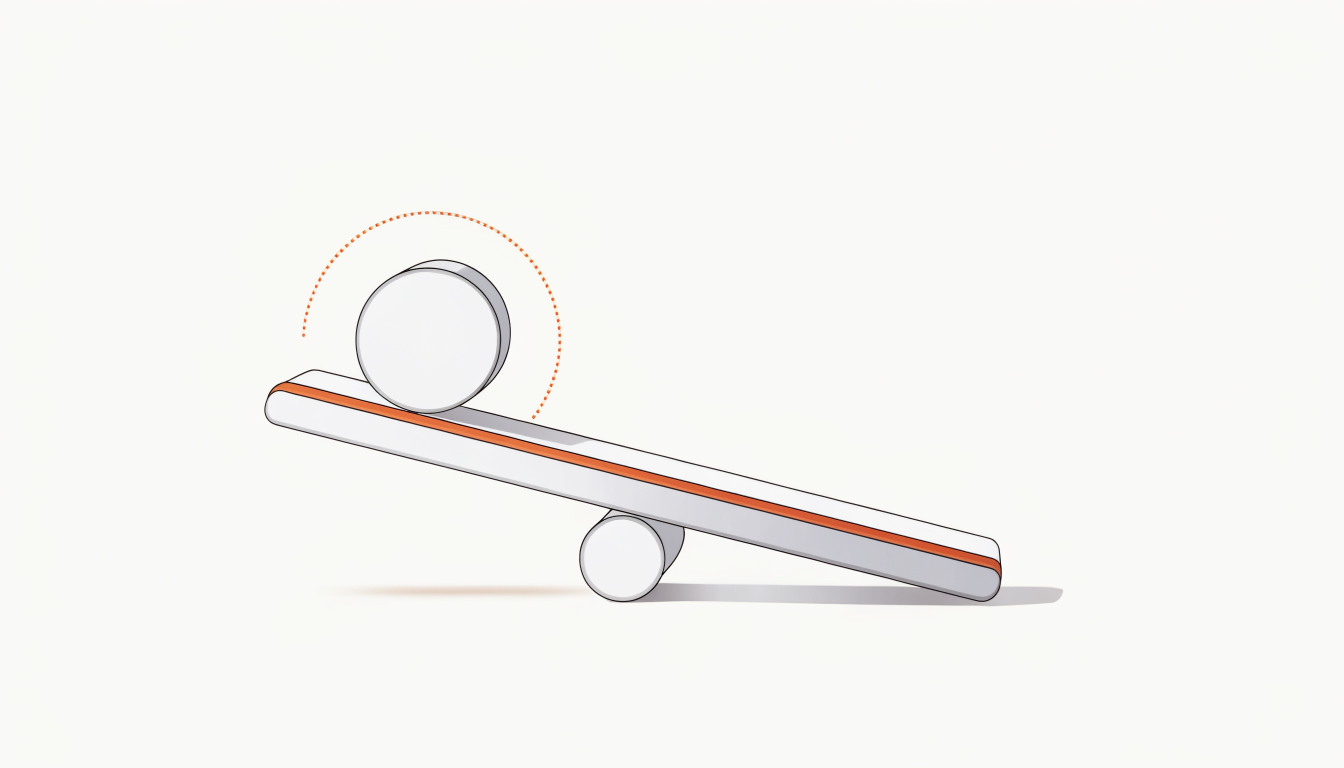
The share decides one number. It is how much of the Paymos processing fee is added to the payer's amount, on a scale from 0% to 100%, and it is a property of the project. A merchant running two projects sets it twice, once in each.
What the share does not do is create a second charge. At any share, one Paymos processing fee is what a settled invoice carries — the setting redistributes that fee rather than adding to it. A payer asked for more is not being charged twice; the same fee reached them by a different route.
An invoice that never settles carries no Paymos processing fee. Unpaid, expired, and cancelled invoices sit outside the arithmetic entirely, so the share only ever describes invoices that completed — an abandoned checkout costs the merchant nothing at 0% and nothing at 100%.
What does the 0% default do to a $100 invoice?
At 0% the payer is asked for the invoice amount and nothing else. A $100 invoice asks for $100. The Paymos processing fee on it — $1.00 at the Standard rate of 1.0% — is carried by the merchant, whose side of that invoice is $99.00.
This is where every Paymos project begins. The default share is 0%, so a merchant who never opens the setting pays the complete processing fee — the arrangement cards default to as well, where Visa treats a surcharge as something a merchant opts into, limits to credit cards, and notifies its acquirer about 30 days ahead.
The consequence is a small, permanent gap between two numbers. On the default, the amount a customer pays and the amount that reaches the merchant differ by the Paymos fee, and $100 in, $99.00 settled is the shape of every invoice on it.
What changes at 100%?
At 100% the merchant receives the original invoice amount. The complete Paymos processing fee is added to the payer's amount instead, so a $100 invoice puts $100 on the merchant's side of the transaction and the fee is funded by the person paying it.
The payer's amount is higher by the processing fee that invoice carries. It is the same Paymos fee at the same rate, moved across the invoice rather than invented for the payer — nothing new was charged, and nothing was charged twice.
Setting the share to 100% is a pricing decision. The listed price becomes the amount that arrives, the Paymos fee stops being a deduction the merchant absorbs, and the published number and the settled number finally agree — which is the whole reason a merchant moves the share at all.
Why does the payer never see a fee line?
The payer sees one final amount in the selected asset. At every share, from the 0% default up to 100%, that is a single figure to send, not an invoice total with a Paymos fee itemized under it.
The difference is in how a price reads. One number is a price. A base with a Paymos fee line under it is a breakdown, and a breakdown invites the payer to question the part they did not expect to be there.
A Paymos invoice matches on the amount, too. Underpayment tolerance is a percentage set per project — 0.1% on a new project, 2% at the top of the slider — wide enough for a rounding tail and never wide enough to be a discount. The figure on the screen is still the figure the wallet has to send: one number carries both the price and the instruction, and a second line would only describe the first.
How does a card surcharge present the same cost?
A card surcharge is a disclosed line of its own. Visa tells a surcharging U.S. merchant to "disclose the surcharge as a merchant fee" and to alert consumers "at the point of entry, the point of sale or transaction, and on every receipt", with the amount carried in a dedicated field on the transaction message.
Visa also bounds it. The surcharge is capped at the merchant discount rate for that card or 3%, whichever is lowest, covers credit cards only, and needs 30 days' notice to the acquirer. As of 15 February 2024 Visa understands Connecticut, Maine, Massachusetts, Oklahoma, and Puerto Rico to prohibit it entirely.
The Paymos share is a different object. There is no separate line to disclose, because the payer's amount is one figure in the asset they chose, and what a merchant owes its own customers about a price stays its own obligation.
Which rail costs less is its own question, and the point here is presentation alone — a card scheme requires the pass-through itemized, while a Paymos invoice presents a single total.
What does a share between 0% and 100% do?
A value between the two splits the fee. Part of the Paymos processing fee is added to the payer's amount, and the remainder stays with the merchant, in whatever proportion the share names.
The result lands between the two end positions. On a $100 invoice at the Standard rate, a split puts the merchant's side between $99.00 and $100.00, and the payer's amount between the invoice total and that total plus the Paymos fee. The share picks the point on the line.
A split is a commercial position rather than a technical compromise. What moves is part of the Paymos fee, so on most order sizes the amount under discussion is small in absolute terms, and the choice is mostly about what the total on the screen says. A share of 50% halves the visible difference and halves what the merchant carries.
Does passing the fee change what Paymos charges?
Passing the fee does not change the rate. The price list owns what a Paymos invoice costs, and no share edits that number: two projects settling identical invoices, one at 0% and one at 100%, carry the same fee.
What differs between the two is only where that fee was collected. A share is something a Paymos project holds; the rate is something the price list states, and moving one has never moved the other.
So the share changes incidence rather than price. Same Paymos fee, same rate, same settled invoice, and the one variable is whose side of the transaction it lands on — nothing on the payment side opens a second charge beside it. Lowering the number itself is a conversation for the price list, not a project setting.
Which costs does the share not move?
The share moves the Paymos processing fee and nothing else. The blockchain network fee is a separate cost with a separate payer: the payer's wallet pays what the network charges to send the transfer, at 0% and at 100% alike.
That inbound cost never lands on the merchant's side of a Paymos invoice, so there is nothing there for the share to redistribute. The network cost a merchant does meet sits at the other end: a withdrawal can carry a disclosed fee for the payout route chosen, below what the chain charges for that transfer and with no Paymos percentage on top.
The share reaches neither number, and neither comes from a rate card — which is why how network fees are priced is a separate article. No conversion charge sits beside them either: nothing forces a Paymos balance out of the asset the payer sent, so there is no conversion to price and no spread to move.
What does the share do to the price you publish?
The share decides whether your published price is the amount at checkout. At 0% the two are the same number. Above 0% the checkout total is the published price plus a portion of the Paymos fee, and the gap is whatever the share made it.
That gap deserves an honest costing. Baymard Institute's abandonment list sets aside the 42% who were only browsing, and of the reasons that remain "Extra costs too high (shipping, tax, fees)" is the largest at 40%.
The gap a Paymos share creates is far smaller than what that research measures. A 1.0% fee on a $100 order is $1.00, a different scale of number from shipping and tax — but a total that does not match the listed price is still a total the buyer has to reconcile.
The default removes the question rather than answering it. At 0% the price a merchant publishes is the amount the checkout asks for, and the Paymos fee lives where the merchant already prices its margin.
How should you choose the share?
The choice comes down to which number has to be exact. If the figure the customer sees is the commitment — a listed price, a quoted rate, a published tariff — the default keeps the checkout equal to it and leaves the Paymos fee as a cost of trading.
Move the share up when the Paymos invoice amount must arrive whole. An agreed sum on a B2B invoice, a contract deposit, or a top-up that has to land on a round figure all point one way: at 100% the merchant receives the original invoice amount.
The middle is for when neither end is right. A split moves part of the Paymos fee and leaves the rest, which suits a merchant who wants the checkout near the published price while recovering some of it.
The payer meets the same object either way. One amount, in the asset they chose, on a Paymos invoice that costs nothing unless it settles. How an invoice moves from created to paid covers the rest of its life; the share decides only who funded the fee.
| Share of the fee added to the payer | What the payer is asked for | What reaches the merchant | |
|---|---|---|---|
| 0% — the default | The invoice amount, $100.00 | $99.00 | |
| Between 0% and 100% | The invoice amount plus part of the fee | Between $99.00 and $100.00 | |
| 100% | The invoice amount plus the fee | $100.00, the original invoice amount |
Frequently asked questions
Who pays the Paymos processing fee by default?
The merchant. Every project starts at a 0% share, which leaves the complete processing fee with the merchant while the payer is asked for the invoice amount and nothing more.
Can I make my customer pay the crypto processing fee?
Yes. Set the project's share to 100% and the complete fee is added to the payer's amount, so the merchant receives the original invoice amount.
Does the customer see the processing fee as a separate line?
No. At every share setting the payer sees one final amount in the asset they selected, rather than an invoice total with a Paymos fee itemized beneath it.
Does passing the fee to the payer lower my rate?
No. Standard pricing stays 1.0% per settled invoice and Enterprise pricing stays 0.3% on request. The share decides who funds that fee, not what it costs.
Does the share cover the blockchain network fee?
No. Sending the payment costs the payer's wallet a network fee, and that cost sits outside the share, which moves the Paymos processing fee only.
What happens at a share between 0% and 100%?
The fee splits. Part of it is added to the payer's amount and the rest stays with the merchant, so the settled result lands between the two end positions.
When NOT to use a fee pass-through
- If your published price has to equal the amount at checkout, a share above 0% breaks that equality. Price the fee into the product and leave the default alone.
- If the goal is to recover the blockchain network fee, the share does not reach it. The payer's wallet already pays that cost, and no part of it moves with this setting.
- If the goal is to pay less for processing, the share redistributes the Paymos fee rather than reducing it. What a payment costs and who carries it are two separate questions.
- If two kinds of order need two answers, note that the share is a project setting. Two positions means two projects.
Sources
- 1. Paymos Pricing (accessed 2026-08-15)
- 2. Visa — U.S. Merchant Surcharge Q and A (accessed 2026-08-15)
- 3. Baymard Institute — Cart abandonment rate (accessed 2026-08-15)
Last reviewed Aug 16, 2026