TL;DR
Custodial vs non-custodial crypto payment gateways differ in who controls transaction signing after a customer pays. Non-custodial routing sends funds to a merchant-controlled wallet. Custodial processing credits a merchant balance and lets the provider manage consolidation and later withdrawals. The right choice depends on whether direct key control or managed payment operations matters more.
Custodial vs non-custodial crypto payment gateways answer one operational question: who can authorize the next transfer after the customer pays? A non-custodial service routes funds to a merchant-controlled wallet. A custodial service records the payment in a merchant balance, then signs a withdrawal under the provider's controls.
That difference changes treasury work, security ownership, refunds, reconciliation, and recovery. It does not make either model automatically better. The useful choice is the model whose responsibilities match the controls your business can run well. Start with the crypto payment lifecycle, then assign every custody task to either the provider or the merchant.
What does custody mean in a payment gateway?
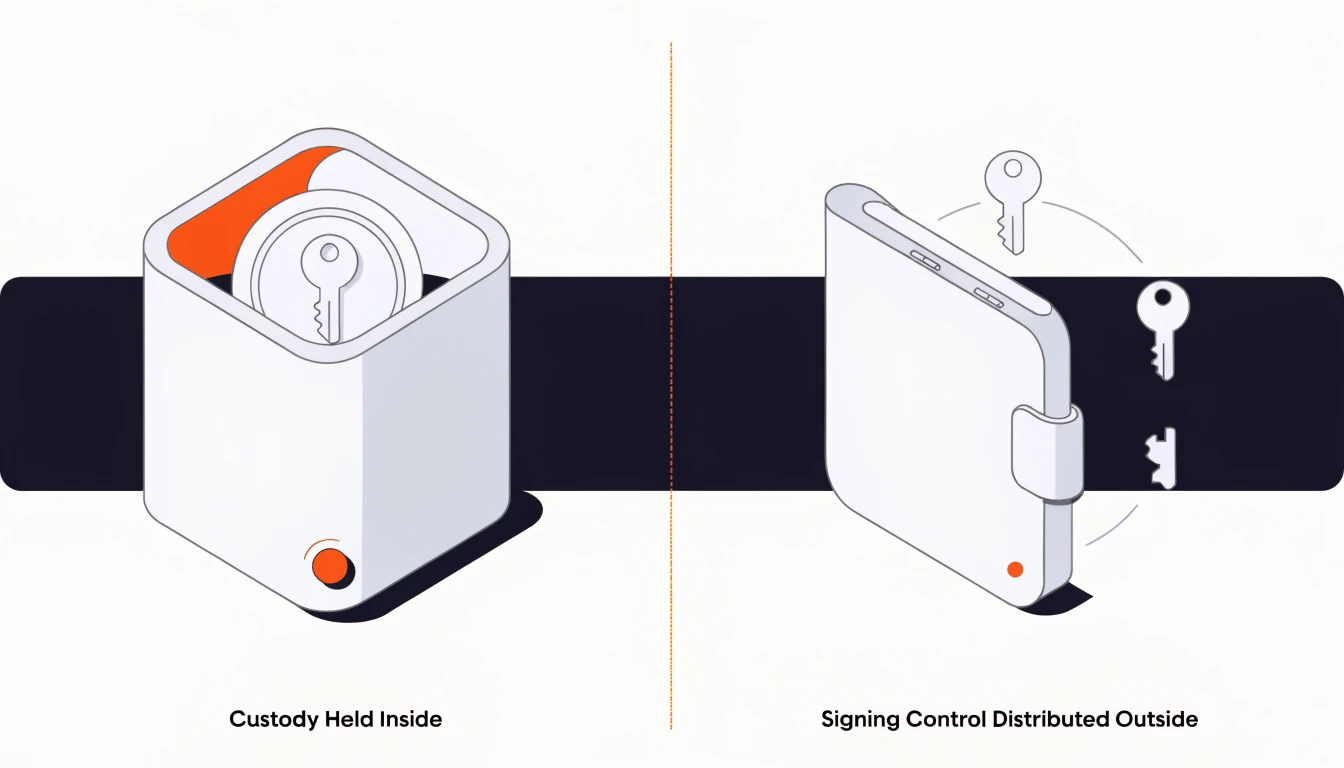
Custody describes control over outgoing transactions, not ownership of the merchant's revenue. In a custodial model, the processor operates the signing system that can move settled balances. The merchant authorizes a withdrawal through the processor's dashboard or API, and the processor enforces its signing, destination, and risk controls before broadcasting it.
A non-custodial processor never receives that signing authority. It can create an invoice, watch a blockchain address, and report confirmation status, but the merchant's wallet signs any later transfer. This distinction matters more than the label on a marketing page. Ask who can produce a valid signature, where the payment lands, and which party must recover the system after a key or infrastructure failure.
How does a custodial payment flow work?
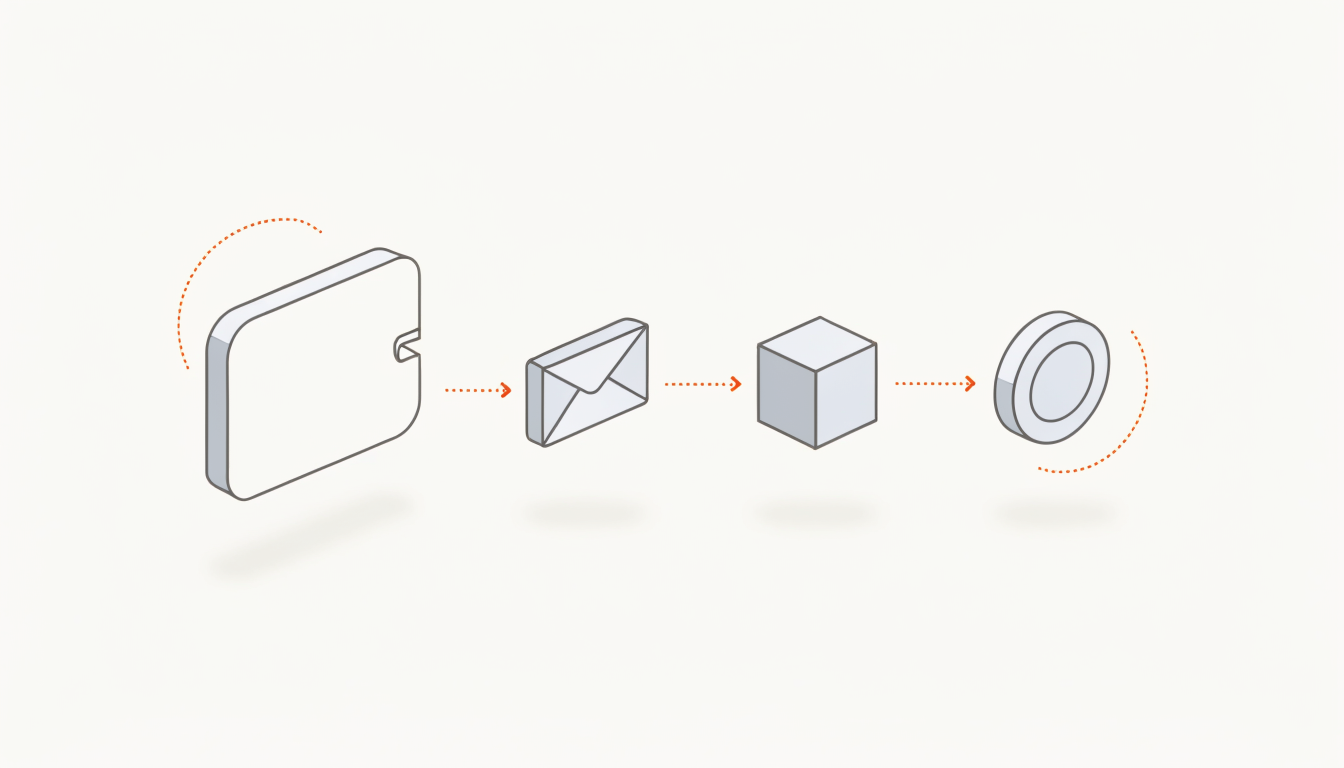
A custodial payment flow separates customer acceptance from merchant withdrawal. The processor assigns payment details to an invoice, observes the transfer, applies its confirmation policy, and credits the received amount to the merchant's balance. The merchant later chooses an available asset and network route to a whitelisted address. The Paymos product model follows this managed flow.
This separation enables managed consolidation. Payments in the same asset can contribute to one asset balance even when customers used different supported networks. The merchant does not need to sweep every invoice address, keep native gas assets on each chain, or build a ledger that reconciles deposits with later payouts. The trade-off is clear: the processor becomes part of the funds-control path and must prove that its signing and withdrawal controls match the merchant's risk standard.
How does non-custodial routing change operations?
Non-custodial routing ends at the merchant wallet. Once a payment reaches that wallet, the merchant controls the signing key and can move the funds without asking the gateway. This is valuable when corporate policy requires direct custody or when an established treasury team already operates blockchain infrastructure.
The model also transfers the hard work. The merchant must secure keys, fund gas, monitor each enabled network, identify deposits, consolidate balances, handle address policy, and recover from signer or node failures. A gateway can still provide invoices and webhooks, but it cannot solve a stuck withdrawal or compromised merchant key. Direct control removes one provider dependency; it does not remove custody risk. It relocates that risk to the merchant's own systems and procedures.
What does the custody difference look like in practice?
Consider a merchant accepting USDT on Tron and Ethereum. With non-custodial routing, the treasury team must monitor both destinations, secure the signing keys, keep the required native fee assets available, reconcile deposits, and decide how to consolidate the two network positions. The gateway can report payments, but the merchant owns every later transfer.
With Paymos's managed model, confirmed USDT payments from supported networks contribute to one USDT balance. The merchant later selects an available USDT payout route to a merchant-controlled, whitelisted address. Paymos operates the signing and consolidation path; the merchant controls the withdrawal decision and destination policy.
Turn this example into a four-row responsibility worksheet: payment detection, confirmation, transaction signing, and recovery. Mark one owner for each row. If any row has two assumed owners or no owner, the custody design is incomplete.
How does Paymos control custodial withdrawals?
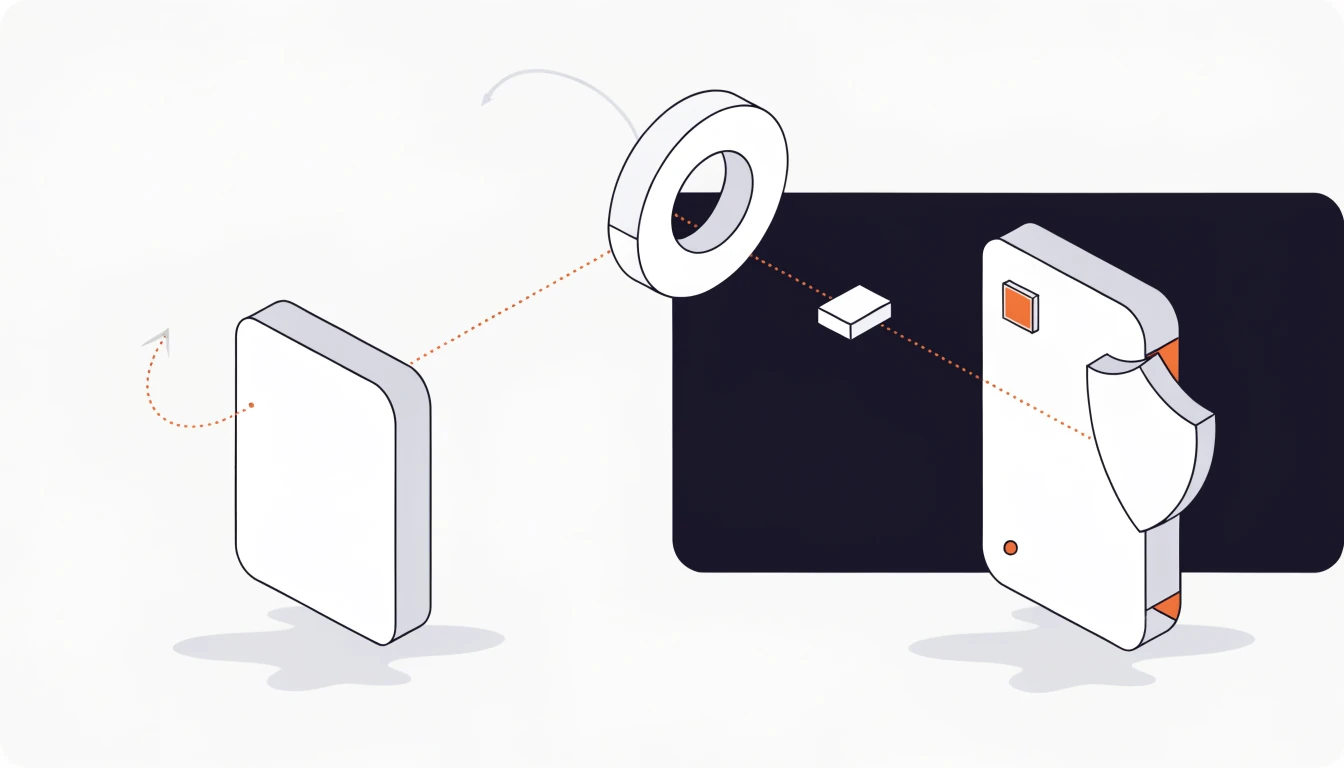
Paymos signs outgoing transactions on isolated infrastructure. This is managed custody: the merchant authorizes the withdrawal, while Paymos operates the signing and broadcast path.
Every destination must first be added to the merchant's withdrawal whitelist, and an empty whitelist disables withdrawals. A change to that list is a recorded action in its own right; where the merchant user has a second factor enrolled, it additionally requires a step-up challenge at the moment of the change. Step-up strengthens an existing factor and cannot challenge an account that has none, so the whitelist is the control that always holds and the challenge is the one the merchant switches on. Operators can also stop all outbound transfers or freeze one asset-and-network pair while an incident is investigated.
These controls are separate from ledger reconciliation. Paymos records the merchant liability and the on-chain transaction independently so an operational signing result cannot silently redefine the balance owed to the merchant.
How do settlement and refunds differ?
Custodial settlement can create one balance per asset. It avoids presenting the merchant with a collection of network-specific wallets. In Paymos, payments received in the same asset contribute to the same asset balance. The accepted token remains the settlement token; there is no forced conversion to fiat, BTC, or ETH. Only payout routes enabled for that asset appear at withdrawal.
Refunds are new blockchain transactions in both custody models. A confirmed payment cannot be reversed through a card-scheme chargeback. A custodial provider may offer different outbound paths, so merchants must verify the exact contract instead of assuming that a balance can pay a customer directly.
Paymos withdrawals go only to a merchant-controlled, whitelisted address. The merchant decides what goes on that whitelist, so the verified customer address can go on it and the refund leaves the Paymos balance as a single withdrawal. A merchant whose policy prefers two steps withdraws to its own treasury address first and sends the refund from there. The business still needs a refund policy, approval record, and outgoing transaction reference. Read the detailed crypto chargeback and refund guide before designing that workflow.
Which security questions expose the real model?
Provider labels are too broad for due diligence. A merchant should map the complete signing and recovery path:
- Who can authorize an outgoing transaction?
- How many independent approvals or signing participants are required?
- Can one server, operator, or credential move funds alone?
- Which destinations are allowed, and how are they changed?
- What happens when one signer or network provider is unavailable?
- How are balances reconciled to invoice and withdrawal records?
- Can failed webhook deliveries be replayed?
These questions turn “custodial” and “non-custodial” into testable controls. They also separate key architecture from account permissions. A two-person dashboard approval process is useful, but it is not the same as distributing the cryptographic signing authority itself.
What operational burden should a merchant price?
The cheapest headline rate can be the more expensive operating model. For non-custodial routing, include signer infrastructure, secure backups, gas funding, monitoring, accounting, incident response, and engineering coverage for every supported network. For custody, include the provider fee, withdrawal network cost, service dependency, and the internal controls needed to authorize payouts.
Paymos charges per settled invoice. Standard pricing is 1.0%, while Enterprise pricing is 0.3% on request. It has no setup fee, monthly platform fee, or reserve. Paymos takes no processing commission on withdrawal, although the selected route carries a network fee, disclosed before the transfer is approved and smaller than the send itself costs. Those facts describe the commercial path; the custody decision still turns on who runs the signing and network operations.
Which custody model fits your business?
Choose non-custodial routing when direct signing is mandatory. The model fits teams that already operate a production treasury stack and can own keys, gas, chain monitoring, reconciliation, and recovery across every enabled network.
Choose managed custody when operations matter more than direct signing. One balance per asset, controlled withdrawals, and provider-managed network operations can reduce more risk than direct key control. Paymos combines that model with isolated signing infrastructure, whitelisted withdrawal addresses, step-up authentication on whitelist changes for accounts with a second factor enrolled, and global or asset-and-network outbound freezes.
The final decision should be documented as a responsibility map. Record who detects payment, who decides finality, who owns keys, who approves withdrawals, who pays each network cost, and who restores service after failure. That map is more useful than either custody label on its own.
Use the crypto payment gateway comparison framework to apply the same responsibility and total-cost questions to every shortlisted provider.
| Decision | Custodial | Non-custodial | |
|---|---|---|---|
| Withdrawal signing | Provider custody system | Merchant wallet | |
| Balance consolidation | Managed by provider | Managed by merchant | |
| Network operations | Provider responsibility | Merchant responsibility | |
| Refund transaction | Provider-specific outbound path | Merchant wallet transaction | |
| Main dependency | Provider custody controls | Merchant key operations |
Frequently asked questions
What is a custodial crypto payment gateway?
A custodial crypto payment gateway receives payments into infrastructure it operates, records the merchant's balance, and signs later withdrawals under its custody controls.
What is a non-custodial crypto payment gateway?
A non-custodial gateway detects and reports payments sent to a wallet controlled by the merchant. The gateway cannot independently move those funds.
Is a non-custodial gateway always safer?
No. It removes provider custody but makes the merchant responsible for key security, gas funding, chain monitoring, recovery, and reconciliation.
How does Paymos protect custodial withdrawals?
Paymos signs withdrawals on isolated infrastructure and sends them only to merchant-controlled, whitelisted destination addresses. Whitelist changes are recorded, and they require step-up authentication once the merchant user has a second factor enrolled.
When NOT to use a custody model
- If policy requires every outbound transaction to be signed by your own treasury team, a custodial model does not meet that control objective. Use direct-to-wallet routing or a self-operated custody stack.
- If your team cannot operate keys, gas balances, chain monitoring, and recovery procedures, non-custodial routing shifts too much infrastructure onto the merchant. Use managed custody instead.
- If you need automatic settlement to a bank account, neither custody label answers the requirement. Choose a separate service that provides bank settlement and price its conversion path.
Sources
- 1. NIST Multi-Party Threshold Cryptography project (accessed 2026-07-29)
- 2. NIST First Call for Multi-Party Threshold Schemes (accessed 2026-07-29)
- 3. Ethereum accounts and transaction signing (accessed 2026-07-29)
Last reviewed Jul 29, 2026