TL;DR
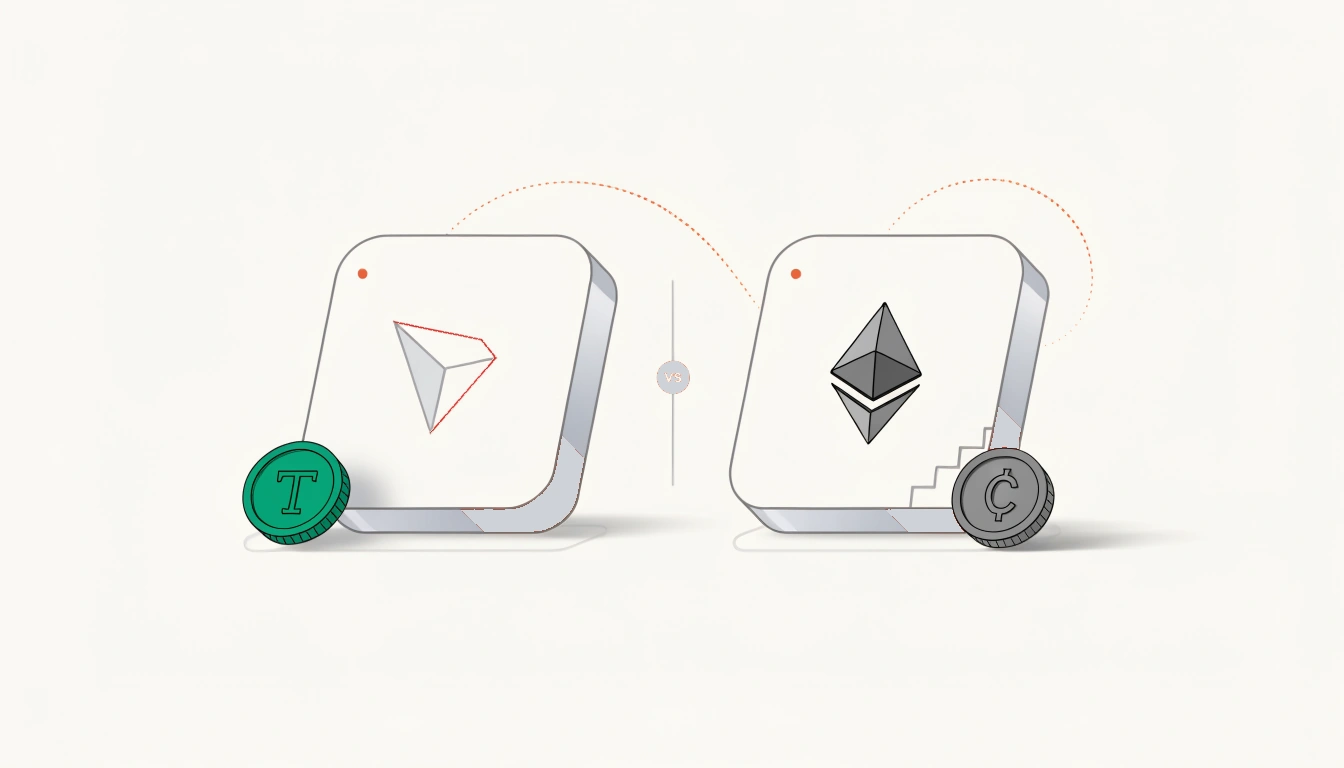
A crypto gas fee is the per-transaction price a sender pays a blockchain to include their transfer in a block. The amount tracks demand for finite block space — when blocks fill, fees spike. Ethereum prices gas under EIP-1559 (a base fee plus a tip), while Tron uses energy and bandwidth resources. A Tron wallet with insufficient resources burns TRX instead. For a merchant accepting crypto, gas leaves the customer's wallet separately from the Paymos processing fee, but it still shapes which networks suit which payments.
Gas can make a small stablecoin payment uneconomic, so checkout should show the wallet's live network estimate rather than a permanent fee claim.
A gas fee is the price of getting into a block. A sender pays a blockchain to execute and record a transfer. Ethereum prices block space under EIP-1559 — a dynamic base fee plus a tip — while Tron consumes energy and bandwidth resources before burning TRX when those resources are insufficient. Other networks use their own mechanisms. For a merchant accepting crypto through Paymos, the customer's wallet pays the network fee, separately from the Paymos processing fee. Network costs vary, so the wallet's quote at signing matters more than a historical dollar estimate.
What is a crypto gas fee?
A network fee compensates the blockchain for executing and recording a transaction. Many routes require the sender to hold the chain's native token: ETH on Ethereum, TRX on Tron, and BNB on BNB Chain. Other routes can expose a different fee mechanism. The fee goes to the network itself, not to the payment processor or the token issuer.
Gas exists because block space is finite. Each network meters scarce capacity differently: Ethereum measures execution in gas, while Tron accounts for energy and bandwidth. A token transfer calls a contract and therefore follows a different execution path from a native-asset transfer. When transactions compete for the same block space, senders raise their bids for inclusion.
Why do gas fees spike?
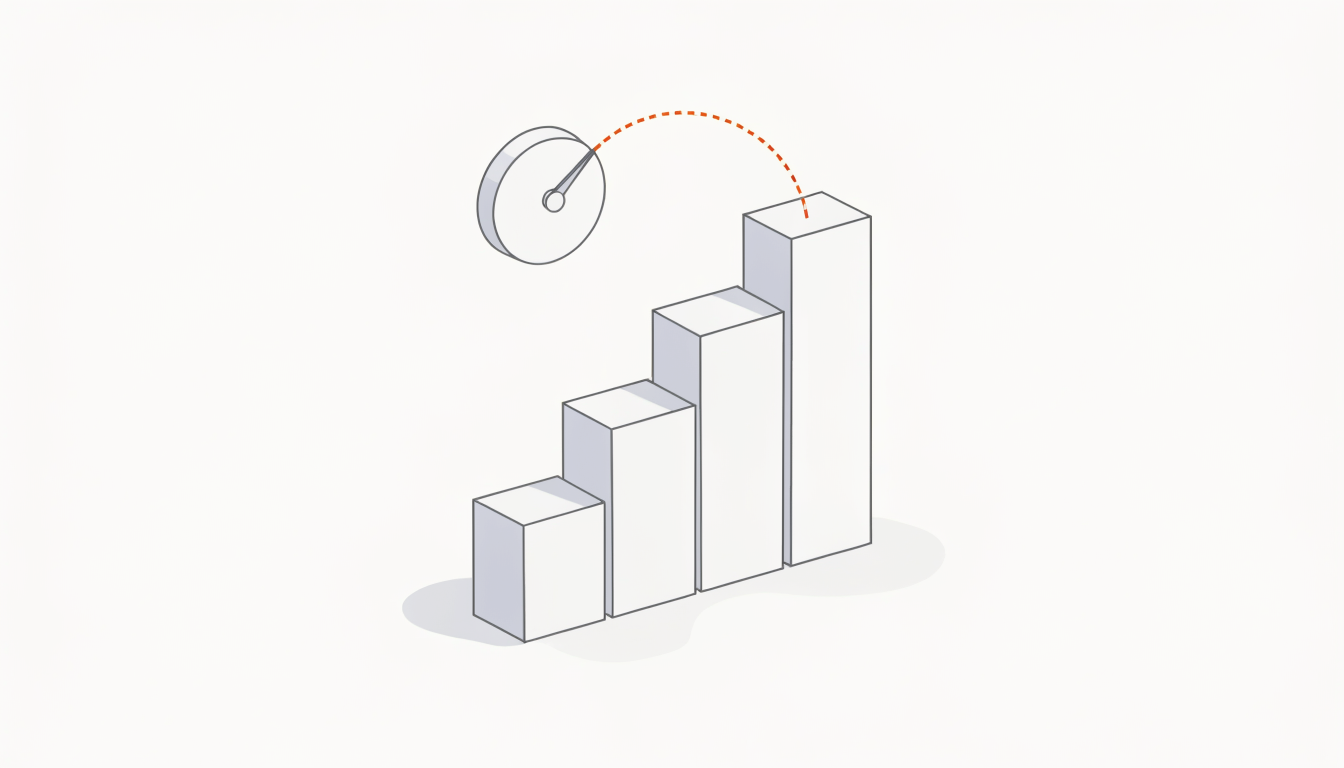
Three forces drive spikes. Popular token launches and claims push many contract calls into the same blocks. Trading volatility creates another auction as automated strategies compete for ordering. Complex contract calls also consume more execution units than a plain native-token transfer, so demand and transaction complexity can rise at the same time.
The EIP-1559 base fee also rises under sustained heavy use. When a block runs above its gas target, the next base fee increases; when use falls below target, it decreases. The adjustment is bounded per block, but repeated full blocks compound the change. That mechanism explains why a fee quoted earlier may no longer match the quote shown at signing.
What is EIP-1559?
Ethereum adopted EIP-1559 in August 2021, at the London hard fork. Before it, gas was a pure first-price auction — every sender guessed a price and lost the difference on an overbid. EIP-1559 split the fee into two parts.
The base fee is a per-block price. It adjusts with the previous block's fullness. If the prior block ran more than 50% full, the next base fee rises; if less, it falls. The base fee is burned, removing ETH from circulation. The tip — or priority fee — is an extra amount the sender attaches to incentivize inclusion. Wallets estimate both components at signing.
EIP-1559 made the next-block price easier for wallets to estimate. It did not guarantee a low fee: high demand still produces a higher base fee. Other networks and L2 routes use their own fee mechanisms, so an Ethereum L1 estimate should not be reused for them.
Why can Tron cost more than expected?
Tron does not use Ethereum's open fee auction. An account can obtain energy for smart-contract execution and bandwidth for transaction bytes through staking or delegation. The network consumes those resources when the account sends a token transfer.
A sender with insufficient resources can still transact, but the network burns TRX for the missing execution resources. The required amount depends on the contract call and current network parameters. Staking status belongs to the sending account; receiving USDT from an exchange does not automatically transfer energy to the recipient. That distinction is why the wallet must quote the fee before signing.
Stake 2.0 defines how accounts obtain and delegate resources. A merchant or processor can manage resources for its own outgoing operations, but that does not subsidize the customer's inbound transfer. The customer pays according to the resources available to the sending account.
How do alternative routes change the picture?
Ethereum L2s and other supported networks calculate fees differently from Ethereum L1. Their live wallet quote is therefore the useful comparison, not the current Ethereum base fee or a historical average.
Other networks use different fee markets and execution models. A lower quote at one moment does not make a network permanently cheapest. For a small payment, compare the wallet's live estimate across the supported asset-and-network pairs available to the payer.
A payment processor applies a confirmation policy appropriate to the selected network and amount. The merchant should rely on the confirmed payment status rather than infer finality from a fixed time estimate.
Who pays the gas?
The sender pays the gas, not the receiver. With the default Paymos project setting, a 100 USDT invoice sends 100 USDT on-chain plus the sender's network fee, and the merchant bears the 1.0% Paymos processing fee. If the project assigns 100% of the processing fee to the payer, the payer amount increases and the merchant receives the original 100 USDT invoice amount. Intermediate settings split that fee.
The network fee and the Paymos processing fee are separate costs. The payer's wallet pays the former; the project setting determines who bears the latter. Some networks or wallet designs can sponsor gas, but that is a property of the selected route and should not be assumed for every transfer.
Edge case: a USDT balance does not prove that a route is ready to send. On Ethereum L1, a standard wallet also needs ETH for the network fee. A different route may expose another fee mechanism, so the wallet's signing screen is the authority for that transfer.
Where does gas land on a Paymos payment?
Gas turns up three times on a payment's round trip. The payer's wallet pays the first, to get the transfer into a block. The second belongs to Paymos: accepting a payment and consolidating it costs gas like any other on-chain operation, and that cost sits inside the 1.0% instead of arriving as a separate line on the merchant's invoice. Only the third, a withdrawal, can put a network fee in front of the merchant — and no Paymos processing commission travels with it.
That withdrawal fee is a network cost, not a second commission, and it is subsidised: the chain's price for the payout route is one number, the merchant is billed a smaller one. Which route the money leaves on is therefore the whole of the decision here — Tron is the dearest on offer today, and that ranking shifts as each chain's gas does.
No amount is published for any of it. The cost underneath is a market price that moves, which is the argument this post has been making about gas from the first paragraph. What the merchant does see is the figure for the route selected, shown with any minimum before the withdrawal is confirmed.
How does a merchant insulate themselves?
The simplest insulation is multi-network acceptance. When one rail's fee spikes, customers can choose another supported route. If the selected stablecoin is supported on both routes, the merchant can keep the same settlement asset while the rail changes.
Network selection also depends on ticket size. Compare the wallet's live fee with the invoice amount and avoid a route whose fee consumes a material share of the payment. Offering several supported networks lets the payer choose from assets and balances they already hold without the merchant making a permanent "cheapest network" claim.
What does gas mean for stablecoin acceptance in 2026?
The network fee is a direct checkout cost. It sets a practical floor for what a payer will send economically. A route with an unfavorable live quote can consume too much of a small payment, while another supported network may quote less at the same moment.
The practical answer is not to predict a permanent winner. Ethereum L1, Tron, L2 networks, and other supported rails price different resources and can change independently. Show the available routes, let the wallet calculate the fee, and base guidance on the current quote rather than a stale market snapshot.
| Network | Fee model | Main cost driver | What the sender should check | |
|---|---|---|---|---|
| Tron | Energy and bandwidth (Stake 2.0) | Available or delegated resources; TRX burn when insufficient | Resource balance and wallet quote | |
| Ethereum L1 | EIP-1559 (base + tip) | Demand for block space | Base fee, tip, and transfer gas limit | |
| Solana | Static + priority fees | Signatures, compute units, and priority | Compute estimate and priority quote |
Frequently asked questions
What is a crypto gas fee in simple terms?
A network fee is what a sender pays or consumes so the blockchain can execute and record a transaction. Ethereum uses gas paid in ETH. Tron first consumes available energy and bandwidth, then burns TRX when those resources are insufficient. Other networks use their own mechanisms.
Why do gas fees spike?
Block space is finite. When more transactions compete for the next block than it can hold, the fee market becomes an auction — senders bid higher to get in first. Spikes line up with NFT mints, airdrops, DEX arbitrage, and high-volatility trading windows.
Who pays the gas fee on a merchant payment?
The customer's wallet pays the network fee. With Paymos' default project setting, a 100 USDT invoice sends 100 USDT on-chain and the merchant bears the 1.0% processing fee. If the project assigns 100% of that processing fee to the payer, the payer amount increases and the merchant receives the original 100 USDT invoice amount.
What is EIP-1559?
EIP-1559 is the fee mechanism Ethereum adopted in August 2021. Each block carries a base fee that adjusts up or down with the previous block's fullness, and senders attach a small tip on top. The base fee is burned; the tip goes to the proposer.
Why can the same token transfer have different network fees?
Each network prices a different scarce resource. Ethereum responds to demand for block space, Tron consumes energy and bandwidth before burning TRX, and L2 networks combine execution cost with a share of data publication cost. The wallet's live quote is the relevant number.
Does the merchant pay gas on a Paymos payment?
Not on the way in. The payer's wallet pays to send the transfer, and the gas to accept it and gather it into the merchant balance is on Paymos, inside the 1.0% rather than beside it. A withdrawal is the one leg that can put a network fee in front of the merchant, and it carries no Paymos processing commission on top. The amount is quoted for the chosen route before the merchant confirms, and it is subsidised — the chain's price for that send is one number and the merchant is billed a smaller one. A payout that fails or is cancelled comes back whole, network fee included.
How can a merchant insulate themselves from gas spikes?
Offer the customer a network choice at checkout. When one rail's gas spikes, customers route through BSC, Polygon, an Ethereum L2, or a route with another fee mechanism instead. If the selected stablecoin is supported on both routes, the asset stays the same while the rail changes.
When NOT to use gas-priced networks
- If the live network estimate consumes a material share of the payment — offer another supported network instead of relying on a historical fee number.
- If you accept tips or micropayments — compare the current quoted fee with the payment before checkout. Aggregating transfers may be more economical than sending each payment separately.
- If your customers hold no native fee token — do not assume a token balance alone can fund the transfer. Let the wallet show whether the selected route requires a native-token balance or supports another fee mechanism.
Sources
- 1. EIP-1559: Fee market change for ETH 1.0 chain (Ethereum Foundation) (accessed 2025-12-05)
- 2. Tron Stake 2.0 documentation (accessed 2026-07-29)
- 3. Solana priority fee post-mortem (Helius blog, 2024) (accessed 2025-12-05)
Last reviewed Aug 21, 2026