TL;DR
A static crypto wallet provides a customer with one permanent on-chain deposit address that remains unchanged across multiple payments. Unlike dynamic checkout invoices, which have a payment window and expire, static payment channels allow users to send recurring deposits at or above the minimum for the token and network (minimum_deposit) without opening a new checkout session. Each incoming deposit is screened for AML; once it is confirmed, it is credited to the merchant's ledger balance and reported by webhook.
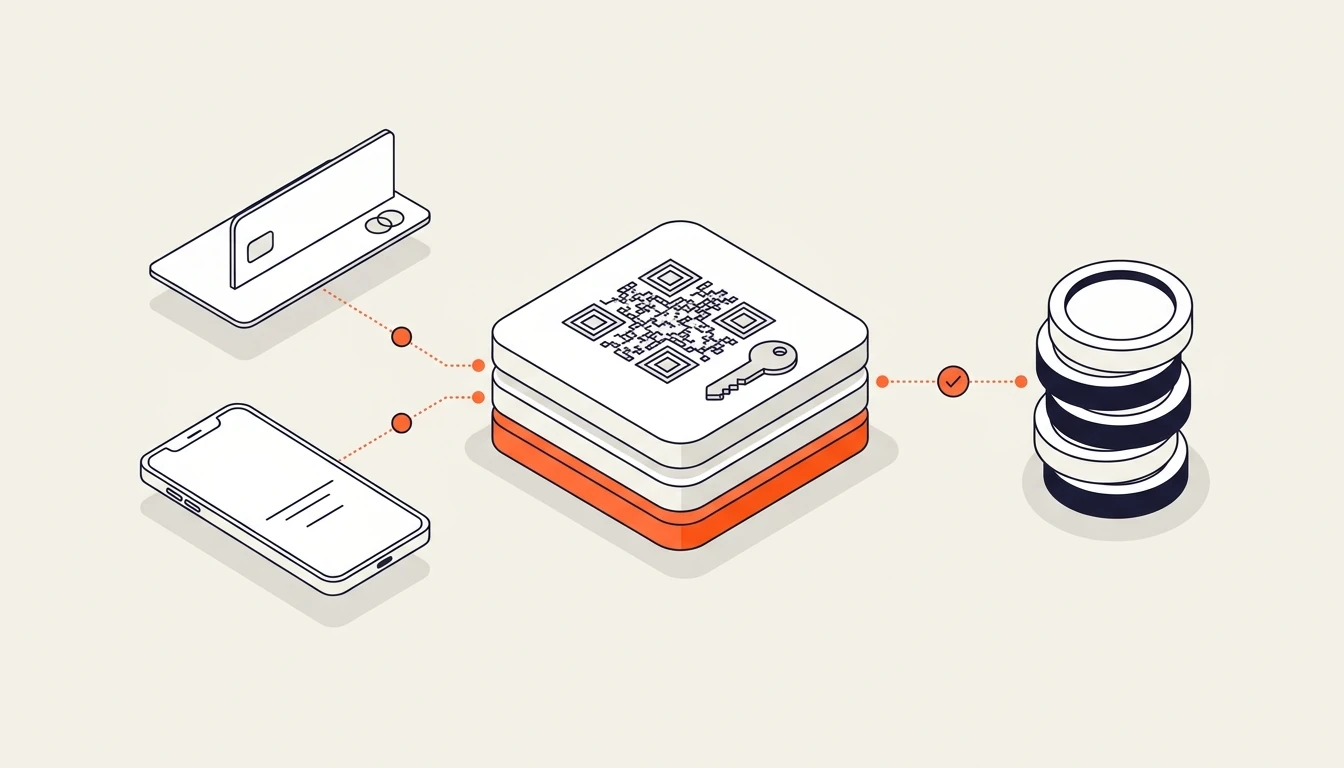
A static crypto wallet assigns a permanent, dedicated deposit address to each registered user, allowing repeat deposits without generating new checkout sessions. In platforms like SaaS applications, iGaming operators, copy-trading brokerages, and creator communities, asking customers to open a new checkout page for every deposit adds friction. Instead of treating every transfer as an isolated checkout order, static crypto wallets turn cryptocurrency into an always-on account funding rail.
Integrating static wallets requires a shift from discrete order states to continuous event streams. When building an automated platform via the host-to-host REST API, your backend provisions permanent addresses across multiple networks and listens for asynchronous deposit webhooks. Here is the complete architectural guide to implementing static crypto wallets, managing multi-chain routing, and handling edge cases safely.
What is a static crypto wallet?
A static crypto wallet is a permanent on-chain receiving address bound to a specific user account that accepts deposits indefinitely. When a customer registers on your platform, your backend calls the gateway API to provision a dedicated deposit address on one or more blockchains (such as Tron rails or Ethereum rails). That address belongs to that customer indefinitely: they can save it in their personal wallet whitelist, set up recurring monthly transfers, or bookmark it in their exchange withdrawal favorites.
Unlike standard single-use checkout sessions, a static crypto wallet does not bind the user to a fixed fiat amount or an expiration countdown. When funds land on the blockchain at or above the route's minimum deposit floor, the payment processor detects the transfer, runs automated screening checks, and dispatches a webhook containing the merchant's customer identifier (payment_channel_external_id in the webhook). After confirmation, the merchant's backend can credit the user's account using the webhook's net amount.
This architecture closely mirrors traditional fiat virtual IBANs (vIBANs) used by neobanks. Just as a banking platform gives each user a dedicated account number for wire transfers, a static crypto gateway gives each customer a dedicated on-chain address for stablecoin deposits.
How do static wallets differ from dynamic checkout invoices?
Dynamic crypto invoices are designed for discrete transactions, whereas static wallets are designed for persistent customer identities. In an e-commerce checkout powered by a hosted checkout, an invoice is created for that exact order, with a payment window and a countdown. If the customer has not paid when the window closes, the invoice expires.
Static wallets eliminate expiration windows entirely. The address has no time-to-live (TTL) and remains active until the merchant programmatically calls the /v1/payment-channels/{id}/block endpoint. Furthermore, a dynamic invoice priced in fiat locks its exchange rate when the payer confirms the asset and network. A static wallet has no order to price: each deposit records its gross amount, the fee rates frozen at attribution, and the net amount credited in the same asset.
For businesses with recurring customer engagement, static wallets take the checkout step out of repeat deposits. A trader on an exchange or an active subscriber does not want to open a new checkout every time their balance runs low; they copy the address once and transfer funds directly from their mobile wallet or exchange account.
Dedicated crypto addresses per user: why SaaS and iGaming platforms switch
High-frequency platforms switch to static crypto deposit addresses because dynamic checkouts introduce severe operational bottlenecks. In iGaming and betting platforms, players expect immediate balance top-ups between rounds without navigating away from the gameplay interface. In B2B SaaS and cloud infrastructure platforms, customers top up prepaid usage credits or run automated API bots that require autonomous balance funding without human checkout interaction.
Consider the user experience comparison:
- The Dynamic Invoice Bottleneck: The user clicks "Add Funds", selects an asset, specifies an exact $50 amount, gets redirected to an invoice screen, scans a QR code before the countdown ends, and waits for confirmations before returning to the dashboard.
- The Static Wallet Flow: The user opens their dashboard, copies their personal, permanent USDT-TRC20 address once, and sends funds directly from Binance, Bybit, or Trust Wallet. Once the transfer is confirmed and has passed screening, the deposit webhook reaches your backend, which credits the balance.
For platforms operating with automated billing models or high user lifetime value, this difference transforms crypto from an awkward novelty into an enterprise-grade funding rail. For broader billing strategies, consult our analysis of who pays the crypto processing fee and merchant pricing models.
Multi-network support: managing static USDT across TRC-20, ERC-20, and TON
Enterprise static wallet gateways provision multi-network address sets under a single customer identifier. Customers hold USDT and other stablecoins on different networks, such as Tron (TRC-20), Ethereum (ERC-20) and TON, so a platform that accepts deposits often needs addresses on several of them without fragmenting user accounting.
When you create a channel, Paymos provisions deposit addresses for the networks it supports. Provisioning takes a moment, so show an address only once the channel reports it ready (see the API section below). Your deposit screen can list them in one place:
- USDT (Tron TRC-20): Supported on Tron; check the current minimum before sending.
- USDT / USDC (Ethereum ERC-20): Both assets are supported on Ethereum.
- USDT (TON): Use the TON address returned for the channel.
- USDT / USDC (Arbitrum, BSC, Polygon): Both assets are supported on these networks. Base supports USDC only.
Whichever network the customer sends on, the confirmed deposit is credited to the merchant's balance in that asset. Your backend does not need to hold gas on each chain or run its own chain infrastructure to receive deposits.
Developer integration via REST API: automating channel provisioning
Integrating static crypto wallets into your application requires two core API interactions: channel provisioning and deposit webhook handling. Below is an example using the Paymos host-to-host REST API.
1. Provisioning a Payment Channel for a User
To assign a permanent deposit wallet to a user, your backend issues an idempotent POST request to the /v1/payment-channels endpoint, passing your internal customer identifier as external_id:
Sign the request with a Payment API key using HMAC-SHA256 authentication. The header placeholders below represent your key ID, a fresh Unix timestamp, and a Base64 signature over timestamp\nMETHOD\npath\nquery\nbodyHash, where bodyHash is the lowercase SHA-256 hex digest of the exact request body. Separate the fields with LF line breaks.
POST /v1/payment-channels HTTP/1.1
Host: api.paymos.io
Authorization: HMAC-SHA256 {api_key_id}:{base64_signature}
X-Request-Timestamp: {unix_seconds}
Content-Type: application/json

{
  "project_id": "prj_xFukZuAJZR06pLVBh3uwzv",
  "external_id": "usr_991824"
}
A first call returns HTTP 201 Created; replaying the same project_id and external_id in the same environment returns HTTP 200 OK with the existing channel. A new production channel starts in provisioning, with no addresses yet:
{
  "id": "pc_2QhKZv6mRt9WdA3nYpLbXf",
  "project_id": "prj_xFukZuAJZR06pLVBh3uwzv",
  "external_id": "usr_991824",
  "status": "provisioning",
  "is_accepting_payments": false,
  "is_fully_provisioned": false,
  "is_test": false,
  "applied_fee_percent": 1,
  "customer_fee_percent": 0,
  "networks": [
    {
      "network": "TRC20",
      "status": "provisioning",
      "tokens": [
        {
          "symbol": "USDT",
          "minimum_deposit": "1.00"
        }
      ]
    }
  ],
  "created_at": 1767225600,
  "updated_at": 1767225600
}
Read GET /v1/payment-channels/{id} as provisioning progresses. Show a network's address only when is_accepting_payments is true, that network is active, and its tokens array is non-empty. Display each token's live minimum_deposit beside the address and check it before sending; the sample minimum is illustrative. If it is missing or null, wait for a quote. Below-minimum transfers are not credited to the channel and are not returned automatically. See channel details.
2. Handling Incoming Deposit Webhooks
After the deposit passes screening and reaches the required network confirmations, a payment_channel.deposit.confirmed webhook reports the settled deposit:
{
  "event_id": "evt_J7EEYeL9pZJukfj2c5OQ44",
  "event_type": "payment_channel.deposit.confirmed",
  "version": 1,
  "occurred_at": 1767225930,
  "data": {
    "id": "pcd_8ScRvL4jNq2XkB7mTfZdWu",
    "payment_channel_id": "pc_2QhKZv6mRt9WdA3nYpLbXf",
    "project_id": "prj_xFukZuAJZR06pLVBh3uwzv",
    "payment_channel_external_id": "usr_991824",
    "status": "confirmed",
    "is_final": true,
    "is_test": false,
    "currency": "USDT",
    "network": "TRC20",
    "chain_id": 728126428,
    "contract_address": "TR7NHqjeKQxGTCi8q8ZY4pL8otSzgjLj6t",
    "gross": "100",
    "fee": "1",
    "net": "99",
    "applied_fee_percent": 1,
    "customer_fee_percent": 0,
    "tx_hash": "9f4c1b7e30ad52c8ef6a1d84b0c39f27a5e6d138f4b90c72ae51d63b8407fc25",
    "transfer_id": "9f4c1b7e30ad52c8ef6a1d84b0c39f27a5e6d138f4b90c72ae51d63b8407fc25:41a614f803b6fd780986a42c78ec9c7f77e6ded13c:41c9f6a2b7d0138e54ca3b91f6072ed48a5c1e93b7:0",
    "source_address": "TQiBwkXtUUNygicvHJVVDCDKyVFr2YNTey",
    "destination_address": "TN3W4H6rK2ce4vX9YnFQHwKENnHjoxb3m9",
    "block_height": 68421905,
    "first_included_block_timestamp": 1767225900,
    "explorer_url": "https://tronscan.org/#/transaction/9f4c1b7e30ad52c8ef6a1d84b0c39f27a5e6d138f4b90c72ae51d63b8407fc25",
    "created_at": 1767225870,
    "updated_at": 1767225930,
    "confirmed_at": 1767225930
  }
}
Verify the signature against the raw body as described in webhook verification. Credit the user's balance with data.net in an atomic transaction, deduplicating money by data.id (the pcd_ deposit ID). Store event_id to deduplicate delivery attempts; separate endpoints can receive different event IDs for the same deposit. See payment webhook idempotency.
AML transaction screening: keeping merchant balances clean
Static wallets receive deposits from arbitrary third-party addresses, so automated screening of incoming transfers matters. When accepting crypto via dynamic invoices, merchants interact with a payer who initiates a checkout; with static wallets, anyone with the public address can broadcast a transfer.
To protect merchant operations, Paymos runs automated Know-Your-Transaction (KYT) screening on incoming transfers:
- On-Chain Inspection: As soon as an incoming transfer is seen on-chain, the sender's address is screened against these sources: TRM Labs, Binance AML, AMLBot, PureFi, and the screening provider's database.
- Clean Transactions Confirm Automatically: If the risk score is clean, the deposit confirms normally, credits the merchant's available balance in the double-entry ledger, and dispatches the standard webhook to your server.
- High-Risk Flags Isolate Tainted Funds: If a deposit fails screening or the check returns no verdict, it is marked as
Held for review. Nothing is credited to the merchant balance, no confirmation webhook is dispatched, and the merchant receives a notification in the dashboard.
Screening does not replace your own AML and sanctions obligations as a merchant, and a held deposit is not guaranteed to be released.
Network fees and consolidation: who pays for collecting static wallet deposits
A common question is who bears the cost of collecting small deposits spread across thousands of individual addresses.
The customer's wallet pays the network fee to send a deposit. Paymos covers the network cost of accepting and consolidating deposits and does not add a separate transfer or sweep commission to the merchant. Network fees are set by each chain and move with congestion, so no fixed amount applies.
If you build the collection yourself, every address has to pay for its own consolidation transfer, so a very small deposit can cost more to collect than it is worth. On Paymos, each route enforces a live minimum_deposit, and a transfer below it is not credited to the channel (see the API section above).
For deeper architectural trade-offs between key storage and payout pipelines, explore our review of hot wallet security and crypto invoicing.
| Feature | Static Crypto Wallet (Channel) | Dynamic Crypto Invoice |
|---|---|---|
| Address Lifespan | Permanent (reusable indefinitely) | Payment window with a countdown |
| Expected Amount | At or above minimum_deposit floor | Fixed order total; rate locked when the payer confirms the asset and network |
| Primary Use Case | SaaS balances, iGaming, prop trading, exchanges | E-commerce carts, retail, physical goods |
| Webhook Lifecycle | payment_channel.deposit.confirmed | invoice.paid / invoice.expired |
| Address Generation | Once per registered user | Once per invoice, when the payer confirms the asset and network |
| Network Cost of Accepting | Covered by Paymos | Covered by Paymos |
Frequently asked questions
What is the difference between a static wallet and a dynamic crypto invoice?
A dynamic invoice is created for one order, with a fixed amount and a payment window; it expires when the window closes. A static crypto wallet (Payment Channel) assigns a reusable address to a customer identity, with no payment window, and accepts deposits at or above the minimum for that token and network.
Can a client send USDT across different networks to the same static wallet?
Yes, if the payment processor supports multi-network routing. A static payment channel provisions permanent deposit addresses across all supported blockchains (such as Tron TRC-20, Ethereum ERC-20, BSC, and TON) linked to the same customer external ID.
How does a platform know which customer deposited crypto on a static address?
Each static wallet address is uniquely mapped to the merchant's customer identifier (such as user_id or external_id) at creation time. When a blockchain transaction is confirmed, the webhook payload includes the merchant's external ID alongside the transaction hash and amount.
Are static crypto deposit addresses custodial or non-custodial?
Paymos operates custodially: it holds the signing keys for its deposit addresses and credits confirmed deposits to the merchant's ledger balance.
What happens if a customer sends a deposit below the minimum amount?
The minimum_deposit is quoted live for each token and network. Check it before sending: a transfer below it is not credited to the channel and is not returned automatically. If the minimum is missing or null, wait until a value is available.
When NOT to use static crypto wallets
- If your platform sells physical e-commerce goods with inventory reserved during checkout — use dynamic crypto invoices with a countdown timer instead.
- If you require exact 1-to-1 order matching for guest checkouts without creating registered user accounts.
- If you cannot run a webhook listener or backend daemon to process continuous asynchronous deposit streams.
- If your business model requires zero on-chain address reuse for strict UTXO privacy across public block explorers.
Sources
Last reviewed Nov 6, 2026