TL;DR
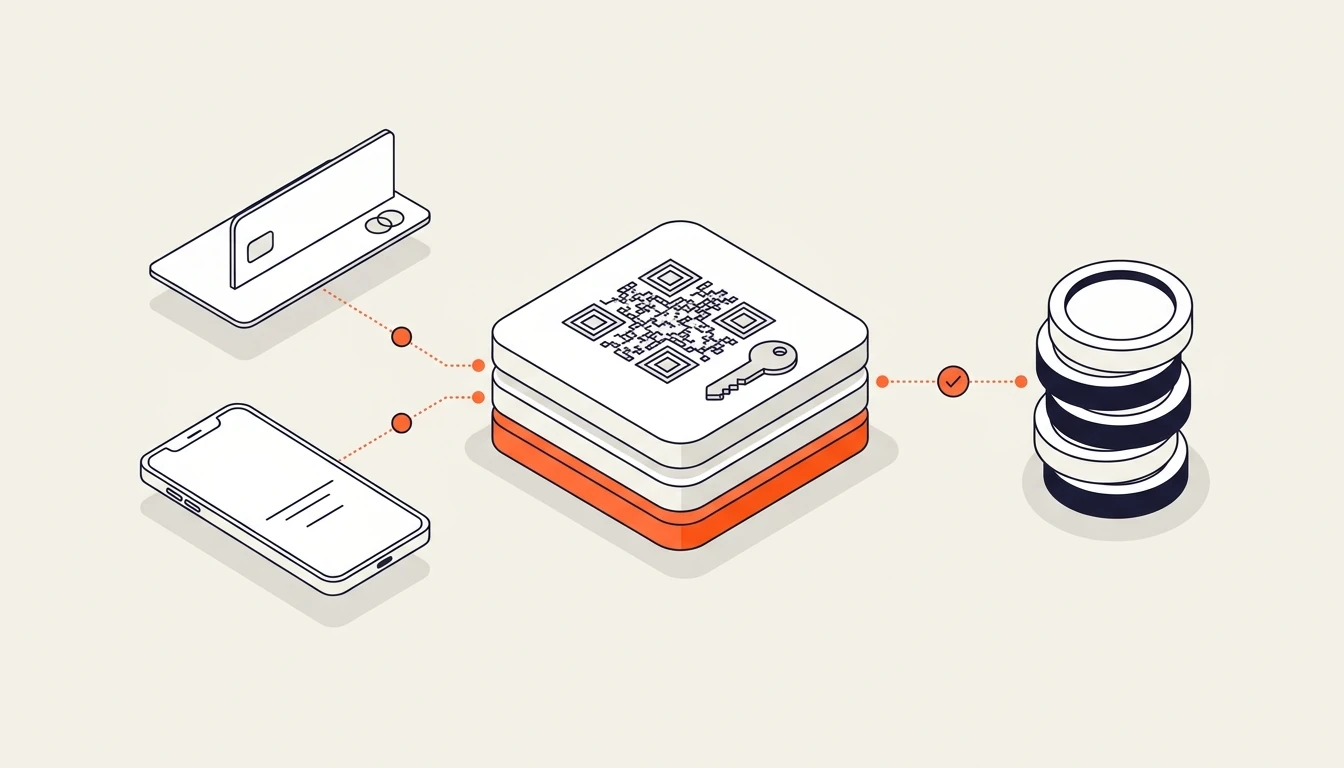
A merchant cannot debit an ordinary crypto wallet without the holder's authorization. Recurring crypto payments can use pre-funded internal balances, renewal invoices created by the merchant's billing service, or a separate smart-contract permission system such as ERC-7715. Paymos provides deposit channels and invoices; subscription schedules, reminders and internal balance deductions belong to the merchant's application. Fiat conversion happens at payment-method confirmation, not invoice creation.
Recurring billing is the lifeblood of modern software-as-a-service (SaaS) and digital membership businesses. On traditional card rails, recurring payments rely on merchant-initiated "pull" transactions under the customer's recurring-payment authorization.
An ordinary self-custodial wallet does not give a merchant a card-style debit authorization. The holder must authorize a transfer, directly or through a supported permission mechanism; a merchant cannot debit an arbitrary wallet merely by knowing its address.
Software platforms can also collect subscription revenue through crypto payments, giving customers an alternative to cards. Three architectural patterns are described below; each still needs a billing service to track renewals and sufficient funds to pay for them.
Why blockchains cannot execute native card-style auto-debits
A normal wallet payment requires the holder's authorization for the destination, token and amount. Merchant API credentials authorize requests to Paymos; they do not grant access to a customer's wallet. Smart-contract permissions are a separate integration discussed below.
In traditional finance, card subscriptions use recurring-payment authorizations. Renewals can still encounter several problems:
- Involuntary Churn: An expired or replaced card can interrupt a renewal even when the customer wants to continue.
- Geographic Exclusions: A card issuer or payment provider may decline a cross-border transaction.
- Dispute and Chargeback Exposure: A customer may dispute a renewal under the applicable card-scheme rules.
Crypto subscription architectures offer a payment path without a card issuer, while still requiring funding, confirmation and renewal handling. For an end-to-end evaluation of processing expenses across business models, review our guide on who pays the crypto processing fee.
Architecture 1: Pre-funded customer balances using permanent deposit channels
The pre-funded balance architecture can serve B2B SaaS, cloud infrastructure, AI compute providers, and other software platforms. In this model, the SaaS application keeps an internal customer ledger: each registered customer is assigned a payment channel with one permanent address per supported network. Customers top up their account balance with stablecoins, and the platform's internal billing engine deducts subscription fees and metered API usage without requiring on-chain interaction at the moment of renewal.
To implement this workflow, the merchant's backend pairs user accounts with dedicated deposit channels via the Paymos host-to-host REST API.
Step 1: Assigning a Permanent Deposit Wallet
When a customer registers or visits their billing tab, the application requests a dedicated channel:
POST /v1/payment-channels HTTP/1.1
Host: api.paymos.io
Authorization: HMAC-SHA256 pk_live_<api_key_id>:<base64_signature>
X-Request-Timestamp: <unix_seconds>
Content-Type: application/json

{
  "project_id": "prj_xFukZuAJZR06pLVBh3uwzv",
  "external_id": "usr_corp_1028"
}
Replace the header placeholders using the HMAC signing scheme: the current Unix timestamp and a Base64 HMAC-SHA256 signature over the canonical request, including the hash of the exact body bytes.
A new production channel starts in provisioning with no deposit addresses. Response excerpt:
{
  "id": "pc_2QhKZv6mRt9WdA3nYpLbXf",
  "status": "provisioning",
  "is_accepting_payments": false,
  "is_fully_provisioned": false
}
Retrieve it through GET /v1/payment-channels/{id} as provisioning progresses. Check is_accepting_payments and show only active networks with accepted tokens and a non-null minimum_deposit; each network becomes ready independently. Transfers below the returned minimum are not credited. Learn more about permanent routing in our dedicated guide on static crypto wallets for payments.
Step 2: Automated Deposit Crediting
When Acme Corp transfers 500 USDT to a ready address and the deposit is confirmed after screening, Paymos dispatches a webhook. Excerpt with an illustrative fee:
{
  "event_id": "evt_J7EEYeL9pZJukfj2c5OQ44",
  "event_type": "payment_channel.deposit.confirmed",
  "version": 1,
  "occurred_at": 1767225930,
  "data": {
    "id": "pcd_8ScRvL4jNq2XkB7mTfZdWu",
    "payment_channel_id": "pc_2QhKZv6mRt9WdA3nYpLbXf",
    "payment_channel_external_id": "usr_corp_1028",
    "status": "confirmed",
    "is_final": true,
    "currency": "USDT",
    "network": "TRC20",
    "gross": "500",
    "fee": "5",
    "net": "495"
  }
}
The merchant's application verifies X-Webhook-Signature against the raw body using its Webhook Secret before processing the event. It credits the reported net under its own customer-balance policy, deduplicating on the deposit's data.id atomically with the balance update.
Step 3: Zero-Friction Internal Rebilling
For an illustrative 30-day plan, a deduction in the merchant's own database might look like this; the billing job must also enforce due dates and prevent duplicate renewals:
UPDATE user_balances
SET balance_credits = balance_credits - 49.00,
    subscription_renews_at = subscription_renews_at + INTERVAL '30 days'
WHERE user_id = 'usr_corp_1028' AND balance_credits >= 49.00;
Because the deduction occurs inside your application database rather than on-chain:
- No network gas fees are paid on monthly renewal dates.
- No card-expiry failure: Renewal still requires sufficient prepaid credit.
- Support for metered billing: Ideal for platforms charging per API call, seat, or compute hour alongside base subscription fees.
Architecture 2: Renewal links with fiat pricing and merchant reminders
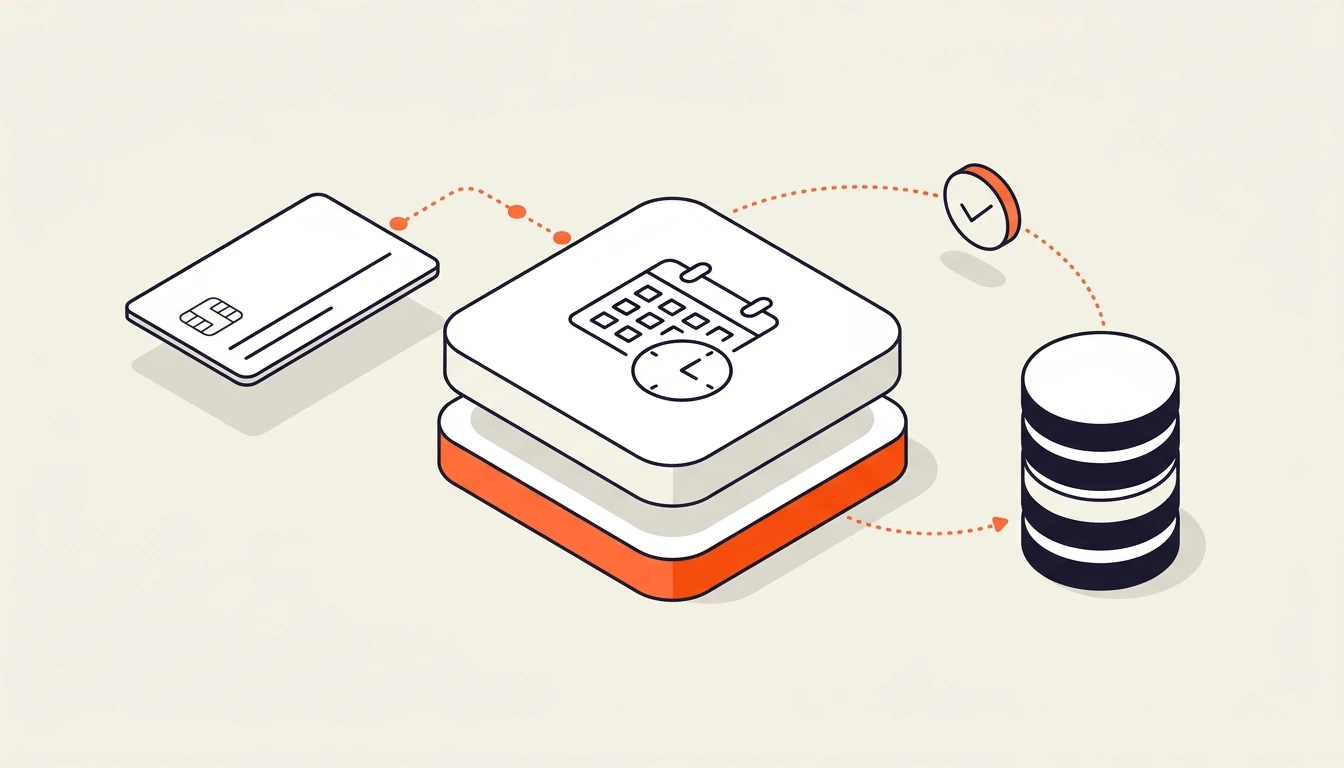
The renewal-link architecture can serve B2C software, VPNs, developer utilities, and membership communities where customers prefer paying invoice by invoice. The merchant's billing service can schedule reminders several days before subscription expiration and create a fresh invoice when the customer is ready to pay. Paymos does not schedule renewals or dunning, and creating an invoice does not lock a fiat exchange rate.
When a customer clicks the renewal prompt, they land on a localized hosted checkout page pre-configured with their subscription tier.
Key Elements of Renewal Invoices:
- Fiat Price Anchoring: Keep the plan price in fiat. Paymos calculates the supported token amount at
confirm-paymentfrom the available exchange rate and applicable fees; $29 does not guarantee exactly 29 USDT. - QR Codes: The customer uses the payment details for the selected token and network and authorizes the transfer in their wallet.
- Merchant Dunning Sequences: Your billing service chooses reminder intervals and grace periods. Create invoices within their payment window instead of relying on an old link. For technical invoice mechanics, review our comprehensive crypto invoicing guide.
This architecture gives customers a renewal path without a card charge; completion still depends on the customer and the payment flow.
Architecture 3: Smart contract pull delegations and the ERC-7715 standard
A separate smart-contract integration can use delegated permissions to debit a customer's wallet. ERC-7715 concerns smart-account permissions; it is not a Paymos billing endpoint. The merchant must assess wallet and contract support and implement its own execution and scheduling.
Such an integration needs an authorization policy covering:
- Maximum pull amount: e.g., 20 USDC per transaction.
- Billing cadence: e.g., minimum 28 days between withdrawals.
- Expiry timestamp: e.g., permission expires after 12 months unless re-authorized.
How ERC-7715 Executes Autonomous Debits:
When renewal day arrives, the merchant's own service would submit a transaction to its contract. That implementation must check, for example:
- The requested amount does not exceed the agreed monthly maximum.
- At least 30 days have elapsed since the last debit.
- The subscriber has not revoked the permission on-chain.
Transfer execution depends on the contract, valid permission and sufficient funds; it is not a built-in Paymos flow.
Operational Trade-offs of ERC-7715:
Wallet support, permission revocation and transaction execution must be evaluated for the chosen implementation. Paymos provides the collection tools for Architecture 1 (Pre-funded Balances) and Architecture 2 (Renewal Invoices); in both, the merchant runs the subscription logic.
Handling fiat pricing ($19/mo, $99/mo) and exchange rate volatility in recurring crypto
SaaS companies can track Monthly Recurring Revenue (MRR), Customer Lifetime Value (LTV), and Average Revenue Per User (ARPU) in fiat while accepting crypto payments. A fiat plan price and the token amount a customer must transfer are separate values.
For a fiat-priced invoice, Paymos resolves the token amount at payment-method confirmation:
Subscription Plan: Enterprise B2B SaaS
Base Price: $99.00 USD / month
Settlement Asset: USDT (TRC-20 / ERC-20)
Conversion: Available rate at confirm-payment, with applicable fees
USDT and USDC target the US dollar, but a peg is not a guaranteed exchange rate. Paymos supports fiat-priced invoices in 46 currencies and calculates the crypto amount when the payer's token and network are confirmed through confirm-payment, before the on-chain transfer. This is distinct from blockchain confirmation. Creating a renewal invoice or sending a reminder days earlier does not lock the conversion rate; the merchant's reminder schedule is separate from the invoice payment window.
Explore our transparent fee model on the Paymos merchant pricing page.
Involuntary churn: card failures and crypto renewal requirements
A failed renewal does not always mean a customer wants to cancel. Crypto payments avoid card-specific failures, but still require sufficient funds and, for renewal invoices, a customer-initiated transfer:
| Failure Mode | Traditional Credit Cards | Recurring Crypto Channels |
|---|---|---|
| Card Expiration Date | Renewal may fail when the card expires | Channel addresses remain assigned |
| Bank False-Positive Fraud Flag | Issuer may decline a renewal | No card issuer in the payment path |
| Card Replacement (Lost/Stolen) | Breaks recurring billing until customer updates card | Wallet address remains unchanged |
| Insufficient Credit Limit | Declines transaction at point of sale | Renewal still needs enough prepaid credit or a new transfer |
| Cross-Border Foreign Exchange Limits | Depends on issuer and provider | Depends on supported token/network and payment availability |
By integrating crypto payment options via Paymos SaaS solutions, companies can offer an alternative when a customer's card renewal fails.
Webhook state machine: modeling active, past-due, and cancelled crypto subscriptions
A resilient merchant billing service models the customer lifecycle using payment webhooks and its own renewal schedule. Crypto transactions settle asynchronously, so grace periods, reminders and access changes belong to that application.
An illustrative lifecycle for the merchant's application:
[ Trial / New ] ──(Deposit Confirmed)──> [ Active ]
                                             │
                                     (Renewal Missed)
                                             ▼
[ Cancelled / Revoked ] <──(Grace Ends)── [ Past Due ]
Critical Webhook Events to Implement:
payment_channel.deposit.confirmed: Reports a confirmed deposit. Your backend credits the reportednetonce and decides whether a suspended subscription can resume.invoice.paidandinvoice.paid_over: Report completed payment of an invoice. Your backend extends access for the purchased period under its own billing rules.invoice.expired: Reports an expired invoice. Your billing service decides whether the related subscription is past due and needs a reminder; link expiry alone does not define the subscription state.
To prevent duplicate credits, verify the raw-body signature and record the business resource ID atomically with the balance update: data.id for a deposit and data.invoice_id for an invoice. Store event_id to deduplicate delivery attempts; different subscribed endpoints can receive different event IDs for the same payment. See our guide on payment webhook idempotency.
Payouts and sweeping economics: managing subscription cash flow
Subscription payments generate incoming stablecoin transfers that the merchant must reconcile with customer credits and withdrawals.
In a Paymos integration:
- Merchant Balance: Confirmed deposits credit the merchant's Paymos balance per asset. Paymos is custodial; collection is not a direct transfer to the merchant's external wallet.
- Network Costs: Withdrawal network fees depend on the selected route. Use the current quote rather than assuming a fixed saving from consolidation.
- Merchant-Initiated Withdrawals: The merchant requests withdrawals separately through the dashboard or
POST /v1/withdrawals. Paymos does not schedule automatic payouts from subscription receipts.
Permanent deposit channels and renewal invoices supply payment collection; the merchant's application manages customer credits, subscription renewals and access. Explore how Paymos supports software billing on our solutions for SaaS overview.
| Architecture | User Interaction | Involuntary Churn | Network Fee Overhead | Best Suited For |
|---|---|---|---|---|
| 1. Pre-Funded Balance (Deposit Channels) | Top up USDT/USDC when needed | Renewal depends on sufficient prepaid credit | Network fee on each top-up | B2B SaaS, API metering, cloud infrastructure |
| 2. Scheduled Renewal Links (Invoices) | Open reminder link and authorize payment | Customer must complete each renewal | Standard transfer fee per cycle | B2C consumer tools, VPNs, newsletters |
| 3. Smart Contract Pull (ERC-7715 / Allowances) | Sign permission delegation once during onboarding | Depends on funds, permissions and execution | Gas paid per contract execution | Web3 dApps, DeFi platforms, EVM smart wallets |
Frequently asked questions
Can crypto wallets be charged automatically every month like credit cards?
An ordinary self-custodial wallet cannot be debited without its holder's authorization. A merchant can deduct subscription charges from its own prepaid customer ledger, or build a separate smart-contract permission integration. Paymos does not automatically charge customer wallets.
How do SaaS platforms price recurring crypto subscriptions denominated in USD or EUR?
SaaS applications can keep prices in fiat, such as $29/month. Paymos calculates the crypto amount from the available rate when the token and network are confirmed through confirm-payment. Creating an invoice or scheduling a reminder days earlier does not lock that rate.
What happens if a subscriber runs out of prepaid crypto credits?
The merchant's billing service decides whether to mark a subscription past_due, allow a grace period, send reminders or suspend access. Paymos reports payment events; it does not manage the subscription lifecycle.
How does ERC-7715 change crypto subscription billing?
ERC-7715 concerns permissions for smart accounts. A merchant considering it needs a separate wallet and contract integration, with its own spending limits, renewal scheduling and revocation handling. This is not a Paymos API capability.
Why do SaaS companies adopt crypto billing alongside card payments?
Crypto gives customers another way to pay when cards are unavailable or declined. Renewals still depend on sufficient funds and completion of the payment flow.
When NOT to use recurring crypto payments
- If your business model depends on involuntary silent rebilling where subscribers forget about monthly charges — crypto always requires explicit upfront funding or authorized permission allowances.
- If your customer base consists exclusively of retail buyers without digital asset wallets who only transact in local fiat currency cards.
- If network fees make individual small renewals uneconomic; consider collecting a prepaid balance instead.
- If your engineering stack cannot deploy webhook listeners to track asynchronous subscription state transitions.
Sources
Last reviewed Nov 7, 2026