TL;DR
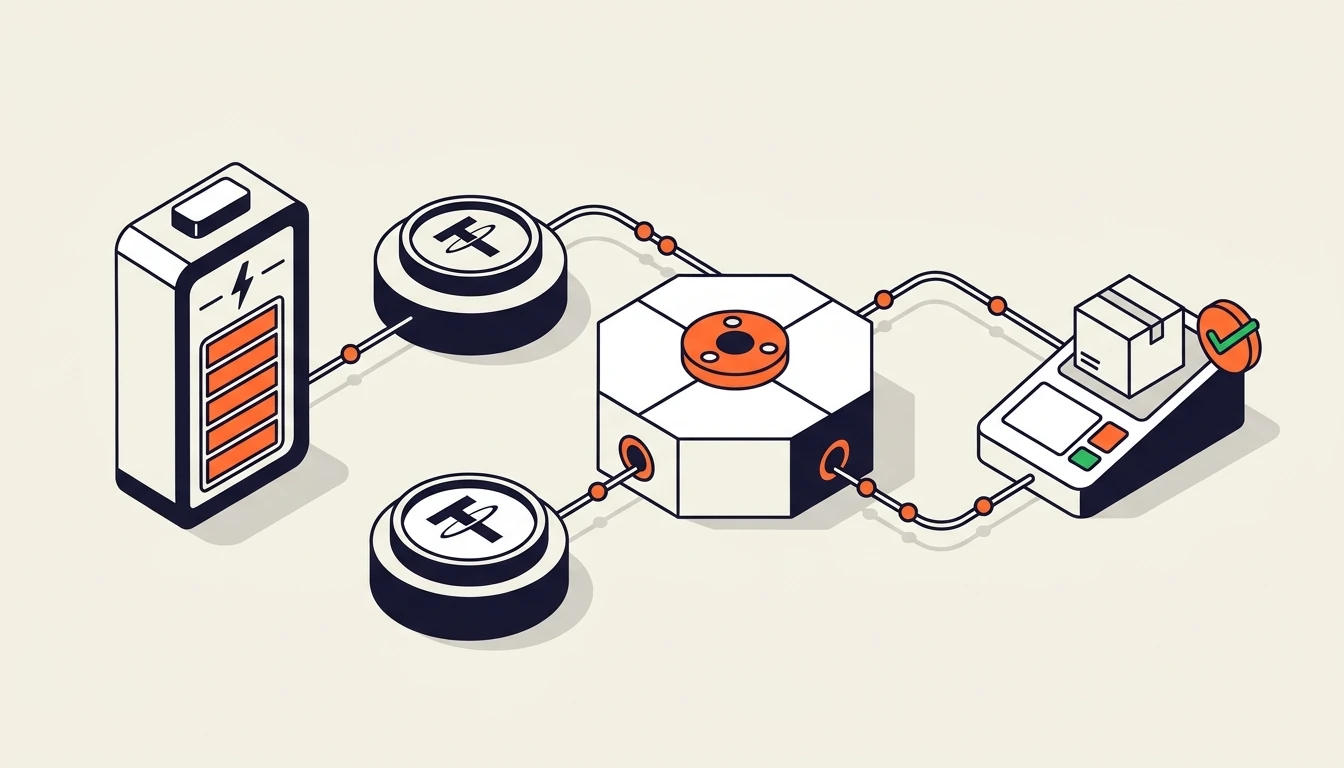
A USDT TRC-20 transfer on TRON used 64,285 Energy when the recipient already held USDT and 130,285 Energy when it had never held it, plus about 345 bytes of Bandwidth (mainnet, November 2026). When the sending account lacks that Energy, the network burns TRX at its energy price, 100 sun per unit today: about 6.4 TRX and 13.0 TRX. Staking TRX or renting delegated Energy replaces the burn, and renting saves money only when the provider's price per unit is below the burn price. These parameters are set by the network and change, so read them before you budget.
USDT on the TRON blockchain (TRC-20) is one of the most widely used stablecoin rails for payouts, payroll and settlement. Sending it costs TRX, paid through two network resources, Energy and Bandwidth, and an account that does not hold them has TRX burned instead.
This guide uses numbers measured on mainnet in November 2026: what one USDT transfer consumes, what burning TRX costs at today's chain parameters, how much TRX you would have to stake instead, and when renting Energy pays off. Parameters change, so the developer section shows how to check them yourself.
What a USDT transfer consumes on TRON
Every USDT transfer calls the token contract at TR7NHqjeKQxGTCi8q8ZY4pL8otSzgjLj6t, which runs on the TRON Virtual Machine (TVM) and needs Energy. The transaction itself also takes Bandwidth, roughly its size in bytes.
- 64,285 Energy: the recipient already holds USDT, so the contract updates an existing storage slot.
- 130,285 Energy: the recipient has never held USDT, so the contract writes a new storage slot. A wallet that holds TRX but no USDT counts as new, and an address drained to exactly zero is new again.
A USDT transfer takes about 345 bytes of Bandwidth, and every account gets 600 free Bandwidth per day, enough for one transfer. These figures come from recent confirmed transfers on mainnet. They depend on the contract and the network, so simulate your own transfer before you plan around them (see the developer notes below).
What burning TRX costs
If the sending account has less Energy than the transfer needs, the network burns TRX for the missing part at the energy price, a chain parameter called getEnergyFee. It is 100 sun per unit in November 2026, and 1 TRX = 1,000,000 sun:
64,285 Energy x 100 sun  =  6,428,500 sun = 6.43 TRX
130,285 Energy x 100 sun = 13,028,500 sun = 13.03 TRX
Bandwidth that free or staked Bandwidth does not cover is burned too, at 1,000 sun per byte: about 0.35 TRX for a 345-byte transfer. At 1 TRX = $0.32 (November 2026) the Energy alone costs about $2.1 and $4.2 per transfer. Both the energy price and the TRX price change, so read these as an example of the calculation, not as a tariff. For a broader comparison of network economics, see our analysis of TRON vs Ethereum fees.
Burning also carries operational risks. A payout wallet needs a TRX balance for every transfer, the dollar cost moves with the TRX price, and a transfer that runs out of Energy with too low a fee_limit fails with OUT_OF_ENERGY after the TRX it already used is burned.
Staking TRX: what Stake 2.0 changed
Since the Stake 2.0 upgrade in 2023, an account that stakes TRX gets Energy and Bandwidth without locking the TRX to one receiver, and can delegate those resources to another address and take them back. Staked Energy regenerates over 24 hours.
How much Energy one staked TRX yields depends on how much TRX the whole network has staked. In November 2026 it is about 9.6 Energy per staked TRX per day (the network's total Energy limit divided by the total staked weight). To cover one transfer a day by staking alone you need:
64,285 Energy  / 9.6 = about 6,700 TRX staked
130,285 Energy / 9.6 = about 13,500 TRX staked
That capital stays yours, but it is locked, and the ratio shifts as other accounts stake or unstake.
Renting Energy: when it pays off
Because Energy can be delegated, providers rent out the Energy their staked TRX produces: they delegate it to your address for a period and charge a fee. Renting replaces the burn for that transfer, and it saves money only when the price is below the burn price.
rental cost per transfer = Energy needed x the provider's price per unit
saving per transfer      = 100 sun x Energy needed - that cost
For example, with a hypothetical quote of 40 sun per unit (not a market price), a 64,285-Energy transfer costs 2.57 TRX instead of 6.43 TRX. At a quote of 100 sun or more, renting is no cheaper than burning. Check what a quote includes: the rental period, the minimum order size, and the cost of the delegation and reclaim transactions themselves. Rental prices differ between providers and move with demand, so compare a current quote instead of relying on a general percentage.
Developer notes: estimate before you send
1. Read the chain parameters
POST /wallet/getchainparameters HTTP/1.1
Host: api.trongrid.io
The chainParameter list in the response contains getEnergyFee (sun per Energy unit; 100 in November 2026) and getTransactionFee (sun per byte of Bandwidth; 1,000).
2. Simulate the exact transfer
Simulating the transfer to the real recipient returns the Energy it will use, so a recipient that never held USDT is priced correctly:
import { TronWeb } from 'tronweb';

const tronWeb = new TronWeb({
  fullHost: 'https://api.trongrid.io',
  headers: { 'TRON-PRO-API-KEY': process.env.TRONGRID_KEY }
});

const USDT = 'TR7NHqjeKQxGTCi8q8ZY4pL8otSzgjLj6t';

// Energy this transfer will use for this exact recipient.
async function estimateTransferEnergy(from, to, amount) {
  const result = await tronWeb.transactionBuilder.triggerConstantContract(
    USDT,
    'transfer(address,uint256)',
    {},
    [
      { type: 'address', value: to },
      { type: 'uint256', value: amount } // USDT has 6 decimals
    ],
    from
  );
  return result.energy_used;
}

// Energy the sending account can use right now.
async function availableEnergy(address) {
  const resources = await tronWeb.trx.getAccountResources(address);
  return (resources.EnergyLimit || 0) - (resources.EnergyUsed || 0);
}
Compare the two numbers. Whatever Energy is missing is burned from the account's TRX balance.
3. Delegate staked Energy to a payout wallet
A delegation is specified in staked TRX (balance, in sun), not in Energy units: the receiver gets the Energy that this stake produces. With the TRON HTTP API:
POST /wallet/delegateresource HTTP/1.1
Host: api.trongrid.io
TRON-PRO-API-KEY: your_trongrid_api_key
Content-Type: application/json

{
  "owner_address": "41a614f803b6fe789ced44c5a1d392d34857a3a47a",
  "receiver_address": "4142f36d0f666f28945cf45a1e2f3d2f9547a1b83c",
  "balance": 2000000000,
  "resource": "ENERGY",
  "lock": false
}
Here 2,000,000,000 sun is 2,000 TRX, which yields about 19,000 Energy per day at today's ratio. Once the signed transaction is confirmed, the receiver can use the delegated Energy until the owner reclaims it.
Batch payouts: size the Energy before you send
When you send many payouts from one wallet, add up the Energy of every transfer (simulate each one, or count 64,285 for a recipient that holds USDT and 130,285 for one that never did) and make sure the wallet has that much, with a margin. A batch of 100 transfers to recipients that all hold USDT needs about 6.4 million Energy. Keep a TRX reserve as well: any Energy the wallet lacks is burned, and a transfer sent with too low a fee_limit fails instead.
What this means on Paymos
Paymos is a custodial processor. The sender's wallet pays the network fee when a customer pays you, and Paymos covers the network cost of accepting and consolidating payments; the same split applies to static crypto wallets for payments. For withdrawals, the fee is disclosed per route, is paid in the withdrawal asset, and carries no Paymos withdrawal commission, so you do not manage Energy for Paymos payouts. See the merchant pricing page and the host-to-host REST API. For broader fee strategy, read who pays the crypto processing fee and general gas mechanics, and see how TRON settlement fits Paymos on the TRON network overview.
| Fee Method | TRX per Transfer (Recipient Holds USDT) | TRX per Transfer (Recipient Never Held USDT) | Capital Required | Best Suited For |
|---|---|---|---|---|
| 1. Burning TRX | 6.43 TRX of Energy, plus about 0.35 TRX of Bandwidth if none is available | 13.03 TRX of Energy, plus about 0.35 TRX of Bandwidth if none is available | Liquid TRX in the sending wallet | Occasional or one-off transfers |
| 2. Self-Staking (Stake 2.0) | No TRX burned while staked Energy covers the transfer | No TRX burned while staked Energy covers the transfer | About 6,700 TRX staked per transfer per day (about 13,500 for the second case) | Operators with idle TRX and steady daily volume |
| 3. Renting Energy | The provider's price for 64,285 Energy | The provider's price for 130,285 Energy | No staking; you pay the provider per rental | Volume that does not justify staking, when the quote is below 100 sun per unit |
Frequently asked questions
Why does sending USDT on TRON cost TRX?
Tether (USDT) on TRON is a TRC-20 smart contract token. Calling the contract's transfer() method needs computational execution power (Energy) and transaction size capacity (Bandwidth). If the sending account has too little of either, the network burns TRX from its balance to cover the shortfall.
How much Energy does a single USDT TRC-20 transfer consume?
On mainnet in November 2026, a USDT transfer used 64,285 Energy when the recipient already held USDT and 130,285 Energy when the recipient address had never held it, because the contract then writes a new storage slot. Both need about 345 bytes of Bandwidth. These are measured values that depend on the contract and the network, so check them again before you plan.
What does burning TRX cost per transfer?
Energy is burned at the chain's energy price (the getEnergyFee parameter): 100 sun per unit in November 2026, where 1 TRX = 1,000,000 sun. That is 6.43 TRX for 64,285 Energy and 13.03 TRX for 130,285 Energy. Bandwidth that free or staked Bandwidth does not cover adds about 0.35 TRX (1,000 sun per byte). At 1 TRX = $0.32 the Energy alone costs about $2.1 and $4.2. Governance can change these parameters.
When does renting Energy beat burning TRX?
Only when the provider's price for the Energy you need is lower than the burn price: 100 sun per unit today, or 6.43 TRX for a 64,285-Energy transfer. Rental prices differ between providers and rental periods, so compare a real quote with the burn price instead of relying on a general percentage.
How does TRON Stake 2.0 make energy rental possible?
Stake 2.0 lets an account that has staked TRX delegate the Energy and Bandwidth that stake produces to another address, without transferring the TRX itself. The staker can reclaim the delegation, which is what makes renting resources to other wallets possible.
Does the recipient pay a network fee when receiving USDT?
The sender pays the TRON network fee. The Paymos processing fee is separate and can be shared between the merchant and payer.
When NOT to use TRON energy rental
- If your business executes fewer than 10 USDT transfers per month, where manual TRX burning overhead is negligible compared to setting up automation.
- If you operate strictly on Ethereum Layer-2s or sidechains (such as Arbitrum or Polygon), where the EVM gas model does not use Tron Energy mechanics.
- If you make spontaneous one-off consumer transfers without access to an energy delegation API or a rental provider.
- If your treasury management strictly prohibits smart contract interactions or third-party resource delegations.
Sources
Last reviewed Nov 7, 2026