Hand the car-rental deposit back on return
Renters pay the booking and deposit to your balance in stablecoins, and the deposit lands as a real payment rather than a card processor's two-week hold — release it back the moment the car returns clean.

Where rental-fleet margin disappears on a card rail
Why is a returned car's deposit still locked on the renter's card two weeks later?
Four ways marketplaces and card rails put rental revenue and renter goodwill at risk — the marketplace cut, frozen deposits, cross-border declines, and the dispute that lands after the car is back.
The marketplace keeps a slice of every booking
Turo's earnings plans let the host keep 60%, 75%, or 90% of the trip price, so the marketplace cut runs roughly 10–40% depending on the plan; Outdoorsy charges a host service fee around 20–25%, tiered by revenue. On a single high-utilisation vehicle, that cut alone consumes a meaningful five-figure sum a year. The marketplace economics work; the host's are squeezed.
The security deposit freezes on the renter's card for weeks
The $500–$2,000 deposit goes on the card as a pre-authorisation at pickup, and the hold typically sits for 1–2 weeks after the return — sometimes longer if the processor flags the rental. The renter's credit limit is tied up the whole time, an international traveller on a tight limit can't book the next car, and an early release often shows up to them as a confusing re-charge.
Cross-border renters get declined at the counter
The German tourist renting in Costa Rica gets card-declined on a cross-border fraud heuristic; the renter who can pay still can't book. On the international inbound that does clear, the acquirer typically adds 1–2% in cross-currency conversion at a rate it sets, not you — so the very renters an exotic or destination fleet lives on are the hardest to take money from.
And a damage claim turns into a chargeback after the keys are back
You charge a documented scratch against the card, the renter disputes it as "already there", and the acquirer holds the funds, demands photo evidence, and takes 30–60 days — often siding with the renter on subjective wear. On a standard 2.9% + $0.30 processor, a $1,500 five-day rental already costs about $43.80 to accept, roughly 3% before any of this; a slice of returns then bleed margin cards were never built to adjudicate.
How the deposit and the booking work in stablecoins
What changes when the rental settles in stablecoins?
Take the rental and its deposit on-chain, and four card-rail problems disappear.

A damage claim comes out of a deposit you already hold
The renter pays the deposit at pickup, so it already sits with you. A documented damage charge is deducted before you return the balance — there is no "did it exist already" dispute, because the money isn't on a card an issuer can pull back. A genuine disagreement becomes a contractual matter, not a chargeback queue, and nothing is yanked back from you while it plays out.

The deposit comes straight back on a clean return
On a clean return you mark the rental complete and send the full deposit back in one transfer. Send it to an address you've already whitelisted and it goes out as you sign off; a first-time address takes a one-time 2FA step to whitelist first — either way, not the one-to-two-week ageing a card pre-auth drags out. No issuer sits between you and the renter, and no "re-charge" confusion: the deposit was a transparent payment that returns the same way.

Cross-border renters pay, and the exchange rate stays yours
Price the rental in a dollar stablecoin and the renter abroad pays the same stablecoin, so the German tourist declined at a Costa Rica counter now pays in seconds — no cross-currency cut, no processor-set rate. Need local currency? You convert on your own treasury schedule, at your own rate. The access problem cards create is the booking the wallet rail unlocks.

Roughly $15 to accept a five-day rental, not $43.80
That same $1,500 five-day rental costs about $15 to accept on Paymos instead of roughly $43.80 — and you keep the difference on every booking, with no per-transaction minimum, no high-risk surcharge, and no separate currency-conversion charge.
How rental operators wire Paymos in
Which integration fits how you rent?
Three ways to wire stablecoin payments into your booking and deposit flow.
Hosted Checkout — rent direct with no code
For indie operators on their own booking site, the renter picks the vehicle and dates, you create a Paymos invoice plus a separate deposit payment, and redirect them to a Paymos-hosted page where they pay both from their wallet. Works with WordPress, Wix, Squarespace, and custom rental-site stacks — no payment screen to build.
See details
Embedded checkout — booking widget on your site
For operators with a richer booking experience — availability calendar, add-on cover, multi-driver — the embedded flow keeps the renter inside your domain. Deposit payment, confirmation, and refund-on-return all happen in your funnel. Works with React, Vue, Svelte, and server-rendered stacks.
See details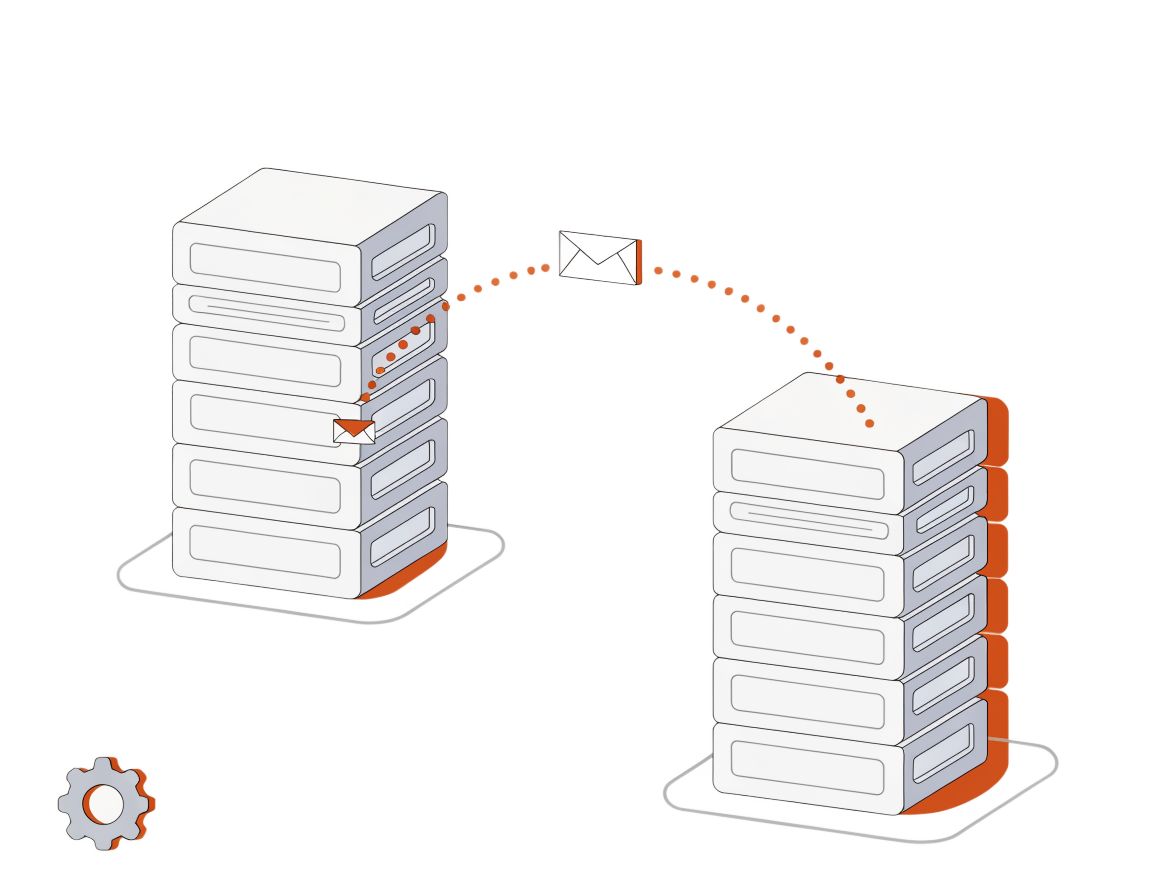
Server-side API — fleet-management PMS integration
For operators on fleet PMS software (HQ Rental, Rent Centric, RentSyst, or a custom Postgres stack), the server-side API plugs in as the payment layer over signed (HMAC-SHA256) webhooks. Your integration creates the invoice on reservation, watches for confirmation, and drives the deposit payment-and-refund lifecycle. Paymos can run alongside Stripe — the renter picks at checkout.
See detailsRental flows on stablecoins today
What rental patterns run cleanly on a wallet?
Four flows from real rental setups — everyday SUV, exotic car, RV, and P2P car-share.
Everyday SUV with a refundable deposit — Hosted Checkout
The bread-and-butter indie rental: a few days in a mid-size SUV with a refundable security deposit. The renter pays the rental and the deposit in two taps from their wallet, the confirmation reaches you in seconds, and on a clean return the whole deposit is sent back as they hand over the keys — no two-week countdown running on their card.
Exotic car with a large deposit — Embedded checkout
A week in a supercar with a deposit big enough that renters hate seeing it frozen. They pay the rental and the deposit inside your own booking flow, and on a clean return the whole deposit goes back on your sign-off rather than ageing off a two-week card hold — a real conversion lift for clients who don't want that much locked up.
Two-week RV trip — Hosted Checkout
An RV booked for a family road trip, direct from an operator who left the marketplace behind. The renter pays through a hosted page, the booking is yours the moment it confirms, and there is no marketplace host fee skimmed off the top and no separate RV-rental risk review holding up the payout.
P2P car-share booking — Embedded checkout
A peer-to-peer platform built as the independent alternative to the big marketplaces. The renter books through your embedded checkout and pays from their wallet; the booking settles to your Paymos balance, and you distribute the host's share on your own schedule afterward — your cut stays sustainable instead of marketplace-sized.
Car rental on stablecoins
Frequently asked questions
How does the on-chain security deposit actually work at pickup and return?
What if the damage claim exceeds the deposit?
Can Paymos integrate with HQ Rental, Rent Centric, or other fleet PMS?
How do refunds work for early returns or no-shows, alongside the deposit release?
What about international renters whose home-country cards get declined?
Can we pay out the platform, host, and cleaning crew from one booking?
Honest disqualifier
When NOT to use Paymos for car rental
Four rental setups where the marketplace or the card terminal still earns its keep.
You rely on Turo's host-protection insurance
Turo bundles damage, theft, and liability cover into the marketplace deal, and for a small P2P host that policy is most of the product. Paymos moves the money; it doesn't underwrite anything, so a direct booking means sourcing your own commercial cover first. Until that policy exists, the marketplace cut is buying you something real.
Your platform is built on Stripe Connect sub-accounts
Paymos credits every booking whole to your Paymos balance — there are no connected accounts, no automatic host splits, no per-host payout engine. If your marketplace runs on Connect's onboarding, tax forms, and split logic, replacing that stack is a re-architecture, not a rail swap. Add the wallet as an option for cross-border renters and keep the Connect machinery underneath.
A domestic counter where the pre-auth never causes a problem
A local renter with a local card, a deposit that pre-authorises without friction, and a near-zero dispute rate is the scenario card acquiring was built for. The wallet rail wins where holds frustrate renters and foreign cards decline at the counter; if neither happens at your desk, you'd be trading a working flow for a smaller fee and little else.
Scooters and economy cars priced for the impulse decision
At very low day rates the renter decides in seconds, and a pick-network-then-transfer flow is where impulse bookings stall. The per-rental fee saving cannot repay lost conversion at that price point. Keep cards as the default and surface the wallet only for renters who arrive already holding stablecoins — some tourist markets genuinely do.
Related flows
Other Travel & Hospitality sub-niches on Paymos
Pricing
1.0% per settled rental. No deposit card-hold, no damage-claim chargeback
No surcharge for renting out vehicles, no acquirer treating the fleet as elevated risk. A week's takings leave the balance for a network fee alone, with no commission added on the way. How many rentals you take and what they average are what bring the rate to 0.3%. Ask from the first one. A $1,500 rental costs about $15 to accept here and roughly $43.80 on a 2.9% + $0.30 processor, before anyone converts a currency — the same gap on the everyday SUV and on the week-long supercar.
See pricing