Pocket the night's rate, not Airbnb's 15.5%
Guests book the vacation rental direct and pay to your Paymos balance in stablecoins, with the security deposit arriving as a real payment at booking — release it on a clean checkout, and no stay can be charged back once it's over.

Where vacation-rental margin disappears under marketplace fees
Why does the marketplace keep a slice of every night you fill?
Four ways marketplaces and card rails thin out rental revenue — the platform take, the extra platform fees for managers, frozen deposits, and the fee plus peak-season reserve.
The marketplace take lands near a sixth of every booking
Airbnb runs two fee models — a split where hosts pay around 3% and guests 14–16%, and a host-only "simplified pricing" model around 15.5% with no guest fee — and either way the take lands near 15.5%. Vrbo runs a 5% commission plus 3% payment processing on its pay-as-you-go tier. On a high-rate beach house, that's a meaningful slice of every night routed to the marketplace before you've paid the cleaner.
A multi-host platform pays Stripe per account and per payout
If you run a multi-host property-management platform, Stripe Connect bills $2 a month per active connected host plus $0.25 per payout — layered on top of the standard card processing on each booking, and on top of whatever commission the platform itself takes. Across dozens of hosts and hundreds of payouts a month, those per-account and per-payout charges stack onto the same nights the card fee is already taxing.
Security deposits freeze on the guest's card for days
The standard $500–$2,000 deposit becomes a card pre-authorisation at check-in, and the hold sits for 1–2 weeks after checkout — longer if the processor flags the rental for review. You can't draw against the balance, the guest's credit limit is consumed, and a damage claim turns into a chargeback fight if the guest disputes. Standard card auth-capture was never designed for two-week deposit holds.
And the card fee stacks with peak-season reserve exposure
On a standard 2.9% + $0.30, a $2,000 weekly rental costs about $58.30 to accept — roughly 3% before anything else. Acquirers also apply reserves to vacation-rental accounts case by case, with neither percentage nor duration published in advance, and those decisions tend to land exactly when peak-season working capital matters most for cleaning, maintenance, and seasonal staff.
How direct rentals work in stablecoins
What changes when the rental settles in stablecoins?
Off the marketplace and onto a wallet — four things change for the direct host.

The security deposit comes straight back on checkout
The guest pays the deposit at booking, so it already sits with you. Once your turnover crew signs off the clean, you send the full deposit back in one transfer — to a guest address you've already whitelisted it goes out on that sign-off, and a first-time address takes a one-time 2FA step to add first. No card issuer sits in the middle, so no chargeback window opens. If there's damage, you deduct it per the rental agreement and return the balance; the deposit and refund transactions are the audit trail.

A completed stay can't be charged back
A guest's stablecoin transfer clears once and stays cleared. Once the guest signs the transfer for the booking or deposit, there's no panel to convince — cancellation-window penalties and deposit-keep decisions are governed by your written policy, not the issuer's dispute team. The issuer's guest-is-right presumption — the thing that makes short-term rentals bleed money on disputes — has no seat in this payment path.

The rent lands at booking — no reserve, no payout lag
The booking confirms and the rental revenue credits your Paymos balance within seconds — no 2–7 day card payout, no peak-season reserve to argue, and no platform-discretion delay. For a manager paying cleaners, owners, and seasonal staff on tight cycles, the cash finally lines up with the booking calendar instead of lagging it. Taking it off the balance costs no commission either — a network fee smaller than the send is the only charge on a withdrawal, whether it funds the turnover crew or your own account.

Roughly $20 to accept a $2,000 week, not $58.30
That same $2,000 weekly rental costs about $20 to accept on Paymos instead of roughly $58.30 on a card processor — and a foreign guest pays the same stablecoin you price in, so there's no cross-currency cut. You keep the difference on every booking, with no per-transaction minimum and no separate currency-conversion charge.
How property managers wire Paymos in
Which integration fits your rental stack?
Three integration routes for taking rental payments and security deposits in stablecoins.
Embedded checkout — property-management platform
For multi-host management platforms, embed Paymos checkout inside your booking flow. The guest never leaves your domain; the wallet payment, booking confirmation, and security-deposit collection all happen in-funnel. Works with React, Vue, and server-rendered platforms.
See details
Hosted Checkout — direct host booking page
If you're a direct host with one or a handful of properties, Hosted Checkout means no integration work. The guest picks dates on your page, you create a Paymos invoice with the total, and redirect them to a hosted checkout where they return with a paid booking. Best for hosts moving off the marketplace without rebuilding the whole stack.
See details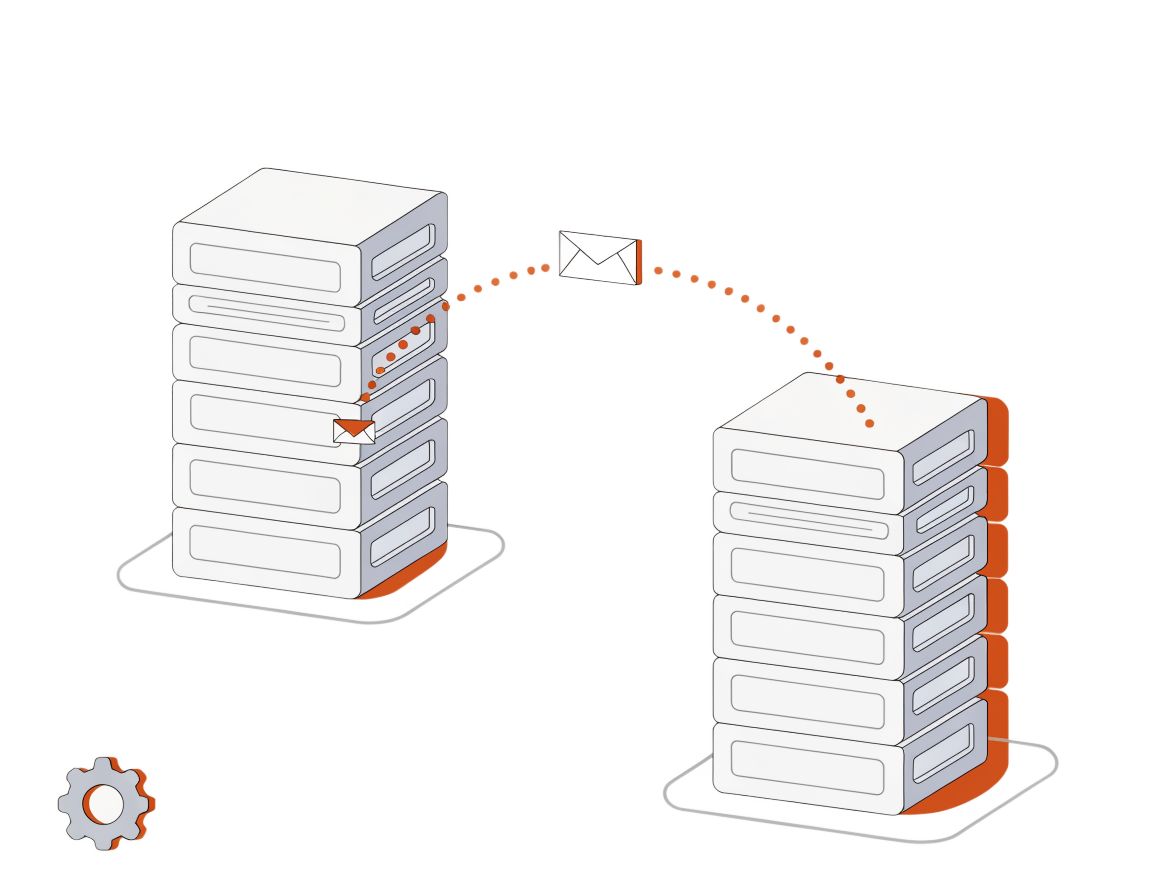
Server-side API — channel manager integration
On Hostaway, Guesty, Lodgify, or another channel manager, the server-side API plugs in as a payment gateway alongside Stripe over signed (HMAC-SHA256) webhooks. The channel manager calls Paymos on reservation, listens for confirmation, and drives the security-deposit payment and refund lifecycle through API hooks.
See detailsVacation-rental flows on stablecoins today
What rental patterns run cleanly on a wallet?
Four flows from working indie hosts and property managers — beach house, villa with deposit, cabin, and platform subscription.
Beach-house weekend booking — Hosted Checkout
For a peak-season stay, issue the rental invoice after the dates are agreed. The guest pays from their wallet, and confirmation secures the reservation before arrival. The payment is not reduced by a marketplace commission or held in an acquirer reserve.
Two-week villa with a security deposit — Embedded checkout
A premium two-week villa where the deposit is large enough that guests hate seeing it frozen. The guest pays the rental and a separate deposit inside your booking flow, and a clean checkout releases the full deposit in one transfer instead of parking it behind a card hold — a real conversion lift for guests who don't want that much locked up.
Mountain cabin single night — Hosted Checkout
The accessible-tier rental: a single-night cabin, guest pays from their wallet. The booking is yours the moment it confirms and the money is in your treasury the same day — and the cost of moving this guest off the marketplace was a single short checkout setup.
Property-management platform subscription — monthly invoice
A manager charging hosts a monthly platform fee for the management software and channel-manager integration. Each month your system issues a renewal invoice the host pays from their wallet — no card on file to expire and no involuntary churn. The platform fee just renews on its own cycle.
Vacation rentals on stablecoins
Frequently asked questions
How does the on-chain security deposit actually work on checkout day?
What if I want to charge a damage fee beyond the deposit?
Can I integrate Paymos with Hostaway, Guesty, or Lodgify?
How do refunds work for early checkouts or cancellations, with the deposit release?
What if the guest's card keeps getting declined?
Can we pay out owner, manager, and cleaning crew from one booking?
Honest disqualifier
When NOT to use Paymos for vacation rentals
Four host profiles where the marketplace or card rail keeps the edge.
Airbnb's reach and host protection are doing real work for you
The marketplace fee buys two things no payment rail will: a search page full of strangers ready to book, and damage protection standing behind every stay. If your calendar fills from Airbnb search and your properties carry real damage exposure, that bundle is earning its commission. Point Paymos at the direct bookings you generate yourself; let the marketplace keep the guests it brings.
You want a referee between you and the guest
On a direct booking there is no resolution centre: a not-as-advertised argument is settled by your written terms and your own refund call, because a confirmed transfer can't be pulled back by anyone. Hosts who value a platform standing between them and an unhappy guest are describing the marketplace's product — and it only ships bundled with the commission.
One domestic property, a few dozen nights a year
Going direct means a booking page, a pricing calendar, and your own guest communication — overhead a single domestic property at modest occupancy struggles to repay. The rail's math compounds across portfolios and across borders. Below that scale, the marketplace's all-in convenience is honestly priced.
Budget cabins where one extra screen loses the night
When the nightly rate is low and the alternatives are one tab away, checkout friction is the most expensive thing on the page — and a first-time wallet payment is friction by definition. Default those listings to card, watch which guests pick the wallet when offered, and expand only where the split proves itself.
Related flows
Other Travel & Hospitality sub-niches on Paymos
Pricing
1.0% per direct booking. No marketplace commission, no acquirer reserve
The $100-a-night cabin and the $5,000 villa with a damage deposit are charged on the same basis, with no ceiling on the booking. Owners and the turnover crew get paid out of it without a commission on top, and each payment out carries only a subsidised network fee. Talk to us about 0.3% from your first booking — how many weeks you fill and what a week is worth decide it. A rental books by the week, so every point of fee is real money: a $2,000 week costs about $20 to accept and roughly $58.30 on a 2.9% + $0.30 processor, before conversion.
See pricing