Credit a top-up in seconds, send the cash-out on your call
A crash round resolves in seconds; the payment rail behind your cashier should match it. Players top up in USDT or USDC, the funds credit your Paymos balance, and a confirmed deposit can't be charged back — so a finished round stays settled. No issuer declines your category, and when your rules clear a cash-out the win leaves on your release, not on a reviewer's queue.
Where a crash-game operator loses money on payments
Why can't card rails keep up with instant-round gameplay?
Four mismatches between a fast game loop and card-rail timing — slow authentication, bank refusals, crypto-processor teasers, and held cash.
Card authentication can't keep pace with the loop
Crash and instant-round play runs on a loop measured in seconds — bet, watch, cash out, repeat. A card step-up on a deposit takes far longer than a round: push notification, app open, biometric, round-trip. The player who has to re-fund mid-session falls out of the loop entirely. Cards lose this player on timing, not on price.
Banks treat your category as high-risk and decline
The classification decides it before your product gets a look. Issuers hold high-velocity gambling on restricted footing and turn away a large share of cross-border deposits on that basis alone, whatever licence you hold in the player's market. On a loop measured in seconds, one refusal doesn't cost a top-up — it ends the session. The acquirers who will board you price that exposure in, commonly 2.5–7% on the deposit before the reserve and the platform fee are counted.
A "0.5%" teaser that compounds every round
A teaser-priced gateway puts 0.5% on the page, then bills a swap markup, a transfer charge and merchant-paid gas behind it — once on the deposit, again on the cash-out. The settled figure usually lands at 1.5–2% per leg, often more. A crash loop fires both legs all day, so on a fast game that gap doesn't add up once — it compounds every round you book.
Disputes and payout holds tie up your float
A card deposit can be reversed weeks after the round has crashed and settled. The player keeps the result, you eat the stake plus a per-dispute fee, and a climbing dispute ratio drags surcharges behind it. Meanwhile the acquirer holds a reserve back for months and releases cash-outs on a multi-day cycle — so the float a fast loop spins up sits locked exactly when you need it to pay the next winner.
How stablecoin settlement fits the loop
What changes when deposits and cash-outs run on stablecoins?
Four things that go right the moment a fast game loop stops depending on card rails and teaser-priced gateways.
The loop never stalls on the cashier
A stablecoin deposit clears in seconds and a cash-out leaves the moment you release it, so the loop stays tight: a player tops up, plays the round, and the payout reaches their wallet without a card step-up breaking the rhythm. The game loop keeps its pace instead of stalling on payment latency.

No bank shuts you down, and a deposit is final
A stablecoin deposit never passes an issuer that can refuse your category, and once it confirms on-chain a finished round can't be unwound. No chargeback on a crash the player already watched land, no per-dispute fee, no ratio creeping toward a surcharge. The top-up credits your Paymos balance after confirmation — working capital for later operator-approved withdrawals, not an acquirer reserve.

One all-in rate across both legs
Paymos is 1.0% all-in and covers the network cost itself: no swap markup, no separate transfer charge, and no second fee on the cash-out the way teaser-priced gateways stack it — which matters most on a loop that fires both legs constantly. The quoted rate is the settled rate.
Cash out the moment you release it
When your rules clear a cash-out, the payout broadcasts to the player's whitelisted wallet straight away — no review queue sitting on it, no banking-calendar gap, nothing batched until morning. Settlement past that point runs at the chain's pace, not on a promise of ours. Paymos takes zero commission on the send; you pay only the network fee for the send — quoted before it goes, and under what the send costs. A fast loop needs a fast settle on both ends, and your rules decide when each payout goes.
How a crash-game operator wires Paymos in
Which integration fits your game loop?
Three ways to wire stablecoin deposits and cash-outs into a fast-round platform.
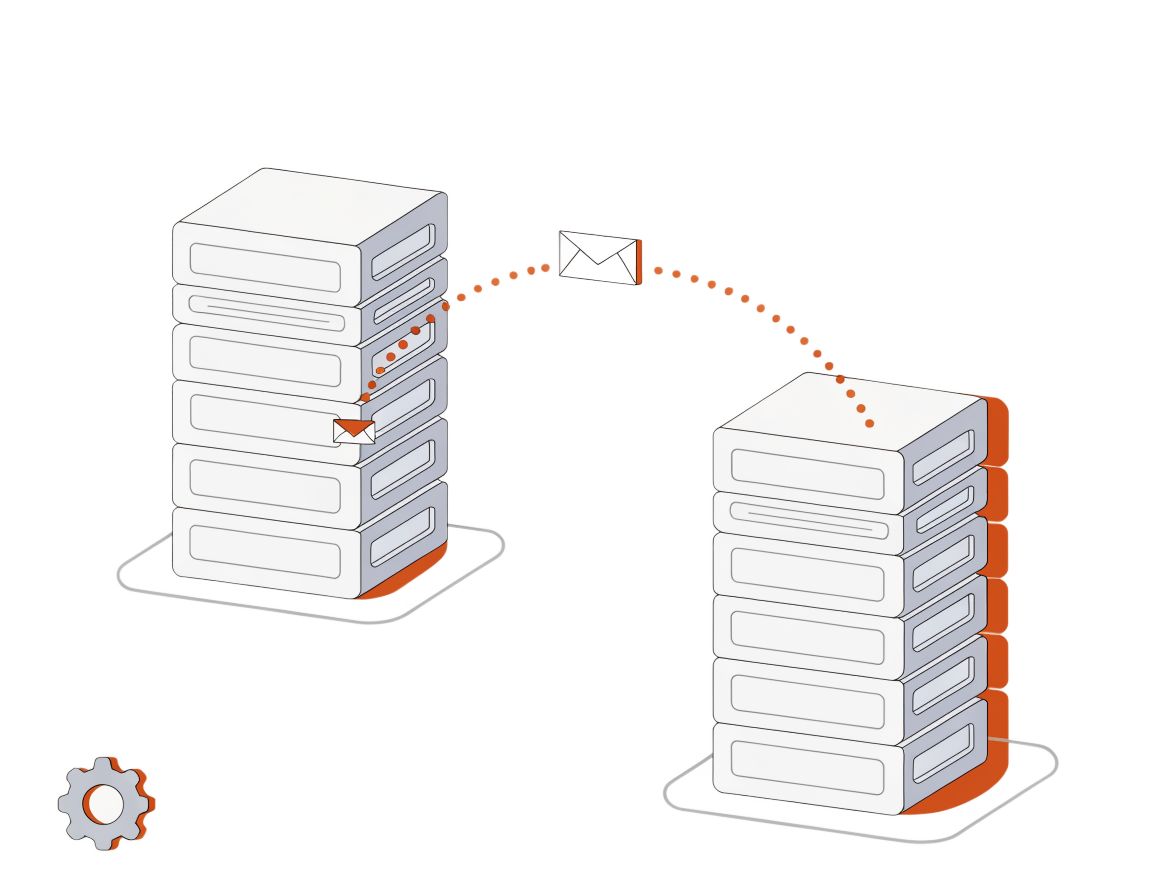
Host-to-Host API — for the in-house game engine
For an instant-round engine, the API integrates at the cashier layer: create-invoice per deposit, watch-confirmations and signed cash-out calls over HMAC-SHA256 webhooks. A confirmed deposit credits the in-game balance within seconds; a cleared cash-out fires a signed outbound transfer. Sandbox runs the same loop on its own credentials, with simulated outcomes standing in for real deposits.
See details
Embedded Checkout — top-up without leaving the round
An embedded panel drops onto the game screen so a player can top up without losing the session. They pick "deposit in stablecoin," pay, and the balance credits in seconds — no domain hop, no full-page reload. Sits next to card and bank-transfer options for players who prefer them.
See details
Payment Links — high-roller manual deposits
For a large manual deposit, generate a one-off link from the dashboard and send it over your existing channel. The player pays from any wallet, the deposit lands on your Paymos balance in seconds, and the in-game balance reflects it. No card data over chat, no wire delay.
See detailsCrash-game flows on stablecoins today
What instant-round patterns run cleanly on a wallet?
Four flows from operators — quick deposit, fast cash-out, high-roller top-up, and continuous-play balance.
Quick deposit between rounds — Embedded Checkout
A player runs low mid-session and tops up through the overlay. The stablecoin deposit settles in seconds and the in-game balance credits immediately, so the player is back in the next round without a card step-up dropping them from the loop.
Fast cash-out on a win — Host-to-Host API
A player banks a multiplier before the crash, your engine resolves the round, and your rules clear the withdrawal. Your back end fires one signed payout call and the transfer goes out at once — no multi-day review hold, no support ticket, no churn from a player who waited days to be paid on a game that resolved in two. From there it is the network's clock, not a queue of ours.
High-roller top-up — Payment Link
A high-value player funds a larger balance to play continuously. The host sends a payment link; the player pays from an exchange withdrawal or their own wallet; the funding credits your Paymos balance in seconds and the in-game balance reflects it — settled the same moment, nothing parked in reserve.
Continuous-play balance — Host-to-Host API
A regular keeps an in-game balance topped up to play a long session of fast rounds. Each top-up settles in seconds and credits immediately; your engine deducts per bet and pays each cash-out as an operator-initiated transfer when the player withdraws, with a subsidised network fee for the route charged to your balance.
Crash games on stablecoins
Frequently asked questions
How fast do deposits confirm for an instant-round loop?
How is a cash-out signed, and where is it allowed to land?
Does Paymos provide bot or fraud detection for fast games?
Does a verification check ever sit between a top-up and the next round?
Can players run a high frequency of small bets on this rail?
What can we rehearse in sandbox before a live round runs on it?
Honest disqualifier
When NOT to use Paymos for a crash-game cashier
Four cases where a fast loop still doesn't make this the right rail.
Your stakes are cents and your players are crypto-cold
A loop of ten-cent bets only works on this rail when the player already keeps a funded wallet — asking a casual mobile player to install one before their first micro-round kills the funnel. If your traffic comes from ad-driven casuals betting pennies, a stored-card flow converts better than any fee saving here.
Your market's rules shut the door on crypto deposits
Fast-round formats often sit in the most tightly policed corner of gambling regulation, and some regimes bar wallet funding for them specifically. Verifying that your permission covers crypto-funded rounds is on you and your counsel — Paymos takes no view and offers no workaround.
Bot defence is outsourced to your card processor
Crash loops attract scripted play, and if your detection leans on the device, card and velocity data an acquirer pipes in, a wallet deposit arrives blind to all of it. You'll keep only what the chain shows — addresses, amounts, timing. Stand up your own bot and multi-account controls before moving the deposit flow.
You cash the float out to a bank every night
Revenue here stays in stablecoins until you exchange it yourself — there's no nightly fiat sweep, no bank statement to hand the accountant. An operator whose costs, salaries and tax all clear through a bank account needs a way to cash out to a bank of its own; without one, the treasury workflow gets harder, not easier.
Related flows
Other iGaming & Betting sub-niches on Paymos
Pricing
1.0% per settled deposit, all-in. Network cost on us
Rounds fire in seconds and balances move constantly, so a per-transaction cost stops being a line item and becomes a multiplier. The quick top-up and the high-roller balance carry one percentage, the cash-out carries none, and nothing is held against the float that funds the next round. Talk to us about 0.3% from your first day live — deposit flow and how many top-ups clear are what it rests on. That arithmetic is why a gateway quoting from 0.5% ends up at 1.5–2% per cycle once swap, transfer and gas hit deposit and cash-out, and why gambling-coded acquirers charging 2.5–7% a deposit, with a reserve behind it, stop being usable at all.
See pricing