Reach the developers cards keep turning away
Charge cloud VPS and GPU rent in USDT or USDC through a crypto payment gateway, to developers in any country. They pay from a wallet — no BIN, no issuing-bank decline — and once a transfer confirms, it never unwinds.

Where independent hosting providers lose margin and signups
Why do so many overseas signups die at the card form?
Four ways the card rail bleeds independent cloud and hosting providers — declines abroad, a fixed per-charge floor, sovereignty mandates, and disputes on compute already delivered.
Overseas signups stall at the card form
Sell developer-tier infra into Tunis, São Paulo, Karachi, or Jakarta and watch the card form turn buyers away. A wrong-country BIN, an issuer flagging the foreign merchant, an ignored re-auth step — the customer has the money, the card rail refuses it. You paid the ad to land them on the signup page, then the checkout sent them home.
A fixed per-charge floor crushes a cheap VPS
Budget VPS lives and dies on margin. A few-dollar monthly plan billed on cards pays a flat per-charge fee plus a percentage, and on the smallest tier that floor alone can be high single digits of the price — every renewal, forever. The fee was set for the $200 retail swipe, not the $4.50 one, so a rail built for someone else's transaction quietly taxes yours.
Sovereign-cloud buyers can't have a US processor in the trail
Data-sovereignty rules in the EU, the Gulf, and beyond push regulated buyers away from US payment infrastructure. A bank, a hospital, or a ministry buying compute may carry a "no US payment processor" line in its own audit — and the large US-based processors are exactly what that line excludes. Regional providers need a way to take the money without putting a third-country processor inside the customer's compliance graph.
GPU disputes land after the compute is already spent
By-the-hour GPU is expensive to serve. A customer runs thousands of dollars of compute over a weekend, then files "I thought I cancelled" — and on services already rendered, card networks side with the cardholder more often than not. The dispute losses pile up fastest in your heaviest-usage months, exactly when you can least absorb them. The compute is gone; the chargeback isn't.
What a wallet rail fixes for cloud billing
What changes when rent settles in stablecoins?
Four things that come right the moment compute billing leaves the card rail — for the customer abroad, the cheap-VPS margin, the regulated buyer, and the GPU operator.

A developer in Tunis pays exactly like one in Frankfurt
A wallet carries no BIN, no issuing country, no billing-address check. A developer in Tunis with USDT pays the same way as one in Frankfurt: pick a token, send, confirmed. No decline cascade, no re-auth prompt to ignore, no "we don't serve your country" — the country was never part of the transfer. The signup that cost you an ad click finally converts, and nobody can cut you off for serving the region.

No per-charge floor — the cheap-VPS margin stays yours
A low-priced plan settles with one flat fee and no fixed floor, so the smallest tier keeps the margin it would have surrendered to a retail-set minimum. Spread across a base of small subscribers renewing month after month, that reclaimed slice adds up. And the rent credits your Paymos balance on confirmation — not in a processor's pool to release on its payout schedule.

The regulated buyer's payment skips the card networks
A bank, a ministry, or a regulated enterprise sends the money on-chain instead of over the card rails. No acquirer, no issuing bank and no correspondent bank stands in the path, and no card scheme can pull the payment back afterwards. Paymos does stand in it: the invoice gets its own deposit address, the amount credits your Paymos balance, and the payout leaves when you send it. Name it in the buyer's review the same way you name any other vendor.

A confirmed transfer is final — no chargeback weeks later
A confirmed stablecoin payment can't be reversed. The customer who runs a weekend of compute and then claims "I thought I cancelled" has no card network to unwind it through. The dispute vector that bleeds by-the-hour operators isn't on the wallet rail. You ran the GPU, the customer sent the transfer — any disagreement is between the two of you, not a network ruling against you by default.
How hosting providers wire Paymos in
Which integration fits how you bill compute?
Three ways to plug a stablecoin rail into your metering and invoicing — REST for metered bills, embedded checkout for prepaid balances, a Payment Link for contracts.
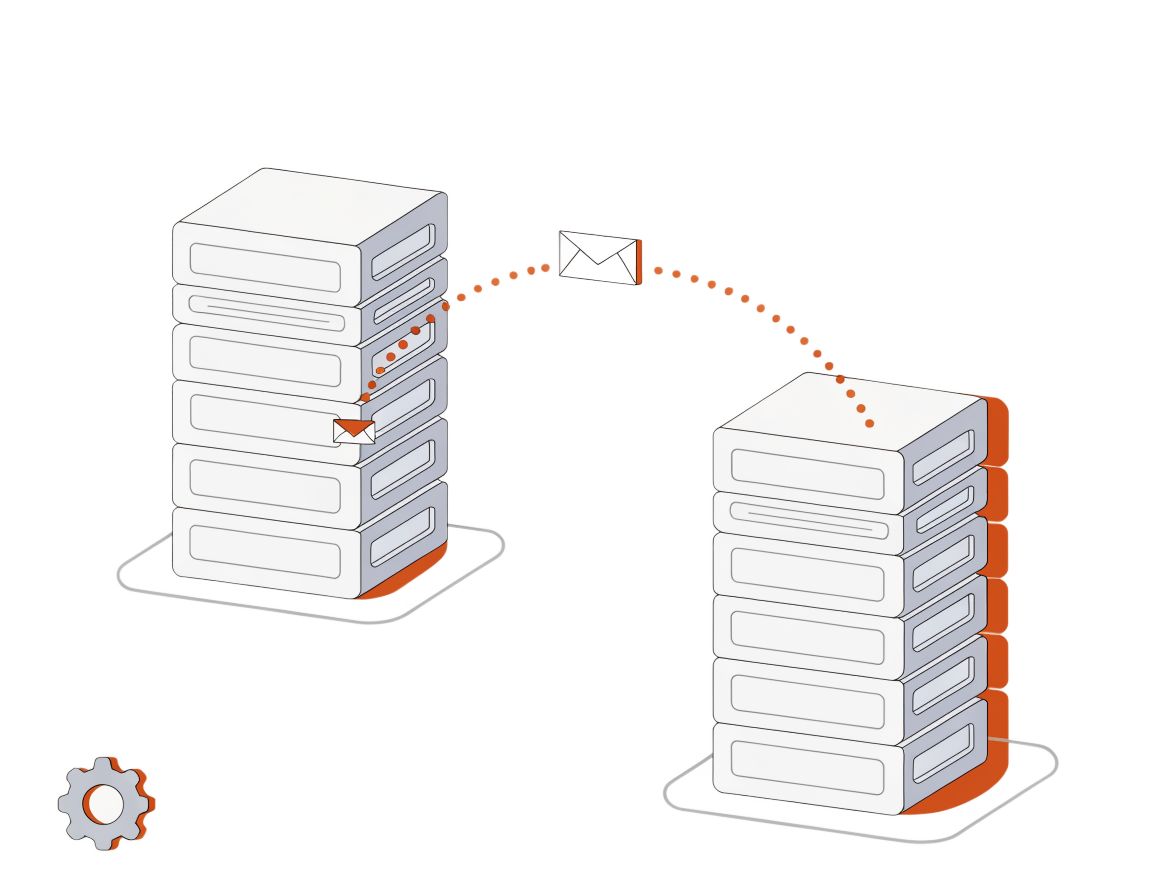
Host-to-host API — turn metering output into one invoice
Meter compute, storage, and bandwidth in your own pipeline. The REST API creates the monthly invoice from that output, presents it to the customer's wallet, and tracks the payment across whichever of the 13 networks they hold funds on. HMAC-SHA256 webhooks fire on confirmation, so the receivable closes itself. One invoice carries the whole period, whether it totals four dollars or forty thousand.
See details
Embedded checkout — top up a balance inside your console
Run a prepaid balance? Drop the Paymos checkout into your console's "add funds" flow. The customer picks an amount, pays without leaving your domain, and your backend credits the balance the moment the webhook lands. You meter usage against that balance in your own system — the model GPU operators already run on.
See details
Payment Links — enterprise and regulated-buyer contracts
For a contract, create a Payment Link with the total and use the PO or contract number as the external order reference. The buyer pays from a treasury wallet; confirmation closes the receivable and credits your Paymos balance. An individual contract does not require an API integration.
See detailsCompute models already billing on a wallet rail
Which compute models run cleanly on stablecoins?
Four flows from real providers — VPS and bare-metal, by-the-hour GPU, metered storage and CDN, and regional sovereign cloud.
VPS and bare-metal — budget to mid-tier SKUs
Sell budget-to-mid-tier VPS and the margin comes back the moment the fixed per-charge floor disappears. The smallest plan stops bleeding a chunk of its price to a retail-set fee, the payment confirms in seconds on a fast network, and the rent credits your Paymos balance the moment it clears — every renewal, nothing held back for a payout cycle.
GPU rental — by-the-hour instances
Prepaid balances close the GPU chargeback hole. The customer funds a balance, you meter per-hour or per-second and draw it down in your own system, and each top-up is a confirmed transfer that's final on arrival. No "I thought I cancelled" weeks later, no four-figure clawback to swallow — your only exposure is a session running ahead of the balance, which a credit cap or auto-pause contains.
Object storage and CDN — metered egress and requests
Storage and CDN bill by the meter: egress, bytes stored, request count. Your pipeline computes the period total, the API turns it into one invoice, and the customer's wallet settles it in a single transfer. A million billable events or a thousand settle the same way. The money credits your Paymos balance and can't be reversed, so a paid month of usage stays paid.
Sovereign and regional cloud — domestic regulated buyers
Serve a domestic regulated base and the payment leg comes off the card networks entirely. The buyer transfers stablecoins on-chain, so nothing in the flow turns on which country issued a card or which acquirer would have had to approve it. Paymos stays in the trail as a custodial processor — funds arrive at an address derived for that invoice, sit on your Paymos balance, and leave on your instruction. Raise that alongside the data-sovereignty story that won the account rather than letting a reviewer find it.
Cloud hosting on stablecoins
Frequently asked questions
How does metered billing for storage and bandwidth settle on-chain?
How do prepaid balances work for by-the-hour GPU rental?
What sits in the payment trail a sovereign-cloud buyer will audit?
Which networks fit a cheap VPS versus a large enterprise contract?
How do refunds work when we credit a customer for downtime?
Can we run cards for some customers and stablecoins for others?
Honest disqualifier
When NOT to use Paymos for cloud hosting
Four cases where staying on cards is the right call.
Your customer base is entirely domestic with cards that always work
If every customer is in your home market with a card that clears reliably and a finance team that wants a card statement, the wallet rail adds a step instead of removing one. The advantage compounds where international declines, exchange-rate loss, and chargeback rate matter. If none of those apply to your book, the case for moving off cards is weak.
You resell a hyperscaler that bills you on cards anyway
If you're a thin reseller whose own upstream cost is billed to you by a hyperscaler on a card or committed-spend agreement, moving your customer-payment leg to stablecoins doesn't change your cost base much. The wallet rail helps most when you own the infrastructure and the margin. For pure resale at a fixed markup, the savings may not justify the parallel surface.
You want VPS renewals to happen while the customer sleeps
A monthly VPS plan on a saved card renews with zero customer effort; a wallet payment can't be pulled — the customer has to send it, every cycle. For a fleet of small set-and-forget plans, forcing that step adds churn risk instead of saving fees. The clean fit is prepaid balances and metered invoices, where the customer already expects to act; leave silent renewals on cards.
You need a built-in sales-tax engine across many jurisdictions
If you sell into many tax jurisdictions and rely on a processor's tax product for registration tracking, remittance, and the audit trail, that's real product Paymos doesn't replicate. We generate invoices with whatever tax breakdown you compute, but the tax engine itself lives elsewhere. For lean teams, keep at least the tax leg there even if processing moves to a wallet rail.
Related flows
Other SaaS & Digital Products sub-niches on Paymos
Pricing
1.0% per settled invoice. Margin-safe on a cheap VPS, final on GPU compute
Nothing here is fixed, so the few-dollar VPS and the five-figure bare-metal contract are charged the same share. Sending that balance on to a colo invoice costs no commission of ours, and the transfer's network fee is subsidised and quoted before it leaves. 0.3% can be asked for from the first invoice, on how many you raise and what they average. A cheap monthly plan gives up high single digits to the flat card component, then gives them up again at the next renewal, and again after that — the same loss twelve times a year, over the roughly 3% percentage.
See pricing