Charge for the API call that earns a fraction of a cent
Meter calls in your own counter and settle the period through the payments API as one stablecoin invoice — no fixed fee to clear before a tiny overage is worth billing — and the money is final the moment it confirms on your balance.
Where per-call API pricing collides with a card-rail floor
Why does usage-based API billing lose double digits to fees on small invoices?
Four structural failures the card rail bakes into pay-per-call API pricing.
The fixed leg is bigger than the call it bills
A card charge carries a fixed per-transaction fee before the percentage even starts. That floor was set for a $20 retail basket, not for an API call worth a tenth of a cent. Try to bill each request and the fee dwarfs the charge thousands of times over; batch a month of calls into one small overage invoice and the fixed leg still claims a fifth of a few-dollar bill — before the recurring-billing add-on stacks its own cut. So you raise the minimum spend and lose self-serve signups, or you eat the overage and let the meter you built go unbilled.
Prepaid API credits make you a treasury you never staffed for
The buy-credits-and-draw-them-down pattern that API buyers expect puts customer money on your balance sheet as deferred revenue, with refund logic on churn and dispute exposure on every prepay charge. The infra incumbents staffed a treasury function to carry that. A four-person API startup hasn't, so it ships pure metered, turns away the buyer who wants a spend cap, and watches a competitor with a credits flow take the account.
The commit deal closes, then dies in accounts payable
An enterprise API buyer on a committed-use contract routes the purchase through a procurement system that demands a structured PO number, a tax form, and a net-30 window. A card-billing invoice carries a free-text memo, so the AP team bounces it: the PO field isn't structured and the charge won't reconcile against their commitment ledger. You bolt an accounting tool onto the processor, double-book the receivable, and answer reconciliation email instead of shipping.
The dev has the budget; the issuer's country code does not
Some of the heaviest API consumption comes from freelance dev communities in regions a processor's risk model treats as suspect on sight. The developer has a corporate card or a stablecoin and a real workload, but the charge declines on the issuing country alone. You spent the acquisition cost to land them on the signup page, and the billing surface — not the product — sends them away.
What a wallet rail does for per-call pricing
What changes when a period of usage settles as one stablecoin payment?
Four things that come right once the meter stops feeding a card processor.

The on-chain leg fires at period close, not per request
Your meter already counts calls in whatever store you run — a Postgres row, a Redis counter. At period close it posts one number, the customer settles one invoice, and a month of millions of calls becomes a single transfer rather than a million round trips. There is no fixed fee to amortise across that bill, so the tenth-of-a-cent call and the tiny overage are finally worth charging. The rate is 1.0% of the invoice, the same on a $4 bill as on a $4,000 one.

Prepaid credits become a counter, not a deferred-revenue problem
The customer settles a prepay invoice once; you increment a balance and debit it as calls land — the credits live as store credit in your own database, not as a liability with dispute exposure attached. A confirmed stablecoin payment is final, so there is no clawback hanging over a month-old top-up. To return an unused balance you initiate one outbound transfer from your Paymos balance, on your own timing, with no round-trip dispute fee on the return.

The commit invoice keeps its paperwork; the payment leg gets short
The document that satisfies procurement — the PO number, the tax form, the line items — keeps coming from your billing tool, and Paymos never tries to replace it. When the AP team releases payment inside its window, it pays a Payment Link carrying your PO or contract reference as the order reference, instead of cutting a wire. The webhook returns that reference the moment funds confirm and the receivable closes itself — no multi-day clearing window, no return risk left hanging for weeks.

A wallet has no issuing country to decline on
The developer whose card bounced on its country code signs a transfer and clears in under a minute, on the network where the funds already sit. There is no BIN to flag, no foreign-transaction wall, no risk score keeping you out of a market where your API is the better tool — Paymos screens neither the buyer nor your category, and no processor can freeze the account for serving the region. Your addressable market grows by the developers the card rail quietly excludes.
How an API platform plugs into the settlement leg
How do you add Paymos to a usage-based API billing engine?
Three paths chosen by who owns the meter and which segment is paying.
Host-to-host API — settle the period your own meter closes
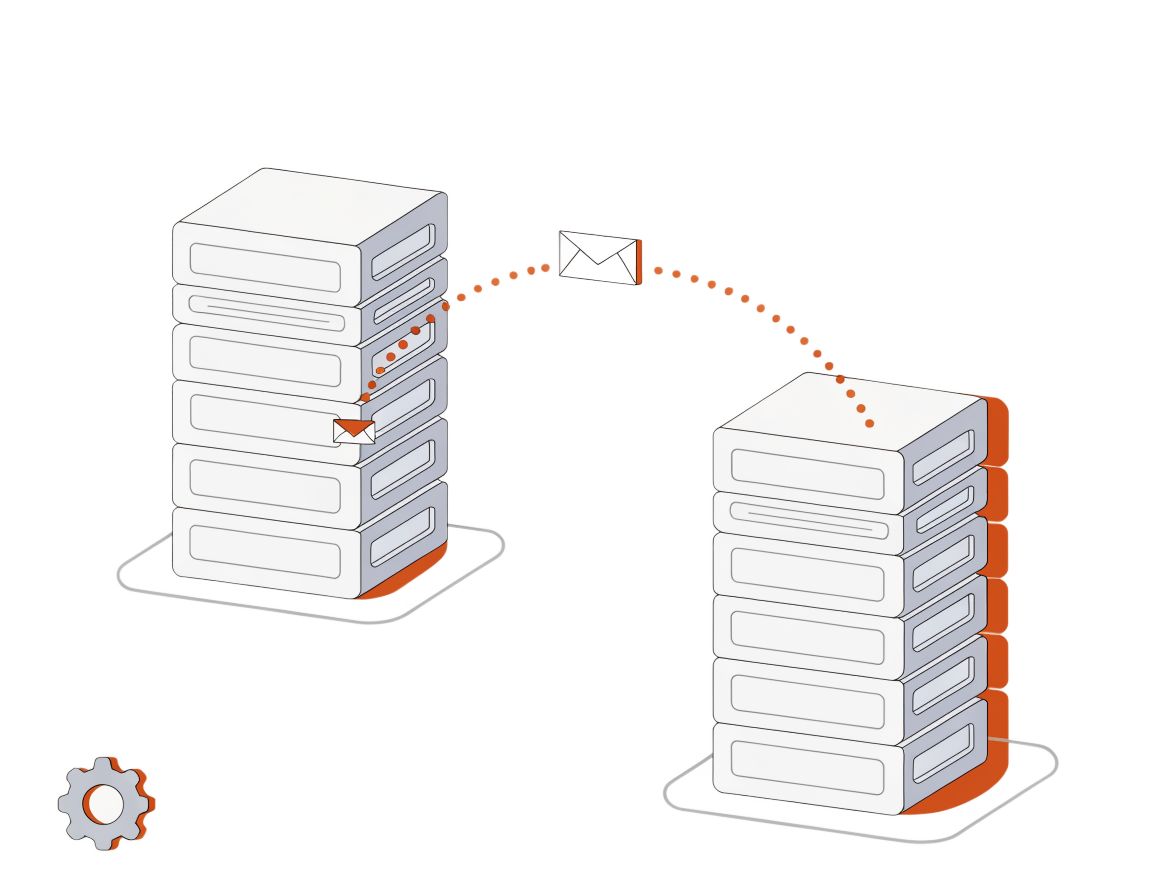
API providers almost always run their own meter, because a generic metered-billing product rarely models an RPC quota or an inference job. The host-to-host API takes the number that meter posts at period close, raises one invoice, and hands it to the customer's wallet to settle across whatever network holds their funds. An HMAC-SHA256-signed webhook fires on confirmation. Your scheduler runs the close, your store computes the total, and Paymos carries only the payment from their wallet to your balance.
See details
Embedded checkout — credit top-ups inside your own console
For the buy-credits flow, drop the Paymos checkout into your console's top-up modal. The customer chooses an amount, pays without leaving your domain, and your backend increments the balance counter the instant the webhook lands. Card buyers can stay on your existing processor; wallet buyers settle here — the rail is a per-customer choice, not a platform migration.
See details
Payment Links — committed-use contracts and annual prepay
For a committed-use contract or an annual prepay, the contract and the invoice keep coming from your existing tools. When procurement releases payment, generate a Payment Link from your CRM or quote tool with the PO or contract reference attached as the order reference and send it to the finance contact. The link settles whether the buyer sits in Singapore, São Paulo, or Lagos — there is no card-network geography to negotiate around.
See detailsAPI pricing models already running on a wallet rail
Which API business models fit a wallet rail in production?
Four shapes from real API providers — RPC, messaging, inference, geocoding.
RPC and node providers — a wallet-native customer base by definition
The developer paying for node access already holds USDC — it is the wallet they deploy contracts from. Settle the monthly plan from that same wallet and the payment confirms in seconds, credits your Paymos balance, and stays put: a paid month of access can't be reversed. For this niche the wallet rail isn't a new ask of the customer; it is the rail they were already on.
Messaging APIs — per-message billing with a hard spend cap
SMS and voice APIs price a fraction of a cent per message, with monthly bills running from a hobbyist's few dollars to an enterprise sender's five figures. Prepaid credits fit because senders want a budget cap against pumping fraud: they fund a fixed amount, you draw it down at the per-message rate, and a low-balance reminder fires from your own system. The balance is a counter in your database, so nothing books as deferred revenue and nothing can be charged back after the messages send.
Inference APIs — spiky GPU-second usage, prepaid against it
Inference endpoints bill GPU-seconds, and one generation job can swing from a couple of dollars to a few dozen. The customer wants a predictable ceiling and you want predictable cash flow — a prepaid balance in stablecoins answers both, drawn down per job in your own meter. The model-building community already lives on-chain, the top-up confirms in seconds, and the compute can't be disputed once it's delivered.
Geocoding and mapping APIs — per-thousand-request volume
Geocoding endpoints bill per thousand lookups. A logistics startup running tens of millions of requests a month carries an invoice too large to leave on a founder's personal card and too informal for enterprise procurement. Pay-as-you-go closes the period as one payment that credits your Paymos balance on confirmation — the mid-size, every-month bill that works better with no per-charge floor under it and no way to reverse it after the lookups ran.
API-as-a-service billing on stablecoins
Frequently asked questions
A million calls at a fraction of a cent each — is every call settled on-chain?
How do prepaid API credits work, and how do you refund an unused balance?
Can we keep cards for small self-serve accounts and use stablecoins for enterprise?
How does net-30 work for API buyers with PO requirements?
Which networks make sense for different API customer sizes?
How is this different from a metered-billing add-on plus an accounting tool for enterprise invoicing?
Honest disqualifier
When NOT to use Paymos for API billing
Four cases where keeping the bill on cards or a wire is the right call.
Your big accounts pay by wire and nothing else, by policy
When the few accounts that carry your revenue have AP policies written around bank wires only, asking procurement for a payment-method exception spends goodwill you'll want at renewal. Leave those invoices where they sit. The wallet rail earns its keep on the long tail — mid-market teams and international developers the card and wire rails serve badly — not by re-litigating a Fortune-500 AP runbook.
Your flat plans survive on a saved card nobody thinks about
A flat monthly plan renews today because a stored card is charged with no one deciding to pay. A wallet can't be pulled — every cycle the customer settles an invoice on purpose, so a plan that lives on inertia will leak churn the moment it asks for an action. Keep those plans on cards and point the wallet rail at metered overage, credit top-ups, and committed-use deals — payments the customer already makes deliberately.
Your invoices are routinely under a dollar — that fits no rail
If the model produces a hundred thousand customers a month each owing thirty cents, no payment rail clears cleanly: the network fee is never zero and a hundred thousand settlements is real operational load. The fix is the same everywhere — a monthly minimum, sub-threshold balances rolled into the next period, or prepaid credits with a top-up floor. Paymos removes the per-call fee problem at ten-dollar-and-up invoices; a sub-dollar bill needs a pricing redesign before any rail helps.
Your meter, plans, and invoices all live inside a processor's stack
When aggregation, plan logic, and customer-facing invoices all sit inside one processor's metered-event objects, unwinding them is a quarter of engineering, not a config flag. Point new committed-use deals at Paymos first, where the fee gap is widest, and leave the installed base running until you replatform for product reasons anyway. A working meter is worth more than a rate cut.
Related flows
Other SaaS & Digital Products sub-niches on Paymos
Pricing
1.0% of the settled invoice. No per-call fee, no metered-billing premium
Paymos bills a share and nothing besides: no setup, no monthly minimum, nothing at all on an invoice the customer never paid. A lower rate of 0.3% is settled between us on how many invoices clear and what they average, from the first one. Credit top-ups are small and frequent, the worst possible shape for a flat per-charge fee: it can claim a fifth of a small overage bill before the near-3% percentage is counted.
See pricing