Developer tools: keep the margin your runners earn
Roll CI minutes, build credits, and seats into one USDC invoice — usage you can finally charge for without a per-charge floor — and the crypto payments can't be clawed back.

Where dev-tools revenue leaks before usage-based pricing pays off
Why does a build-acceleration product get taxed on the savings it sells?
Four ways card-rail billing leaks dev-tools revenue before the value lands.
Per-minute CI costs compound before processing fees even touch them
CI runners are billed per minute, and Windows matrices cost well more than Linux. A busy monorepo can burn hundreds of dollars a month on runner time alone. Card processing then takes its percentage plus a recurring-billing add-on on every metered invoice. Your build-acceleration product sells against runner cost, but the rail taxes the savings on the way out — the very margin your runners were supposed to win back.
Seat licensing forces procurement-mandated annual prepay
Per-seat and per-host dev tools handle seat math fine on cards, but enterprise procurement wants annual prepay with a PO number, a contract number, and net-30 terms. Card-billing's prepay flow is weak — you end up scripting one-off invoices, emailing PDFs, and chasing the AP team. The self-serve seat-upgrade path stops working the moment a 200-person org shows up.
Consolidated team billing fractures on multi-currency dev teams
A per-user plan looks clean until the team is a dozen devs in Argentina, a few in the EU, a few in the US. Local currency volatility, cross-border surcharges, and settlement-timing mismatches add exchange-rate loss and a high decline rate on Latin-American issuers. The admin's card pays the consolidated invoice, but the underlying seats live in countries where the card rail routes through expensive acquirers.
Prepaid build credits leave finance teams with phantom balances
Credit-burn models force customers to top up in large chunks and watch the balance trickle down. Finance teams hate it: there's no predictable monthly invoice, just a treasury reserve sitting on a vendor's balance sheet. Refunds for unused credits go back through the card dispute path, so vendors stall on returning them — which is exactly the abandonment pattern that triggers a procurement audit later.
How one rolled-up invoice fixes dev-tools billing
What changes when a month of usage settles as one stablecoin payment?
Four things that go right when dev-tools billing leaves the card rail.

Per-minute CI usage rolls into one payment at period close
Your usage meter closes the billing period and posts one number to Paymos. The customer pays a single stablecoin invoice for the month's minutes — no percentage taken per metered event, no recurring-billing surcharge, no per-invoice fixed fee. The payment credits your Paymos balance on confirmation, so your gross margin on build acceleration finally reflects what your runners actually cost.

Annual prepay is one Payment Link with PO and contract metadata
An enterprise buyer wants twelve months prepaid at a locked price with a PO and contract reference on the invoice. Generate a one-shot Payment Link, attach the procurement metadata fields, and the AP team pays from their treasury wallet. No card-billing workaround, no PDF-emailing dance — the invoice is the settlement plus your CRM record, and a paid contract stays paid.

Multi-country teams pay in one stablecoin — no rate cliff at consolidation
Devs in Buenos Aires, Berlin, and Boulder all hold the same dollar stablecoin. The team admin authorises one consolidated payment in the asset they all share — no local-currency conversion, no settlement-timing mismatch, no Latin-American decline rate eating retention. The seat math runs the same everywhere, and the payment credits your Paymos balance final.

Build credits are a balance counter in your DB, refundable cleanly
Finance stops carrying a phantom reserve. The prepaid balance is a line in your own ledger — you draw it down as builds run, and hand back any remainder as a single outbound transfer from your Paymos balance. No connected account per credit pool, no round-trip dispute fee on returns, no chargeback risk on a month-old top-up. The refund is a transfer you initiate and time yourself.
How dev-tools platforms wire Paymos in
Which integration fits how you bill usage and seats?
Three ways to settle metered dev-tool revenue in stablecoins.
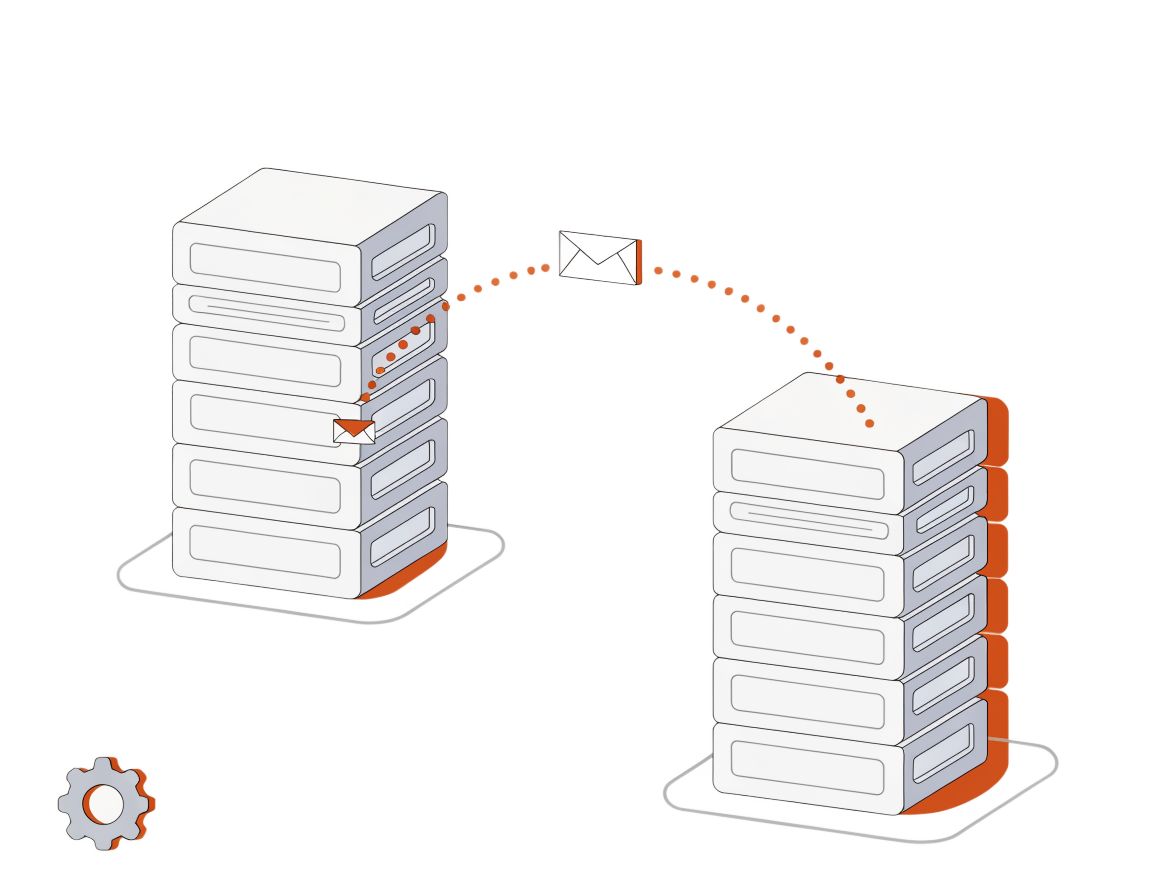
Host-to-host API — period-close settlement from your meter
Your meter (a Postgres counter, a ClickHouse rollup, whatever you run) closes the period and posts one total. The host-to-host API lets you create the invoice, hand it to the customer's wallet, and watch settlement across the networks they hold funds on. On confirmation, an HMAC-SHA256-signed webhook hits your endpoint and the period's receivable clears itself. The metering math never leaves your stack — Paymos only carries the payment from the customer's wallet onto your balance.
See details
Embedded checkout — build-credit top-ups inside your dashboard
For credit-burn models, embed the Paymos checkout in your dashboard's top-up flow. The developer chooses a top-up amount, completes the payment on your own pages, and the webhook credits their balance in your backend as soon as it fires. You meter builds against that balance in your own system, exactly as today.
See details
Payment Links — annual prepay and enterprise contracts
For annual prepay or an enterprise contract, the invoice and PO paperwork stay in your existing tools. When the AP team releases payment, generate a Payment Link from your CRM with your PO or contract reference attached as the order reference; they pay from a treasury wallet, and your receivable closes on an HMAC-SHA256 webhook the moment funds confirm — no PDF-emailing, no Slack chase.
See detailsDev-tools billing flows on stablecoins today
Which dev-tools models run cleanly on a wallet rail?
Four flows from real dev-tools setups — CI/CD, code review, build acceleration, deployment platforms.
CI/CD self-hosted runners — GitHub Actions, GitLab CI alternatives
A self-hosted runner product lives or dies on processing cost. A month of runner minutes rolls into one stablecoin invoice at period close, the payment confirms in seconds, and the money credits your Paymos balance — reclaimed margin that funds more runner capacity instead of the rail. A paid month can't be reversed, so it stays reclaimed.
Code review and linting — per-org team and enterprise tiers
Per-org pricing for code-review platforms sits in exactly the band where a fixed per-charge fee and a recurring-billing surcharge hurt most. A single stablecoin invoice per period carries no fixed floor and no recurring add-on — the team plan and the annual enterprise tier both settle clean, and the payment credits your Paymos balance final on confirmation.
Monorepo build acceleration — remote cache and satellite minutes
Build-acceleration products combine seat pricing with metered compute. Both legs roll into a single monthly stablecoin invoice — seats decremented from the prepay balance, compute metered to period close. No prepaid-credit treasury problem, because the balance lives as a counter in your DB. Finance sees a real recurring invoice line, not a topped-up reserve.
Deployment platforms — bandwidth, compute, and build minutes
Deployment platforms bill bandwidth, compute, and build minutes — three meters into one invoice. The customer settles the combined total in one payment that credits your Paymos balance on confirmation, with no per-meter fixed fee stacking up. A deployment startup competing on price gets that margin back to invest in faster cold-starts or cheaper bandwidth.
Developer tools on stablecoins
Frequently asked questions
How do per-minute CI invoices settle without paying a fee per metered event?
How does annual prepay with a PO and net-30 work?
How do multi-country teams pay without exchange-rate loss at consolidation?
How do prepaid build credits and their refunds work?
Which networks make sense for small team plans versus large enterprise prepay?
Can self-serve stay on cards while enterprise prepay moves to stablecoins?
Honest disqualifier
When NOT to use Paymos for developer tools
Four cases where staying on your current billing is the right call.
You sell monthly seats that renew off a saved card
There is no card on file here: a wallet payment happens only when the customer sends it, so nothing renews by itself. A $12/seat monthly plan that survives on silent renewal will leak churn if every cycle demands a manual payment. Route annual prepays, CI rollups, and credit top-ups through Paymos — payments customers already make deliberately — and let monthly seats keep their saved card.
Your accountant needs dollars in the bank, not in a wallet
Paymos settles in stablecoins on a balance you withdraw to your own wallet; there is no built-in cash-out to a bank and no fiat payout. If your close process requires dollars on the operating account within days, you'll run an exchange step yourself every cycle. Crypto-comfortable teams treat that as routine — but if nobody on staff wants to own it, the card processor's bank deposit is the simpler machine.
Your meter, plans, and invoices live inside a processor's billing objects
Unwinding a metered-billing integration that grew for two years isn't a weekend task — events, plan versions, and invoice rendering all assume the processor's schema. The pragmatic path is additive: new enterprise prepays and international teams settle through Paymos, while the legacy meter keeps running until you replatform for product reasons, not fee reasons.
All your teams are domestic and their cards never fail
A dev-tools vendor whose entire revenue is US or EU teams with reliable corporate cards won't feel most of what this rail fixes. The wins come from Latin-American seats that decline, exchange-rate loss on consolidated invoices, and per-event fee stacking. If your dashboards show none of that, there's nothing here to fix yet — revisit when the international share grows.
Related flows
Other SaaS & Digital Products sub-niches on Paymos
Pricing
1.0% per settled invoice. No recurring-billing premium on CI rollups
One line covers the two-seat team plan and the annual enterprise prepay, whatever the meter reads that month. 0.3% on request, from your first invoice: invoice volume and contract size are the numbers behind it. A metered invoice is a different number every month, which is exactly the shape a stacked fee schedule punishes: roughly 3% to the card, then the billing add-on's cut of that same invoice.
See pricing