Capture email-marketing renewals without a churn-tipping fee
Bill each renewal in USDC at a crypto checkout, from a wallet that never expires — a soft month never adds the fee that tips a customer into cancelling — and a paid invoice stays paid.
Where ESP gross margin leaks before deliverability can compensate
Why does a soft month trigger the cancellation, not the product?
Four ways card-rail billing leaks ESP margin and tips customers into churn.
ESP pricing tracks merchant revenue — the card rail doesn't care
A contact-tier plan isn't really a usage tier; it's a revenue-share proxy. The merchant on that tier earns many times the invoice from those contacts, so it feels comfortable in a good month. Card processing takes its percentage on it regardless. When the store has a bad month and revenue drops, the fixed charge becomes a churn trigger — and the fee stacked on that already-painful invoice is what tips the cancellation email.
Dedicated IPs, deliverability tooling, SMS bundles — add-ons render badly
Real ESP invoices aren't a single base line. They're a contact tier plus a dedicated IP plus SMS overage plus deliverability tooling. A card-billing add-on flow collapses all of that into one opaque line on the customer's statement — no clear breakdown, support tickets asking "what is this charge," and cancellations from finance teams who can't reconcile it. The line items exist in the API; they just don't surface where the customer reads.
A Black Friday transactional surge gets a surcharge on the spike
Transactional providers bill the bucket plus per-block overage. A store's order-confirmation surge over a peak weekend can run thousands of dollars of overage in days. A recurring-billing add-on takes its cut on the whole inflated invoice, so the rail charges the most on a single irregular bill — and that surcharge on the spike is pure friction in a month the customer was already bracing for.
LATAM and SEA customers eat an exchange-rate margin on every monthly invoice
E-commerce is enormous across Mexico, Brazil, Colombia, and Indonesia, and the ESPs follow. The marketing site quotes a dollar price, the invoice settles in local currency at an added exchange-rate margin layered on the card issuer's own cross-border surcharge, and the local decline rate runs well above US and EU baselines. The merchant signed up expecting one price and pays more every month — with a real chance of a hard decline.
How stablecoin settlement protects ESP margin
What changes when the plan settles as one stablecoin payment?
Four things that go right when ESP billing leaves the card rail.

A soft month never adds the fee that tips the cancellation
The customer pays the same dollar-denominated tier in stablecoins — no fixed per-charge fee, no recurring-billing surcharge stacked on top. A soft month stays exactly the bucket the customer expected, with nothing extra added to the invoice that's already under pressure. The payment credits your Paymos balance on confirmation, and a paid invoice stays paid — that margin is either yours to keep or yours to pass back to stay competitive.

Composite pricing settles as one clean payment
A contact base plus a dedicated IP plus an SMS bundle plus deliverability tooling is computed by your billing engine and settles as one payment against one invoice. The line-by-line breakdown stays in the quote or invoice your own system issues, and the settled amount matches it exactly — your order reference travels with the payment and comes back in the webhook. No support tickets asking what the charge is, no finance-side cancellations from a total that doesn't reconcile against the contract.

Surge months settle at the same rate — no premium on the spike
Transactional overage, SMS spikes, and send-volume bumps all settle at the same rate as the base month — no premium baked into the rail on the spike. The ESP doesn't pass through extra fees, the merchant pays exactly the bucket plus overage they expected, and the relationship survives the irregular invoice that historically triggered cancellations the following month.

A LATAM merchant pays in stablecoins to your Paymos balance — no exchange-rate margin
A merchant in Brazil or Mexico pays a dollar stablecoin from the same wallet they use for inventory, and it credits your Paymos balance at parity. The price quoted in your marketing matches the price the merchant pays — no intermediate local currency, no cross-border decline. The exchange-rate margin a card processor would take goes back into the merchant's marketing budget, and no processor can freeze you for serving the region.
How ESPs wire Paymos in
Which integration fits how you bill sends and contacts?
Three ways to settle contact-tier and send-volume billing in stablecoins.

Host-to-host API — tier, overage, and add-ons billed as one invoice
Your engine computes the contact tier, overage, and add-ons each period. The host-to-host API lets you post the composite total as one invoice, hand it to the customer's wallet, and watch settlement. Once the payment confirms, an HMAC-SHA256-signed webhook marks the invoice paid and the receivable drops off your aging report. Your tier logic stays where it is; Paymos handles the settlement leg.
See details
Hosted Checkout — self-serve contact tiers
For self-serve contact tiers, create a Paymos invoice for the period total and redirect the customer to a hosted page, where they pay from their wallet and return. No payment screen to build, and the same flow handles a small monthly plan and a large enterprise tier identically — including the surge months.
See details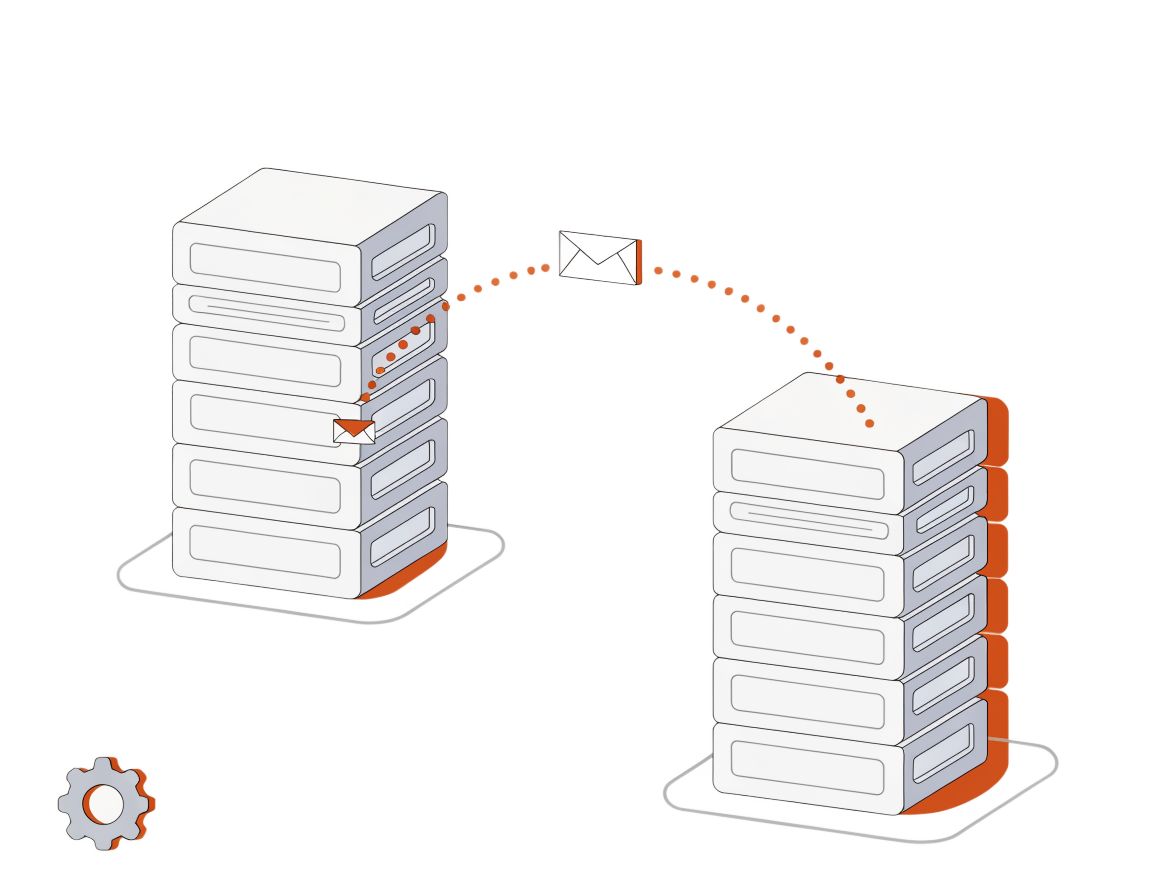
Payment Links — the payment leg of enterprise ESP contracts
For enterprise ESP contracts, the quote with the contact tier and add-on lines keeps coming from your CRM — Paymos doesn't replace that document. When the customer releases payment, generate a Payment Link for the contract total with your PO or invoice number as the order reference. Your receivable closes on confirmation, and the reference comes back in the webhook so finance can reconcile the transfer against the contract.
See detailsESP billing flows on stablecoins today
Which email models run cleanly on a wallet rail?
Four flows from real ESP setups — contact tiers, transactional, SMS, deliverability tools.
ESP contact and send-volume tiers
The standard contact-tier plans all settle in stablecoins against the same dollar-denominated price. A newsletter publisher and an e-commerce store pay through the same flow. Tier upgrades fire when the contact count crosses the threshold, prorated against the period — Paymos handles the settlement, your tier logic stays where it is, and the payment credits your Paymos balance final.
Transactional email — bucket-plus-overage metering
Bucket-plus-overage billing settles as a single stablecoin invoice at period close. A store's order-confirmation surge over a peak weekend goes through the same rail at the same rate as the base subscription — no premium on the overage leg, where the unit economics live. The payment confirms in seconds and credits your Paymos balance, final on confirmation.
SMS and MMS marketing — per-subscriber plus per-message
SMS-marketing platforms charge per-subscriber plus per-message, and prefer to invoice as a single composite charge. Paymos settles the composite as one amount, and your invoice itemises each component. International SMS pricing actually works on stablecoins, because the merchant abroad isn't paying a cross-border markup on top of an already margin-thin per-message product.
Deliverability tools — flat-rate or sample-based
Deliverability-monitoring tools — seedlist testing, inbox-placement scoring, DMARC reporting — price as a flat monthly fee with usage-based sample overage. The rate matters more here because gross margin on the underlying product is already thin. The customer settles one stablecoin invoice that credits your Paymos balance, final the moment it clears.
Email marketing on stablecoins
Frequently asked questions
How does a composite invoice with add-ons render on-chain?
How do surge months settle without a premium on the spike?
How does an international merchant pay without exchange-rate margin?
Which networks and stablecoins should we offer for small versus enterprise plans?
Can we keep cards for self-serve and use stablecoins only for some customers?
How do refunds or credits work for a billing dispute or service issue?
Honest disqualifier
When NOT to use Paymos for email marketing
Four sender profiles that should stay on their current rail.
Your contact tiers renew monthly on autopilot
An ESP plan works because the merchant forgets it exists — the saved card renews and the sends keep flowing. Paymos can't pull a renewal from a wallet; the merchant must send each payment, and a missed one means paused campaigns. Keep autopay on cards for the set-and-forget tiers, and use the wallet rail where merchants already pay attention: overage invoices, annual deals, and the international book.
Enterprise senders whose AP runs on wire, period
Large senders with formal AP processes sometimes have the payment instrument written into the vendor contract — wire or ACH, nothing else. Renegotiating that clause over a billing rail isn't worth the relationship capital. Invoice those accounts the way the contract says, and reserve Paymos for the merchants whose problem is an exchange-rate margin and declined cards, not paperwork.
VAT across your markets is handled by your processor today
If a merchant-of-record or tax add-on currently registers you, calculates the right rate per buyer country, and files the returns, understand that Paymos does none of that. It will carry whatever tax lines you compute, nothing more. Moving the payment leg without re-homing the tax function leaves filings orphaned — solve the tax question first.
A $19 plan can't afford a wallet tutorial
A small domestic merchant on a $19/mo plan with a working card has no reason to learn a wallet, and pushing one at checkout costs signups. Show the stablecoin option to the merchants who'll recognise it — cross-border, crypto-adjacent, or freshly card-declined — and leave the default checkout alone. The rail should absorb friction, never create it.
Related flows
Other SaaS & Digital Products sub-niches on Paymos
Pricing
1.0% per settled invoice. No surge-month premium, no add-on fee stack
Nothing here scales with your peak: the same share of a small-business plan and of an enterprise contract, whatever the month looks like. Talk to us about 0.3% from your first billing month — how many invoices settle and what they average decide it. Send volume spikes in the campaign months, and a billing add-on charging a percentage of the invoice spikes with it, over and above the roughly 3% the card already takes.
See pricing