Bill agency retainers without the per-seat tax
Send a retainer invoice and the client pays it at a crypto checkout, straight from their wallet — the cash is yours the moment it clears, and delivered work can't be charged back months later.
Where agency revenue leaks on card rails
Why is a delivered retainer still at risk weeks after the work shipped?
Four ways card and invoicing rails put agency cash at risk — disputes, frozen reserves, the wait, and the fee on top.
Delivered creative can still be charged back
A rebrand, a positioning deck, a redesign — no receipt proves the client liked it. That keeps the charge disputable for up to 120 days after it is paid, on work that shipped and an associate whose salary already went out. Arguing taste in front of a card network rarely ends your way, and every case moves the ratio that sets your surcharge and your reserve.
New-account reserves hold your cash
Open a new merchant account and the acquirer often holds back a reserve — commonly a slice of every sale parked for a week or more against future disputes — with the exact percentage set by underwriting and not posted up front. You bill the work and wait on cash you've already earned.
Net-30 breaks payroll on a small shop
The client routes your invoice through procurement, then AP pays on Net-30 or Net-45. You've shipped the campaign and paid salaries on the 1st, but the cash lands six weeks later. On a lean partnership, that gap forces you to carry trade credit on every engagement.
Card processing takes ~3% of every retainer
On a typical 2.9% + $0.30 card processor, a $15,000 retainer costs about $435 to accept — roughly 3% before any cross-currency markup, and invoicing add-ons push it higher. Across a year of retainers it's a five-figure line you don't control.
How stablecoin settlement removes the risk
What changes when the retainer settles in stablecoins?
Four things that go right the moment client payments stop running through card rails.

A paid invoice is final — no dispute window
Once a stablecoin invoice confirms, nothing can reverse it. Once the client pays, the invoice is settled for good — no 120-day clock, no "that's not the rebrand we wanted" reversal months after delivery. Refunds stay in your hands, on your own contract terms, paid from your Paymos balance when you decide.

Your money is on your balance, not in a reserve
The client pays and the retainer credits your Paymos balance within minutes — no 2–7 day payout cycle, nothing held back in a new-account reserve. For a shop paying salaries on the 1st, the cash arrives the moment the invoice clears, exactly when working capital is tightest. Taking it out costs nothing in Paymos commission — the whole bill on the way to your own wallet is a network fee, and less of it than the transfer costs.

Overseas clients pay in the same dollar stablecoin you billed
Bill the retainer in a dollar stablecoin and the client abroad sends that same stablecoin — no 1–2% conversion cut, no wire chain, no bank-set rate skimming the invoice. You move it into local currency on your own treasury schedule, only if and when you need to.

Roughly $150 to accept, not $435
That same $15,000 retainer costs about $150 to accept on Paymos instead of about $435 — and you keep the difference on every invoice, with no per-transaction minimum and no separate currency-conversion charge.
How agencies wire Paymos in
Which integration fits how you bill?
Three ways to wire stablecoin payments into your billing flow.
Payment Links — invoices from your CRM
Generate a payment link per deposit, milestone, or monthly retainer from the Paymos dashboard or API, and drop it into the HubSpot, Pipedrive, or Salesforce thread where the account manager already works. The client opens it in any browser, pays from their wallet, and your receivable closes on confirmation. The best fit for shops under ~30 people with no AR team.
See details
Hosted Checkout — fixed-scope project deposits
For a brand sprint, a website rebuild kickoff, or a research engagement, send the client to a Paymos-hosted page in your logo and colours. They click from the proposal, pay the deposit from their wallet, and it lands before kickoff — no payment-delay-to-start risk and no payment screen to build.
See details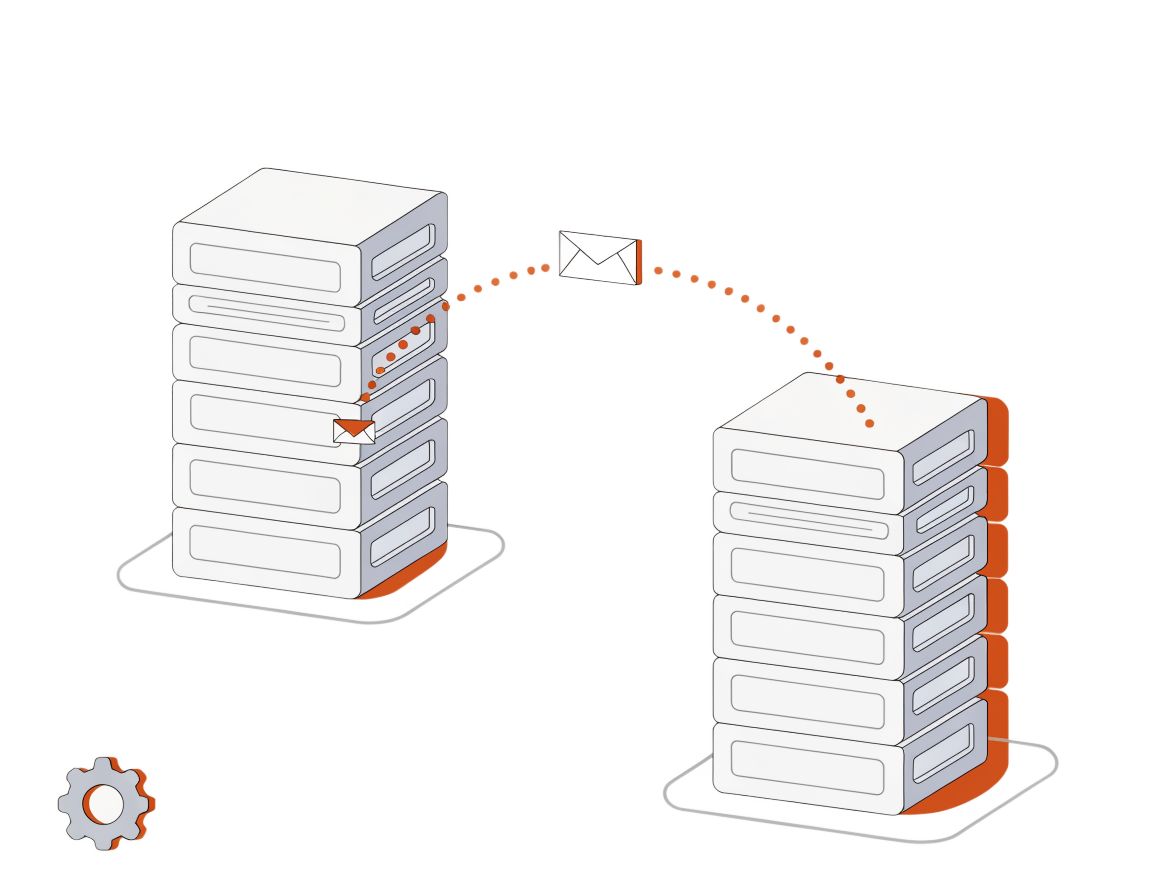
Server-side API — custom PMS and project tooling
Running a custom PMS, Productive, or in-house tooling? The server-side API gives you create-invoice, watch-confirmations, and signal-paid steps over signed (HMAC-SHA256) webhooks, with invoices tied to project codes. Time-tracking → invoice → settlement → revenue recognition becomes one pipeline you own.
See detailsAgency billing flows on stablecoins today
What billing models run cleanly on a wallet?
Four flows from real agency setups — project deposit, monthly retainer, milestone draw, and quarterly renewal.
Brand-identity deposit — Payment Link
The strategist sends a brand-identity proposal with a Paymos payment link attached in the CRM. The client clicks, pays from their wallet, and the deposit lands in minutes — no card decline at month-end, no Net-30 waiting room. Kickoff happens this week, not after the client's monthly AP batch.
Monthly retainer — recurring invoice
A monthly retainer billed on the 1st: your system issues the renewal invoice, the client pays it from their wallet, and settlement lands the same hour. No card on file to expire mid-engagement, no failed renewal quietly pausing the work, no failed-payment cycle to chase.
Website rebuild — milestone draws
A rebuild split across discovery, design, and launch: three payment links sent at each gate, each settling independently to your balance. No platform-held escrow waiting on acceptance, and no dispute exposure on the launch draw if the client has second thoughts two months later.
Quarterly growth retainer — renewal invoice
A quarterly growth retainer runs as a recurring invoice: each quarter your system issues the renewal and the client pays it from their wallet. Either side can stop by not issuing or not paying the next one — no card-on-file surcharge, no surprise auto-charge on a six-figure annual relationship.
Agency billing on stablecoins
Frequently asked questions
Does the client need to be "crypto-native" to pay this way?
How does Paymos fit with QuickBooks, Xero, or NetSuite?
What does the client's payment experience look like?
How do refunds work without chargebacks?
What about media spend pass-through and agency-of-record models?
Which networks do agency clients pay on?
Honest disqualifier
When NOT to use Paymos for agency billing
Four cases where ACH, a card processor, or Bill.com is still the right call.
Your clients pay only through Coupa or Ariba procurement
Enterprise AP wants a vendor record, a PO, and an approval chain before anything moves — and the payment that finally fires is an ACH or wire out of their system. Paymos doesn't plug into those AP suites, so that segment stays on bank rails. Bill the crypto-comfortable mid-market side of your book through the wallet instead.
Bill.com's 1099 automation does your contractor reporting
Paymos doesn't issue 1099s or any IRS forms — it settles invoices and leaves reporting to you. If Bill.com currently auto-files for the sub-contractor network behind your delivery, keep it on that leg or move the work to your CPA before shifting the client-payment side to stablecoins.
You borrow against processing volume to fund growth
Products like Stripe Capital advance cash against the card revenue they can observe. Paymos doesn't lend and doesn't underwrite your retainer book — it only settles what clients pay. If advances against recurring revenue fund your hires or media commitments, keep enough volume on the processor that backs them.
Finance must close every month in fiat on a bank account
Settlement is a stablecoin to your Paymos balance — there is no bank payout inside Paymos. Turning USDC into dollars or euros is a cash-out you run yourself, through your own exchange. If your controller can't or won't own that step, keep agency billing on ACH until the treasury process exists.
Related flows
Other Services & Hosting sub-niches on Paymos
Pricing
1.0% per settled invoice. No per-seat license, no exchange-rate margin
A $5k kickoff deposit and a $50k milestone draw are billed at one percentage, and a draw the client never sends is billed at nothing. Payroll on the first leaves that balance without a second cut — nothing is charged as a percentage, and a subsidised network fee is the only line. Ask from your first retainer for 0.3% — billing volume and what a retainer is worth decide it. Cards sit around 3% all-in before a single dispute, and the invoicing suite adds its per-seat line whether or not anyone bills that month.
See pricing