Recurring hosting income without the fixed-fee drag
Bill recurring hosting renewals through a native WHMCS payment gateway plugin, paid from the customer's wallet — no card to expire, no failed renewal quietly churning a paying reseller every billing cycle.

Where small-ticket hosting margin dies
Why does a $4.95 plan cost so much more than 3% to bill?
Four ways card rails hurt a low-priced, recurring hosting business.
A fixed per-charge fee swamps a $4.95 plan
A $4.95 shared-hosting plan costs about $0.44 to accept on a 2.9% + $0.30 processor — roughly 9%, and the flat $0.30 is 6% of the plan on its own, before the percentage. On entry hosting, that fixed floor quietly caps how cheap a plan you can profitably sell.
The card on file expires and fails the renewal
Hosting bills monthly against a card the customer saved years ago and hasn't looked at since. A reissue changes the number, the expiry date passes, and the renewal fails for reasons that have nothing to do with your uptime. Then the suspension notice goes out — and on a reseller account it isn't one site that goes dark, it's every client sitting underneath it. You lose the recurring revenue, they lose customers, and nobody chose any of it.
International resellers can't always pay with a card
A lot of hosting demand — especially the reseller channel — comes from regions where a card won't clear with a foreign merchant: geo-blocks, low cross-border approval, hard 3DS. The reseller wants to pay and can't, so you lose recurring revenue to a payment rail that can't reach them.
A cross-currency markup taxes every foreign card
On the foreign cards that do go through, you also eat a cross-currency markup — usually another 1–2% layered onto the base fee, at whatever rate the processor chooses. On a thin-margin hosting plan that markup is the difference between profit and break-even, before you count the failed-renewal churn.
How a flat percentage fits recurring hosting
What changes when the renewal settles in stablecoins?
Four things that go right the moment hosting renewals stop running through fixed-fee card rails.

No fixed-fee floor — a $4.95 plan keeps its margin
A stablecoin payment has no fixed per-charge leg, so the cost scales with the plan instead of swamping it. A $4.95 plan keeps its margin instead of giving up 9% to a flat fee. The cheaper the plan, the bigger the difference — the opposite of how cards treat low-priced entry tiers.

Recurring renewals from a wallet — nothing to expire
The customer pays each renewal from a wallet they already hold, invoiced through the native WHMCS plugin on the billing cycle you already run. Nothing is stored between cycles to expire, so a paying customer never churns over a number their bank changed. Renewal becomes a decision the customer makes rather than a background charge that silently stops working.

International resellers pay direct — you hold the rate
A reseller is not one customer — they carry a book of their own clients on your infrastructure, so a payment that fails takes all of them down with it. Wallet payment removes the places it used to fail: no issuer ruling on a foreign merchant, no 3DS challenge arriving in a channel the reseller cannot reach. You are paid the dollar stablecoin you invoiced, at the price you set, and whether any of it becomes local currency is a decision you make later.

Roughly $0.05 to accept on a $4.95 plan, not $0.44
That same $4.95 plan costs about $0.05 to accept on Paymos instead of about $0.44 — no fixed-fee floor, no cross-currency cut. Across a high-volume hosting book the recovered margin compounds. Nor does that margin get clipped when you withdraw it — the withdrawal carries no commission of ours, and the network fee behind it is subsidised.
How hosts wire Paymos into the renewal cycle
Which integration fits how you bill hosting?
Three routes — from WHMCS to a custom panel — for taking hosting renewals in stablecoins.
WHMCS plugin — recurring hosting billing
The native Paymos plugin adds a stablecoin option to your existing WHMCS renewal cycle. The customer pays the recurring invoice from their wallet, the plugin marks it paid, and your provisioning and suspension logic runs unchanged. The fastest path for the many hosts already living in WHMCS — no rebuild of your billing.
See details
Hosted Checkout — signup and plan upgrades
For a new signup or a plan upgrade, send the customer to a Paymos-hosted page. They pay from their wallet and return with the plan active. No card form on your domain and no 3DS to fight on international customers who'd otherwise decline at checkout.
See details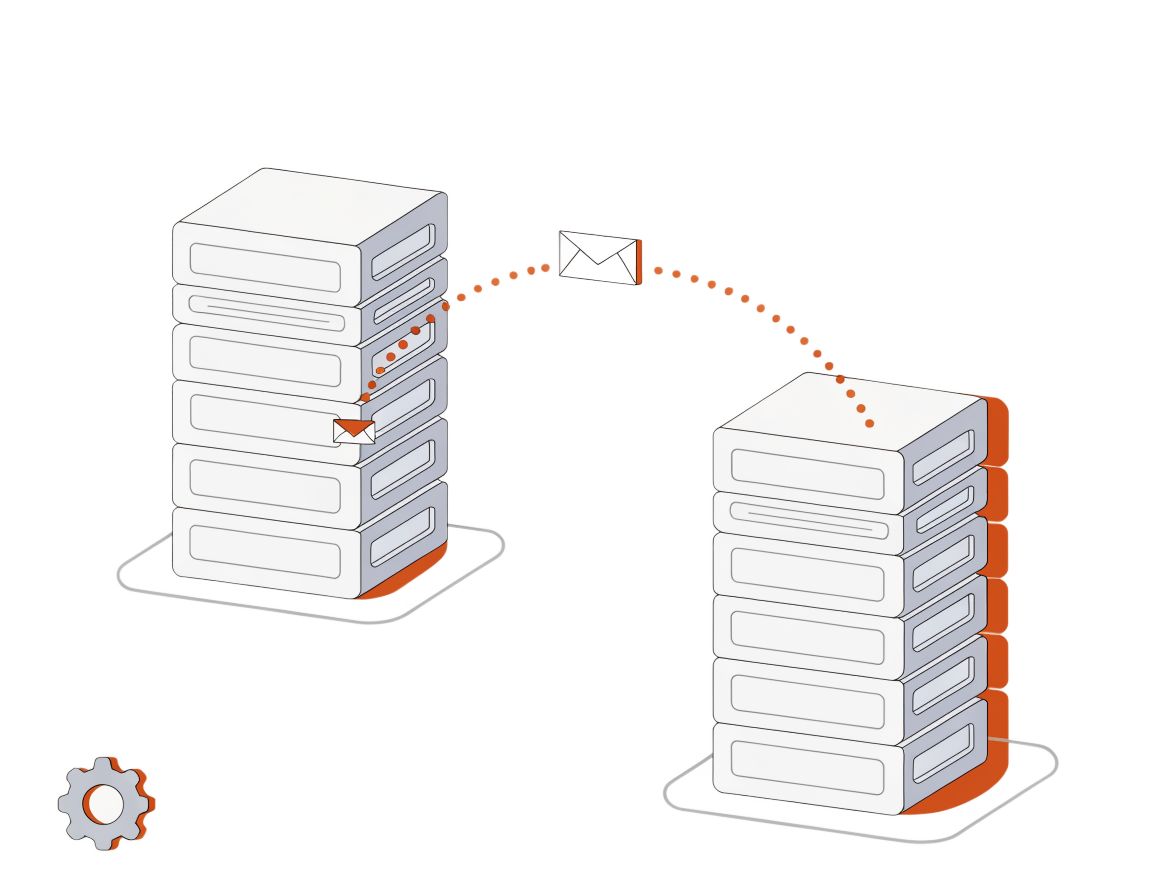
Server-side API — custom panel and provisioning
Running a custom panel instead of WHMCS? The server-side API hands your panel the same three steps — invoice out, confirmations watched, paid signal in — over webhooks signed with HMAC-SHA256. Provisioning and suspension stay with your panel; Paymos settles the renewal and tells you it's paid.
See detailsHosting billing flows on stablecoins today
What hosting patterns run cleanly on a wallet?
Four flows from real hosting setups — shared plan renewal, annual prepay, reseller channel, and a plan upgrade.
Shared plan renewal — recurring invoice via WHMCS
A monthly shared-hosting plan billed through WHMCS: each cycle the invoice goes out automatically and the customer clears it from their wallet. No fixed-fee floor eating a cheap plan, no dead card failing the renewal — the plugin marks it paid and hosting carries on without an involuntary-churn suspension.
Annual prepay — Hosted Checkout
A customer prepays a year to lock pricing and skip monthly renewals. They pay once from their wallet via Hosted Checkout and the plan extends for the full term. Nothing to expire across the year and no renewal that can lapse — one payment, twelve months of hosting secured.
Reseller channel — direct wallet payment
A reseller in a region where cards won't clear with your merchant account pays from a wallet instead. The payment confirms in seconds and the reseller account stays funded — recurring revenue you'd otherwise lose to a decline, with no manual workaround on either side.
Plan upgrade — Payment Link or checkout
A customer upgrades to a bigger plan mid-term: a payment link or checkout collects the difference, they pay from a wallet, and the upgrade takes effect the moment it confirms. No stored card to re-authorise, and no flat per-charge fee swallowing the few dollars of a mid-term upgrade.
Web hosting on stablecoins
Frequently asked questions
Is provisioning and suspension something the Paymos WHMCS plugin takes over?
Renewals are recurring — does the customer pay manually each cycle?
When is a renewal payment final enough to act on — and to suspend on if it never arrives?
How do refunds work for a cancelled or downgraded plan?
Which networks and stablecoins should I offer for cheap plans and resellers?
Can I keep cards for domestic customers and use Paymos for the rest?
Honest disqualifier
When NOT to use Paymos for hosting billing
Four cases where cards are still the right call.
You sell renewals as fully hands-off auto-charge
A wallet cannot be pulled from — every renewal is a payment the customer approves, not a charge against a stored card. That kills involuntary churn but adds one confirmation per cycle. If set-and-forget renewal is the promise your plans are sold on, keep card-on-file as the default and route declines and international resellers to the wallet option.
Your customer base is entirely domestic and cards already clear
When approvals run high and the fixed fee is tolerable across your plan mix, the strengths of this rail — cross-border reach, no conversion cut, no expired-card churn — barely engage. A second payment option still costs support and reconciliation attention. Turn it on when reseller or international demand shows up, not before.
You lean on your processor's tax-automation bundle
Some card processors register, calculate, and remit sales tax or VAT across dozens of jurisdictions. Paymos doesn't compute or file taxes — your accountant gets a ledger of settled invoices and works from there. If finance depends on that automation, keep the card stack for the tax-handled segment and book stablecoin renewals as a separate line.
Your treasury can't hold or convert stablecoins yet
Settlement lands as stablecoins to your Paymos balance; there is no built-in conversion to a bank account. If accounting runs strictly on fiat and you have no exchange account to cash out through, the balance sits waiting on a process you don't have. Set up the treasury leg first, then open the rail.
Related flows
Other Services & Hosting sub-niches on Paymos
Pricing
1.0% per settled invoice. No fixed fee, no rate markup
Percentage-only pricing removes the floor — the $4.95 shared plan and the annual VPS prepay give up the same share, and a renewal that never settles costs nothing. Taking the balance out carries no commission either, only a subsidised network fee for that route. Ask from your first renewal for 0.3% — how many plans renew and what they average decide it. The entry tier is where card economics break: accepting $4.95 costs close to 9% once the flat component lands, which quietly decides the cheapest plan you can afford to list.
See pricing