Keep the swipe fee your acquirer takes
Ring up retail sales in USDT and USDC with the payment gateway plugin for WooCommerce and OpenCart, or a widget on a custom or Shopify storefront. The cash credits your Paymos balance when the order clears, a paid order can’t be reversed, and there’s no per-swipe fee skimming every sale.
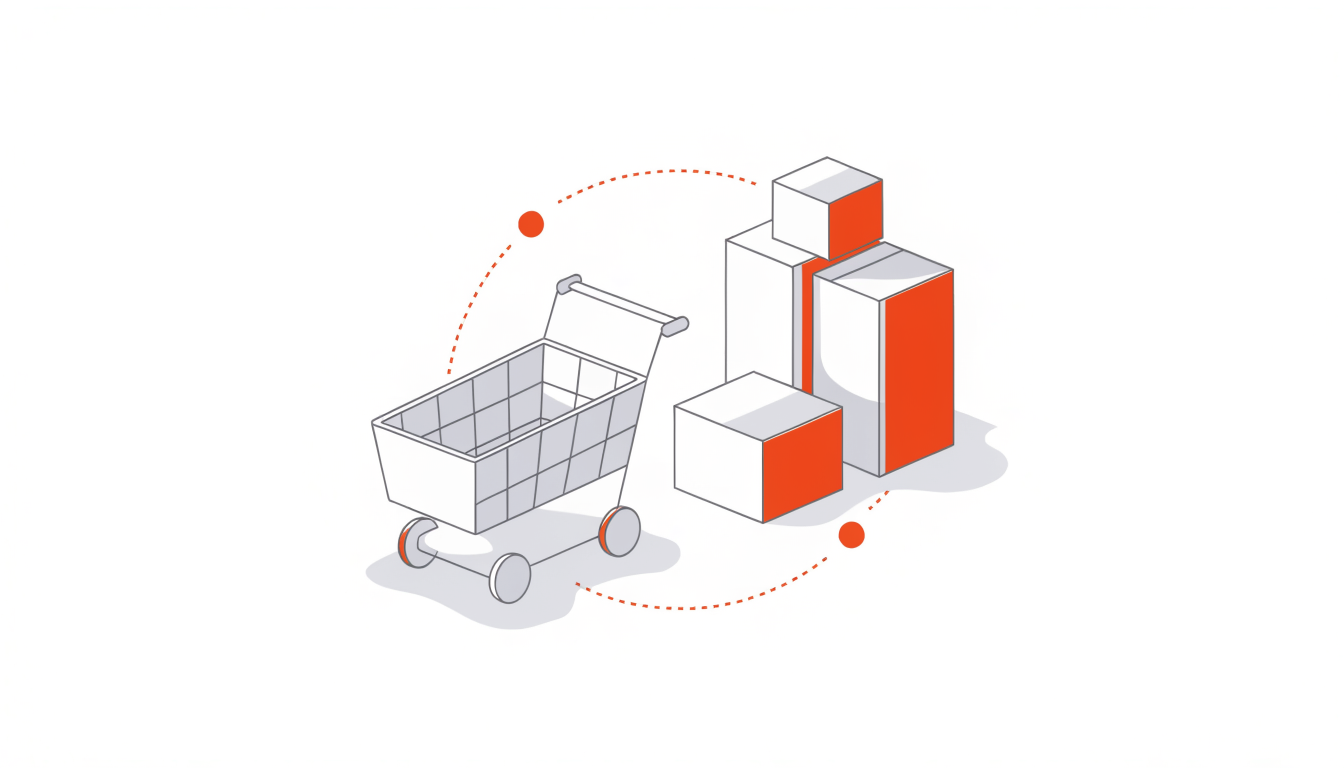
Where retail margin leaks on card rails
What does card processing cost a retail store?
Four ways card rails quietly tax a physical-goods store: the swipe fee, late-return disputes, a currency-conversion markup, and a holiday reserve.
The swipe fee takes a slice of every order
A card rate plus a fixed per-transaction fee runs close to 3% all-in on a typical order, and the fixed part bites hardest on small baskets. Sell on a hosted platform and there’s often a surcharge on top unless you route through its own processor. It’s a steady cut on every sale — and the line you control least.
A late return becomes a dispute
A buyer files weeks later, claiming the item never arrived. Without signed delivery proof the card network tends to side with the cardholder, so you’re out the goods, the payment, and a fixed dispute fee. That window stays open long after the parcel left your counter.
Cross-border orders lose margin to a currency markup
A buyer abroad pays in their own currency, and the card network picks the exchange rate — then pads it with a markup over the real one. Across a run of international orders that padded rate walks off with your margin one sale at a time, and the true rate you paid never shows on a statement.
A holiday reserve locks up your peak cash
Heading into the holiday quarter, an acquirer can hold back a reserve on a retail account to cover the January return wave, parking a slice of every sale for weeks. You post your biggest numbers exactly when part of that cash sits locked out of reach until well into the new year.
What the till keeps with the acquirer out of it
What changes when a retail order settles in stablecoins?
Four things that go right the moment store payments stop running through card rails.

The cash is yours when the order clears, in full
The buyer pays and the order credits your Paymos balance on confirmation — no multi-day payout cycle, nothing shaved off by a per-transaction surcharge or a platform markup. Small baskets clear in seconds; the working capital is there to restock the minute a sale happens.

A paid order can't be reversed
A stablecoin payment is final once it confirms on-chain. There’s no dispute window to reopen weeks later, and a kept order can never flip into a chargeback. When you do refund, it’s an outbound transfer you send yourself — your amount, your policy, your timing.

No currency markup — the rate gain stays with you
Quote in a dollar stablecoin and a buyer abroad pays that same stablecoin — no conversion markup, no processor-set rate. Your unit economics read the same in every country, and any move into local money happens on your own schedule, at a rate you choose.

No reserve, in peak season or any other
Paymos holds back no reserve, in December or any other month. Your holiday-quarter takings aren’t parked against a return wave that may never come. Every sale settles in full when it clears, so the working capital stays yours exactly when the floor is busiest.
How retail stores wire Paymos in
Which integration fits a retail storefront?
Three ways to add stablecoin payments — a plugin, a widget, or a hosted page.
WooCommerce plugin — no code
The plugin drops a stablecoin method into the WooCommerce checkout beside your card and PayPal options, and works with any theme that respects the standard checkout. Open the current Paymos project, click Connect Paymos, approve the store URL and project, then choose the tokens you accept; Paymos securely provisions Sandbox and Live credentials plus the webhook.
See details
OpenCart plugin — same two-minute install
OpenCart shops run the same flow: native checkout integration, order-status sync over a signed webhook, and key provisioning from the dashboard. The stablecoin option shows up in your existing checkout with no rebuild.
See details
Widget or hosted page — custom and Shopify storefronts
No Shopify plugin yet, so a Shopify store — or any custom storefront — uses the drop-in widget or the hosted page instead. Embed the widget on your checkout in two lines of HTML, or redirect to a Paymos-hosted page; both carry your logo, colours, and theme.
See detailsRetail flows on stablecoins today
Which retail models run cleanly on a wallet?
Four flows from real retail setups — single-product, full catalogue, pre-order, and online-plus-counter.
Single-product direct brand
One product, one landing page, one checkout. Drop the widget onto the page and the payment credits your Paymos balance on confirmation — a clean swap for a card rate plus a fixed fee, with no payout day to wait on.
Full catalogue (many SKUs)
A full catalogue with size and colour variants. Your platform computes the cart and creates one invoice for the total; Paymos settles that amount against your own order ID and fires a signed webhook the moment it clears, so fulfilment kicks off on the order you already hold.
Pre-order with a deposit
Collect a deposit on a product shipping weeks out. A card rail can read that gap as a fraud signal and sit on the funds; here the deposit is in your Paymos balance on confirmation, so the working capital is real, and you take the balance as a second invoice on ship date.
Online store plus counter till
Your web checkout and a browser-based till at the counter pay into the same wallet. The Saturday market stand, the trade-show pop-up, and the online catalogue all land in one Paymos balance — no separate point-of-sale ledger to reconcile by hand.
Physical retail on stablecoins
Frequently asked questions
How do returns and RMAs work without chargeback liability?
Does Paymos integrate with my Shopify store?
What about sales tax and VAT?
Can Paymos coexist with my in-store card terminal?
What about high-value orders?
Which stablecoins and networks do retail buyers use?
Honest disqualifier
When NOT to use Paymos for retail
Paymos is an additive stablecoin rail, not a card-terminal replacement.
All your revenue crosses the counter
Walk-in shoppers tap a card or hand over cash; nobody installs a wallet in the queue. Until you have an online channel where stablecoin-holding buyers find you, the rail has nothing to bite on — turn it on alongside the web store, not before it.
You restock shelves with same-day bank payments
If suppliers, rent, and wages all clear from a bank account, note that settlement arrives as stablecoins to your Paymos balance — Paymos doesn’t convert it to fiat or wire it onward. Either part of your cost base takes stablecoins, or you run the exchange leg yourself.
Repeat sales ride on stored-card replenishment
Auto-reorder programs — the coffee that ships monthly against a saved card — depend on pulling a stored credential. A wallet can’t be charged unless the customer acts each time, so replenishment stays on cards; point Paymos at one-off baskets and the crypto-holding segment instead.
Your baskets are small convenience purchases
On a low-value basket the fee saving is a few cents, while the wallet step risks the whole sale for a card-native shopper. Finality and the fee gap compound on bigger orders and on buyers who already hold stablecoins — that’s the volume worth routing here.
Related flows
Other Commerce & Retail sub-niches on Paymos
Pricing
1.0% per settled order. No per-order surcharge, no monthly minimum
The same 1.0% on a small basket and a large one — no per-transaction add-on, no monthly minimum, and you cover only a subsidised network fee on payout. Ask from your first till receipt for 0.3% — receipt flow and turnover decide it. Card checkout runs near 3% all-in once a dispute fee and a peak-season reserve land on top, and that gap widens with every higher-value order.
See pricing