Renew the subscription box without a card on file
Recurring crypto payments start with the subscriber signing a renewal invoice from their own wallet, each cycle. Nothing is auto-charged, so there is no card to lapse, decline, or get flagged — the box renews because the customer chose to, not because a stored card happened to clear.
Where subscription revenue leaks on card rails
Why does card-based recurring quietly lose you subscribers?
The card on file is the single point of failure — it expires, it declines abroad, and the billing app you bolt on to retry it takes its own cut.
Every reissued card is a renewal you have to win back
Cards get reissued on lost, stolen, or expired plastic, and each reissue breaks a stored card mid-subscription. The renewal then declines for a reason the customer never sees, so a box they still want stops shipping. Card-account-updater services patch some of this, charge per lookup, and never catch all of it.
The billing app and the processor both take a cut
Card recurring usually means two bills, not one. A recurring-billing layer charges a percentage of subscription volume on top of the card processor underneath it — so every renewal is taxed twice before it reaches your margin.
Failed payments, not cancellations, drive much of the churn
A meaningful slice of subscription churn is involuntary — a renewal that failed on an expired or declined card, not a customer who chose to leave. The dunning-and-retry machinery that recovers some of it is itself work to build, monitor, and pay for, and it never recovers all of it.
Cross-border renewals bleed margin and stall on bank holds
An overseas subscriber is charged a foreign-transaction fee and an exchange-rate markup every cycle, and a card issuer can flag a recurring foreign charge as fraud and block it outright. The friction repeats month after month on exactly the subscribers hardest to replace.
What a wallet-signed renewal changes
What changes when the subscriber signs each renewal?
Remove the stored card and the failure modes that feed off it — the expiry, the double cut, the retry logic, the year-late dispute — go with it.

No stored card, so nothing to expire or decline
Paymos holds no buyer credentials and cannot pull a wallet. Each cycle the subscriber either signs the next invoice or doesn't — a renewal or a clean stop, both deliberate. The whole category of failed-card churn disappears because there is no card sitting on file to fail.

One fee on the paid invoice, nothing stacked underneath
A renewal is a single invoice the subscriber pays in USDT or USDC. It carries 1.0% when it settles — no recurring-billing layer, no per-subscriber charge, and no fee at all on a cycle nobody paid. The two-bill stack collapses to one.

A skipped month is an unpaid invoice, nothing more
If a subscriber lets a cycle's invoice expire, no box ships and nothing renews until they pay again. You don't build a pause state or a card-retry ladder — the invoice expiry already is the pause. Skip-a-month falls out of the model instead of being engineered into it.

Annual prepay closes in one payment, with no late dispute
For an annual subscriber, one invoice at sign-up covers the term and you fulfil month by month. There is no renewal event later and no chargeback window opening most of a year after the sale — crypto is final once it confirms. Priced in a dollar stablecoin, the figure holds for the whole year.
How box brands run renewals
How do you wire renewal invoicing in?
The renewal schedule lives in your system, not in Paymos. Three ways to turn each billing day into an invoice — a billing plugin, your own backend, or the dashboard.
WHMCS plugin — when your billing already lives there
If you run recurring billing through WHMCS, the plugin adds Paymos as a gateway: WHMCS raises the renewal invoice on its own schedule and the subscriber pays it in USDT or USDC. Open the current Paymos project, click Connect Paymos, and approve the WHMCS URL and project; Paymos securely provisions Sandbox and Live credentials plus the webhook.
See details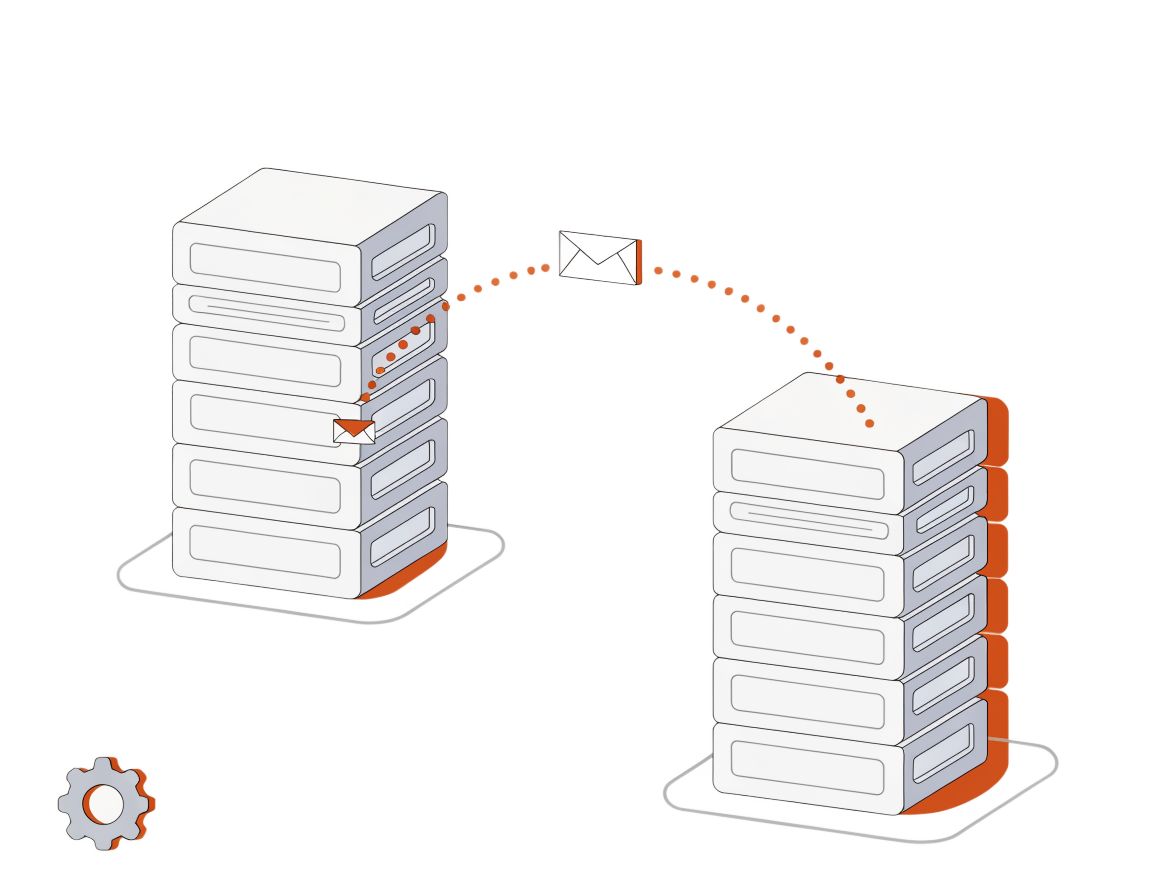
REST API — headless and custom storefronts
A scheduled job in your backend creates a Paymos invoice on each subscriber's billing day, keyed to your own order ID, and emails the pay link. The HMAC-SHA256 webhook fires the moment payment confirms, so your fulfilment system releases the next box while the subscriber is still on the success page.
See details
Payment Links — before you write any code
For a pilot, create each renewal invoice in the dashboard and send the hosted link by email. This tests the renewal flow with real subscribers before your billing system begins creating invoices through the API.
See detailsBox billing flows that fit a wallet
Which box flows run cleanly without a stored card?
Monthly renewal, a skipped month, annual prepay, and a gift — the four flows every box brand needs, each handled by an invoice rather than a recurring charge.
Monthly renewal
Billing day comes, your system raises the invoice, the subscriber signs it from their wallet within the window, the webhook confirms, and the box ships. No decline-and-retry loop runs in the background, so the only reason a renewal doesn't happen is a subscriber who decided not to.
Skip a month
A subscriber travelling or short on space lets that cycle's invoice expire. No box ships, nothing renews, and the next cycle picks up when they pay again. You ship nothing extra and write no pause logic — the unpaid invoice does the work.
Annual prepay at a discount
Offer a cheaper annual option at sign-up. The subscriber pays one invoice and your fulfilment system queues the twelve shipments — no mid-year decline to recover, no exchange-rate revaluation between months, and the dollar-stablecoin price locked for the term.
Gift a subscription
Someone buys a fixed run of boxes for another person. You raise a single prepay invoice for the term, capture the recipient's shipping address, and fulfilment queues the shipments. A gift is concrete by nature — a set number of boxes, paid up front, with nothing left to renew or expire.
Subscription boxes on stablecoins
Frequently asked questions
How does renewal work if there's no card on file?
How does retention compare to card recurring?
Can I run a free trial or a first-box-free offer?
What happens to recurring-revenue forecasting?
What if a subscriber pays in a different stablecoin next cycle?
Which stablecoins and networks do subscribers use?
Honest disqualifier
When NOT to use Paymos for a subscription box
Paymos settles the renewal invoice your system raises. It is not a billing engine and it can't auto-charge a wallet — so a few models genuinely fit cards better.
Your revenue leans on subscribers who forgot
A wallet can't be pulled, so every renewal is a payment the subscriber has to make on purpose. If a real share of your revenue comes from people who forgot they're subscribed, that share shrinks on this rail. It rewards boxes customers look forward to opening.
You need the billing logic, not only the rail
Proration, mid-cycle plan swaps, coupon stacks, dunning sequences, retry ladders — that's a billing platform's job. Paymos settles the invoice your system computes; it doesn't calculate one for you. Without that engine in place, a stablecoin rail won't stand in for it.
Your funnel depends on a silent trial rollover
The classic trial works by capturing a card on day zero and charging it on day fifteen. With no stored credential, there's nothing to charge when the trial ends — the subscriber has to pay deliberately. If the quiet auto-charge is what makes your conversion math work, keep that funnel on cards.
Most of your buyers are card-native gifters
Gift buyers who don't hold crypto — a relative, an office exchange — won't stop to fund a wallet at checkout. Keep cards for that audience and offer stablecoin renewals to the crypto-comfortable subscribers who prefer them. The two rails sit side by side.
Related flows
Other Commerce & Retail sub-niches on Paymos
Pricing
1.0% when a renewal settles. Nothing in between
One rate on every paid invoice, monthly or annual — no recurring-billing layer charging a slice of subscription volume on top, no per-active-subscriber line, and no fee on a cycle nobody paid. A lower rate of 0.3% is settled between us on renewal counts and how many subscribers reach payment, from the first box on. Card recurring runs around 3% all-in before the billing app takes its own cut.
See pricing