Collect prop-firm deposits, pay winners the minute they hit target
Collect challenge fees and deposits through a crypto payment gateway, then pay winners worldwide in stablecoins. No card rail that drops the whole category after the next blow-up, no three-to-six-month reserve on your capital, and a confirmed deposit can't be charged back. NFA, FCA, ASIC or CySEC authorisation stays with the broker.
Where a broker or prop firm loses its payment rail
Why does forex and prop trading keep getting de-banked?
Four problems a regulated broker or prop firm hits taking deposits and paying traders on card rails.
One headline and the whole category gets de-banked
Forex and prop trading sit under a recurring regulatory cloud. Every enforcement wave or high-profile blow-up prompts acquirers to retreat from the entire vertical, and a firm approved last quarter gets dropped this one — not for anything it did, but because its bank decided the category runs too hot. Lose the rail mid-operation and you can't take a deposit or pay a trader until you find another.
Card deposits get charged back after the trades are placed
Take a broker deposit or a challenge fee on a card and the trader can dispute it after they've already traded — “didn't authorise,” “lost money, want it back.” The reversal lands long after the funds were in play, and forex carries one of the highest dispute baselines on the card networks, which keeps the account under permanent review. Every funded account is an open chargeback exposure until that window closes.
A held-back reserve freezes the capital your model runs on
High-risk acquirers park a slice of every settlement for three to six months against future disputes. The challenge fees and deposits you've already collected sit on the processor's balance sheet instead of funding payouts and operations. A prop firm's whole model is cycling capital fast — a long reserve is precisely the constraint that breaks it.
Paying winners across borders is slow and leaks fees
Funded traders win from everywhere, and moving that money out by bank wire bleeds exchange-rate markup, intermediary cuts and multi-day delays — to people in markets your bank can't easily reach. For a prop firm the payout is part of the product, and the traditional rails turn it into the slowest, most expensive part.
What changes when the deposit outlives the trade
How a stablecoin rail keeps a broker or prop firm trading
Four things that go right once deposits and payouts stop routing through card and bank rails.

No category code for an acquirer to flag
A stablecoin payment carries no merchant category code, so there's no field a bank can read and refuse, and no category-level pullback when the next firm makes news. Deposits and challenge fees credit your Paymos balance like any other transfer. Your authorisation — NFA, FCA, ASIC, CySEC — still belongs to the broker; the payment rail stops being the thing that vanishes when the vertical gets hot.

Deposits are final — no chargeback after the trade
A confirmed on-chain payment can't be reversed by a bank, so a deposit or challenge fee can't be pulled back once the trader has placed their trades. A paid challenge stays paid. That removes the reversal exposure sitting on every funded account, and the dispute spike that drives reserves and de-banking never forms in the first place.

No reserve — collected fees are yours on confirmation
Nobody parks months of settlement against future disputes here, because there are no disputes to reserve against. Challenge fees and deposits clear to your Paymos balance on confirmation and stay there, ready to fund payouts and operations now. For a desk that cycles capital, money in your treasury instead of a processor's reserve is the difference the model depends on.

Pay winners worldwide, with no wire and no queue
A payout is an operator-initiated transfer from your Paymos balance to the trader's whitelisted address, sent the moment you initiate it and final once the network confirms it — to a winner in any market, without the exchange-rate markup and intermediary cuts of a bank wire. Paymos takes no commission on the way out; you pay only the network fee the payout route carries — quoted before you send, and smaller than the route's own cost. Fast, final payouts become part of what the firm sells.
How a broker or prop firm wires Paymos in
Which integration path fits a trading product?
Three integration shapes sized to challenge fees, broker deposits and trader payouts.
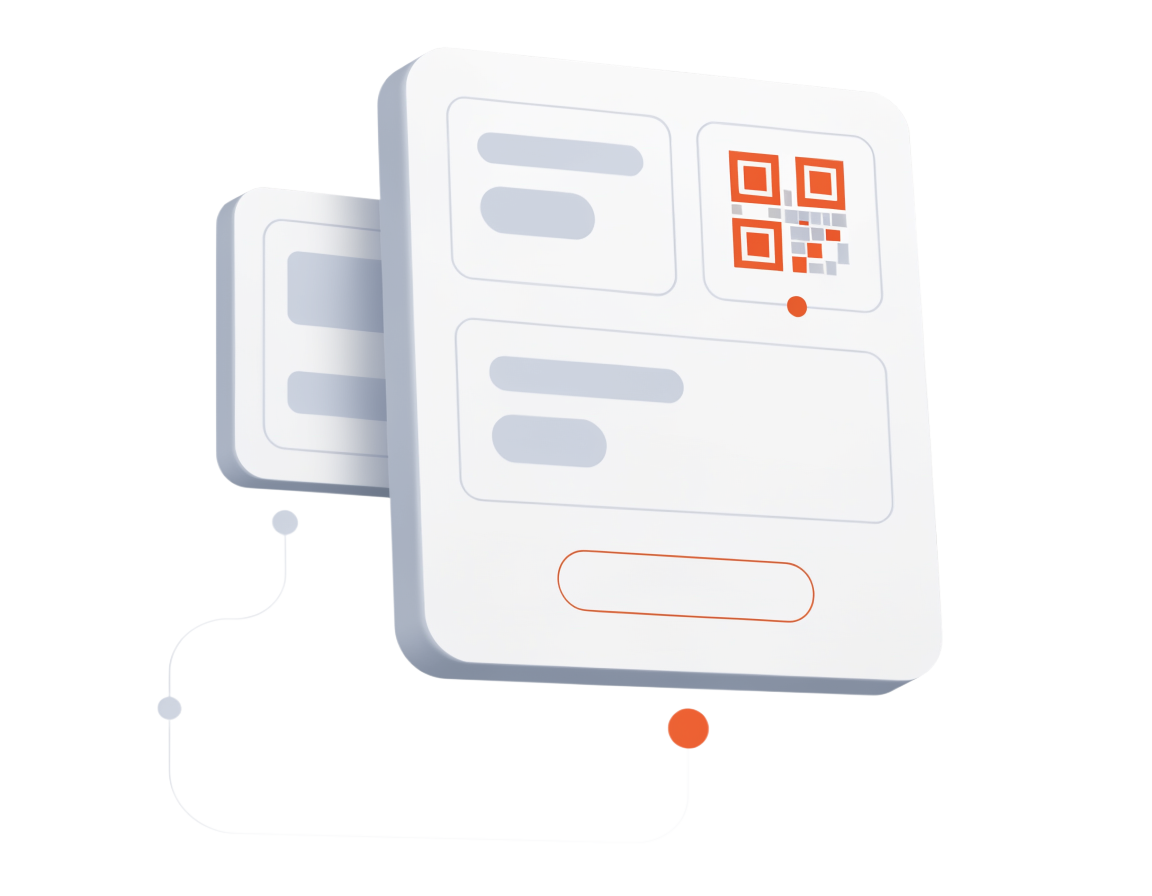
Hosted Checkout — challenge fees and retail deposits
For challenge fees and retail account deposits, Hosted Checkout takes the trader from your dashboard to a wallet-paid invoice in one flow. They pay from their wallet, you receive a confirmation, and your platform credits the challenge or the account. No code on your payment screen, and no category code for a bank to pull.
See details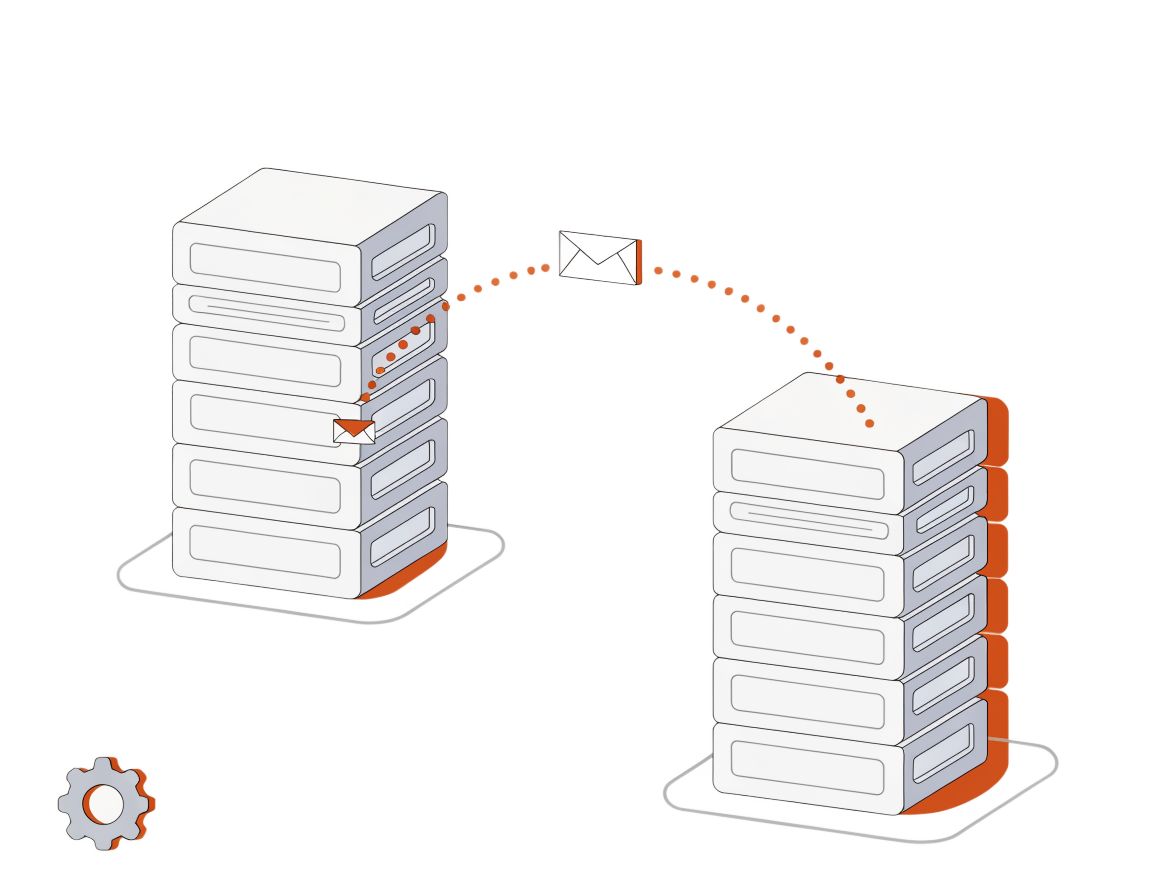
Host-to-Host API — deposits, credits and payouts in your platform
Run your own trading platform and the REST API gives you create-invoice, watch-confirmations, operator-initiated outbound transfers and HMAC-SHA256-signed webhooks across the supported networks. Your platform drives challenge assignment, account crediting and payout approval; Paymos settles the deposit and executes the transfers your system authorises. Each transfer is signed on isolated infrastructure and restricted to a whitelisted destination.
See details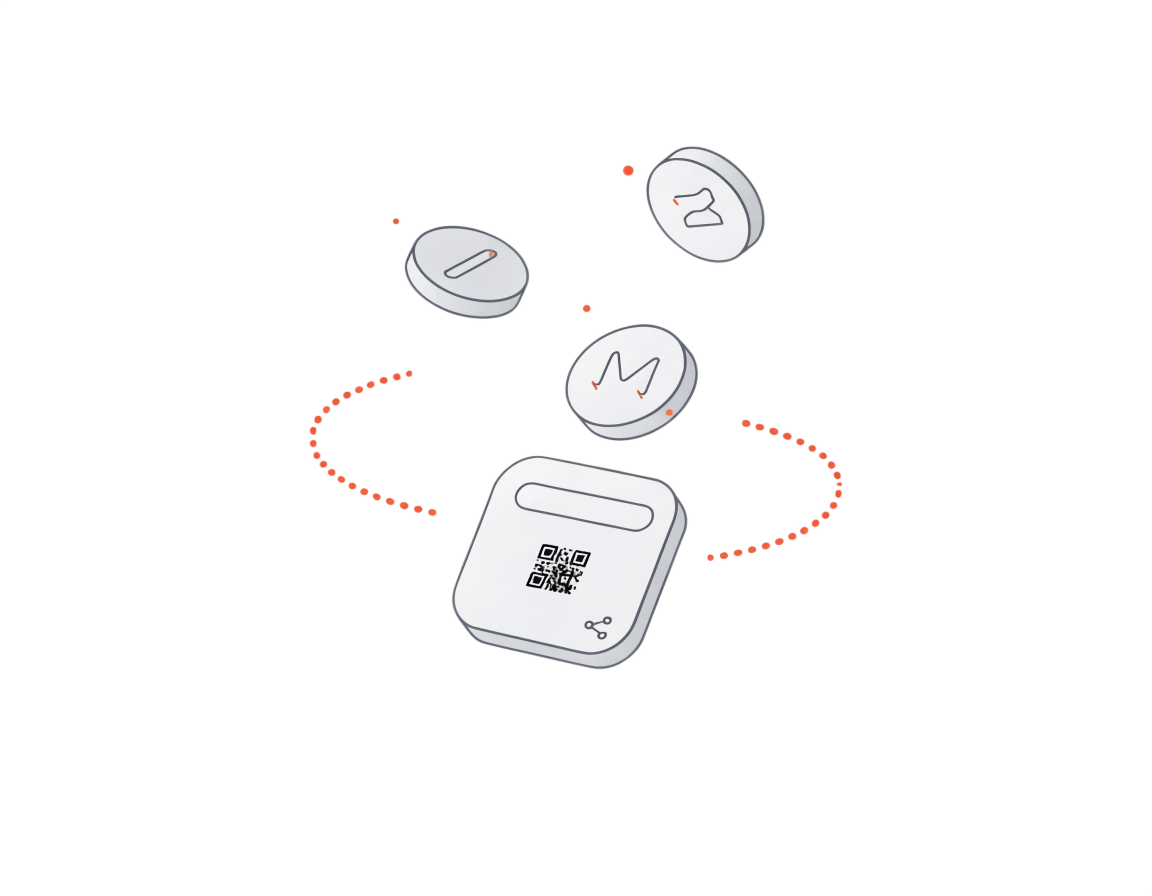
Payment Links — large deposits and institutional funding
For a large account funding or an institutional deposit, generate a payment link with a fixed amount and expiry and send it over. The counterparty pays from their own wallet, and your receivable closes on confirmation — with a real invoice attached and no multi-day processor review parked on a high-value deposit.
See detailsBroker and prop-firm flows that run cleanly today
What trading patterns work on wallet settlement?
Four flows from real broker and prop-firm setups — challenge fee, deposit, payout and refund.
Prop-firm challenge fee — Hosted Checkout
A trader buys an evaluation challenge. They pay the fee through Hosted Checkout from their wallet, the confirmation reaches your system in minutes, and your platform opens the challenge account. The fee is final on confirmation — settled before the first trade, with no chargeback window left open after the trader has used the account.
Broker account deposit — Host-to-Host API
A trader funds a live account through your platform. The deposit settles via the API, your system credits the balance on confirmation, and the funds are final the moment they clear — no reversal exposure once the trader is in the market. It credits your Paymos balance, not in a reserve held against disputes that can't happen.
Funded-trader payout — operator-initiated transfer
A funded trader clears their profit target and requests a payout. Your platform approves it and triggers an operator-initiated transfer from your balance to the trader's whitelisted wallet. Paymos signs and broadcasts the transfer on isolated infrastructure after your rules pass. It reaches markets a bank wire struggles with, final once the network confirms it, and Paymos takes no commission on the transfer — only the route's network fee, priced under what the route itself costs. Fast, final payouts are part of the product.
Refund on a cancelled challenge — outbound transfer
A trader cancels before trading, or a deposit needs reversing for a policy reason. You send the refund yourself as an outbound transfer from your Paymos balance to the trader's wallet, on your own terms and timing. It's final on confirmation, and the 1.0% applies only to a settled deposit — there's no second fee layered onto a refund.
Forex and prop trading on stablecoin rails
Frequently asked questions
Does Paymos require my broker or prop firm to be authorised?
How are deposits final if there's no chargeback?
Can Paymos handle funded-trader payouts at scale?
Which networks and stablecoins do traders use?
How do refunds on deposits and challenge fees work?
What happens if a regulator asks you to stop processing for my firm?
Honest disqualifier
When NOT to use Paymos for a broker or prop firm
Four cases where a trading business and this rail don't line up.
You want the rail to decide where you may operate
Whether you can take deposits from traders in a given market — securities registration, derivatives licensing, marketing rules — is a question for your counsel, and the exposure is yours; ESMA, the CFTC or ASIC won't ask how the deposit settled. Paymos doesn't assess your authorisation and doesn't rule on it. Draw the regulatory perimeter first, then route the markets inside it through the rail.
Your traders are fiat-first retail with no wallet
If your book is mainstream retail that funds and withdraws in fiat and has never held a stablecoin, asking them to use a wallet adds friction at deposit and at payout. Paymos fits crypto-comfortable traders who already hold stablecoins; for a fully fiat-first base the wallet rail is a poor first touch, even when the de-banking protection appeals.
You expect Paymos to run KYC and onboarding
Paymos settles payments; it doesn't run trader KYC, AML screening, suitability checks or onboarding. If you want a partner to carry the regulated onboarding load, that's your compliance function, not the payment rail. Use Paymos for final deposit settlement and fast payouts, and keep screening and onboarding where your authorisation puts them.
Your payout promise is a bank wire in fiat
Paymos pays out the way it settles — stablecoins in USDT or USDC to a whitelisted wallet, never to a bank account. If your funded traders are promised euros or dollars in a bank, you'd be running the conversion step yourself on every payout through your own exchange relationships — a treasury job, not the rail's. Fit the rail to traders who want the payout in stablecoins, and keep your fiat channels for the rest.
Related flows
Other Adult & High-Risk sub-niches on Paymos
Pricing
1.0% per settled deposit. No reserve, no per-industry surcharge
A prop firm's reputation rests on paying winning traders quickly, so a rail that charges for the payout charges you exactly where it hurts. Paymos takes 0 commission on one, leaving a subsidised network fee and no second processing cut. Challenge fees and account funding settle at the same percentage on the way in, acceptance gas included. Ask about 0.3% from your first deposit — deposit flow and the networks traders fund on are what we weigh. Card processing for trading firms costs far more and locks a reserve away for months, while gateways advertising near 0.5% climb to roughly 1.5–2%+ once conversion, transfer and network costs land.
See pricing