The pawn-shop sale clears before the customer leaves the counter
Sell resold goods, buy gold off the street, settle high-value pieces — both legs run on one stablecoin payment rail. A confirmed sale is final, so no authenticity chargeback weeks later; the money credits your Paymos balance to write the next loan, with no acquirer reserve and no weekly payout cycle. Pawn-broker licensing and hold-period filings stay with the operator.
Where a pawn counter loses on card and bank rails
Why do processors treat pawn and used-goods as high-risk?
A licensed pawn shop or used-goods reseller hits four distinct frictions — at acceptance, on disputes, on cash flow, and on the buy side.
Lawful and licensed, still bucketed as a problem merchant
Pawn and second-hand dealing sit in a high-risk processing bucket. Underwriters read the category — disputed resales, item-not-as-described complaints, the resale-of-valuables reputation — and price it cautiously or restrict it outright. The account opens under scrutiny and stays there. A shop that holds its state licence and files every report gets the same suspicion as a fly-by-night.
An authenticity dispute lands weeks after the watch walked out
Resale carries its own dispute baseline. A buyer claims the watch is a fake, the phone has a hidden fault, the gold isn't the grade promised — and on card rails they can file long after pickup. The shop eats the chargeback on an item it sold in good faith. Let that ratio drift and the acquirer answers with monitoring fees, surcharges, and a reserve.
A reserve freezes the till that writes your next loan
High-risk acquirers hold back a reserve and pay out weekly, parking money you already took at the counter for days. A pawn shop funds loans and buys inventory out of one till. Cash sitting in a reserve or waiting on a settlement cycle is cash that can't write the next loan or take the next piece in. The hold tightens exactly when working capital is thinnest.
The buy side runs the wrong way for bank rails
Paying a customer for their gold, jewellery or electronics is an outbound payment, and banks make outbound slow. A cheque has to clear, an ACH has to settle, or you keep cash in the safe and carry the security overhead. The seller is standing at your counter wanting paid now, and the rail turns the payout into the slow half of the deal.
What one wallet on both legs changes
What does stablecoin settlement fix for a pawn or resale shop?
Buying and selling both run through the same wallet — and four frictions drop away in the move.

No category code for an underwriter to read
A stablecoin payment carries no merchant category code. There's no field for an acquirer to read and bucket as high-risk, and nothing to underwrite at acceptance — the wallet settles a sale the same way it settles any transfer. The regulated side — state pawn-broker licensing, hold-period filings, police reporting on pledged goods — stays with the operator, where it belongs.

A confirmed sale stays sold
An on-chain payment is final once it confirms. A buyer can't pay for a watch, walk out, and reverse it weeks later by calling it a fake. The authenticity-dispute bleed that drives reserves and account scrutiny has no mechanism here. A genuine return is your call, on your terms — a transfer you choose to send back, not a chargeback forced on you.
The till is funded the moment the sale confirms
No acquirer holds a reserve against what you took at the counter, and no weekly cycle stands between the sale and the cash. The customer pays, the funds credit your Paymos balance on confirmation — typically within minutes — ready to write the next loan or take the next piece in. You hold the money when the deal closes, not after a settlement run clears.

Pay the seller from the same balance you sell into
The buy side is an outbound transfer from your Paymos balance to the seller's whitelisted address — final on confirmation, no cheque to clear, no ACH wait, no cash to keep in the safe. A regular whose address you've already whitelisted is paid without a further step; a first-time seller's address takes a quick 2FA step to add. The gold you buy is funded out of the balance the morning's sales topped up, and one wallet runs both directions.
How the counter and the storefront wire in
Which integration path fits a pawn shop or reseller?
Three shapes, mapped to where the money moves: the counter sale, the online resale, and the seller payout.
Embedded Checkout — the counter sale, from the phone you already have
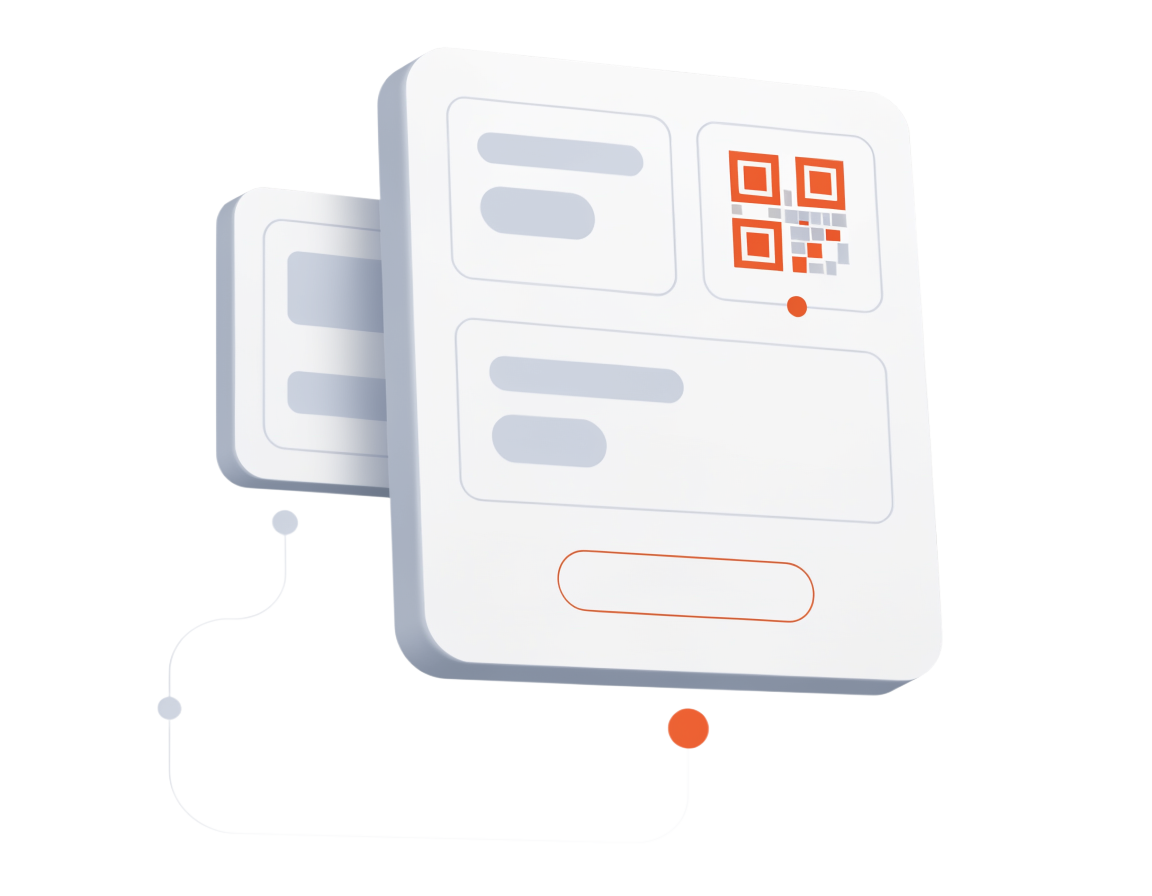
A buyer's at the counter. Raise the invoice on the spot, hand it over as a QR, and they pay from the wallet on their own phone in a flow embedded in your site or POS. Funds credit your Paymos balance on confirmation and the sale closes — no card terminal to rent, no per-swipe surcharge. Cash and card customers carry on untouched; the wallet rail picks up the ones who'd rather pay that way.
See details
Hosted Checkout — the online resale storefront
For a used-goods or jewellery storefront, Hosted Checkout carries the buyer from product page to wallet-paid invoice in one full-screen flow you don't have to build. They pay before the piece ships, the confirmation reaches your system, and the order closes. Because the payment is final, no authenticity-chargeback window opens behind an item already in the post.
See details
Payment Links and outbound transfers — high-value pieces and the buy side
For a high-value item, create a fixed invoice in the dashboard and set a short expiry. The buyer pays through the hosted link. A seller payment remains a separate outbound transfer from your Paymos balance, so purchase and payout stay distinct in the ledger.
See detailsFour shop-floor moves, mapped to the rail
What patterns work at the counter and online?
The everyday transactions of a pawn and resale floor — sell at the counter, sell online, buy gold in, and clear a high-value piece.
Counter sale — Embedded Checkout
A resold piece sold across the counter. The buyer scans the invoice QR, pays from their phone wallet, and the funds credit your Paymos balance on confirmation — final the moment it clears. No card terminal, no per-swipe surcharge, and no dispute window trailing a sold item. On a small ticket the confirmation lands in seconds.
Online resale order — Hosted Checkout
A used phone or a ring listed online. The buyer pays through Hosted Checkout before you ship, the confirmation reaches your system, and the order closes. The payment is final, so the sale can't be reopened by an authenticity dispute once the parcel is gone.
Buying gold off the street — outbound transfer
Someone walks in to sell their gold. You settle a price and send it as an outbound transfer from your Paymos balance to theirs — sent while they are still at the counter, final on confirmation. No cheque to clear, no cash drawn down, and the buy is funded straight out of the balance your sales built.
Clearing a high-value piece — Payment Link
A four-figure watch, instrument or collectible. Generate a payment link with a fixed amount and a short expiry; the buyer opens it, picks a wallet, and pays. Nothing is held back in a reserve against the size of the ticket, and the link carries a real invoice for the buyer's records.
Questions a pawn broker asks before switching
Frequently asked questions
Does Paymos require my shop to be licensed as a pawn broker?
Without chargebacks, how are disputes over a sale handled?
How does this work with hold-period and police-reporting rules?
Do pawn-shop customers pay in stablecoins?
How do refunds and buy-side payouts work end-to-end?
What if a regulator demands you stop processing for my pawn shop?
Honest disqualifier
When NOT to use Paymos for a pawn or resale shop
Four cases where the counter is better off staying as it is.
Your regulars deal in cash and always will
Pawn loans go out in bills and redemptions come back the same way, and most of your window regulars have never touched a stablecoin. Pushing a wallet on that crowd costs you trust where it matters most. The rail earns its place elsewhere in the shop: online resale of watches, jewellery and electronics to buyers who already pay in crypto, and the high-value pieces card processors won't comfortably touch.
Your volume is fast, low-ticket bargain-bin sales
A $20 sale clears fastest on a card tap, and a wallet step at that ticket only slows the queue for margin that isn't there. The rail pays for itself on the four-figure watch, the bullion lot, and the online listing where the real exposure is a not-as-described claim months later. Keep the terminal for the small stuff; route the pieces worth disputing here.
You want a partner to carry the regulated pawn process
Paymos settles payments and nothing more. It doesn't enforce hold periods, file police reports, check the provenance of pledged goods, or run your pawn-broker compliance for you. If what you need is someone to own the regulated side of pawn, that someone is you, the licensee — not the payment rail. Take Paymos for final settlement and fast buy-side payouts to whitelisted sellers, and run the compliance the law puts on you.
You want the rail to stand in for the licence
The state pawnbroker licence, the bond, the interest caps your loans answer to — whether you may operate at all is your question and your exposure, and it reads the same to a regulator whatever the customer paid with. Paymos doesn't check licences and doesn't rule on whether your business is lawful. Square that with the state first; the rail handles only the payment.
Related flows
Other Adult & High-Risk sub-niches on Paymos
Pricing
1.0% on a settled sale. No reserve, no weekly cycle
One rate on a $40 counter sale and a four-figure watch alike, acceptance gas covered inside the 1.0%. A buy-side payout you send carries no Paymos commission; you pay a subsidised network fee and nothing else. A lower rate of 0.3% is settled between us on how many tickets you write and what they average, from week one. High-risk card acquirers headline 3.5–4.5%, land higher once reserves and surcharges count, and hold 3–6 months of your takings. Other crypto gateways dangle 0.5% that climbs to 1.5–2%+ once their swap, transfer and merchant-paid gas land.
See pricing