Settle P2P and OTC fees the second they confirm
Trade fees, OTC settlements and trader subscriptions clear in stablecoins to your Paymos balance, without card acquiring anywhere in the flow. No MSB-category decline at underwriting, no months-long reserve parked on an acquirer's balance sheet, and a confirmed fee can't be charged back after the crypto has moved. FinCEN MSB registration and the Travel Rule stay with the operator — Paymos is the payment rail, not the regulator.
Where a P2P or OTC desk gets cut off from card and bank rails
Why do exchanges and OTC desks struggle to bank their fees?
Four problems a registered exchange or OTC desk hits taking fees and subscriptions on card and bank rails.
MSB-category acquirers decline or restrict at signup
A money-services business in crypto is one of the hardest categories to bank — even a registered, licensed exchange or OTC desk gets declined or restricted at underwriting. Mainstream processors won't touch the category, and the specialist acquirers that will treat the account as elevated risk from day one. The fee revenue your desk runs on becomes the hardest part to settle.
Card-funded trades get charged back after settlement
Let a customer fund a trade or a fee with a card and you carry reversal risk — a chargeback after the crypto has moved, “I didn't authorise this,” “I changed my mind.” For an exchange the asset is already gone when the reversal lands, and the category's dispute baseline keeps the account under pressure. A reversible funding leg is an open exposure on every trade.
MSB acquirers hold long, deep reserves
To cover that exposure, the acquirers that underwrite MSBs hold back a reserve — a slice of every settlement parked for months, often three to six, against future disputes. A desk lives on capital turnover, so fee revenue trapped in someone else's reserve is the worst possible place for it to sit: on their balance sheet, earning a return for them, while your treasury runs short.
Cross-border friction slows trader funding and subscriptions
P2P and OTC customers are global, and funding their trades or trader-tier subscriptions over bank rails is slow and full of cross-border friction — an exchange-rate markup, intermediary fees, and customers in markets your bank can't easily reach. The very users who most need a fast settlement rail are the ones the traditional banking stack serves worst.
What changes when fees credit your Paymos balance
What does stablecoin settlement fix for a P2P or OTC desk?
Four things that go right once fees and subscriptions stop routing through card and bank rails.

A rail that won't decline you for the category
A stablecoin payment carries no merchant category code, so there's no MSB field for an acquirer to read and decline at signup. Trade fees, OTC settlement fees and subscriptions credit your Paymos balance like any other transfer. The compliance that matters — FinCEN MSB registration, state money-transmitter licensing, the Travel Rule, KYC and AML — stays with the operator, not the payment rail.

A settled fee is final — no chargeback after the crypto moves
A confirmed payment can't be reversed by a bank, so a trade-funding leg or a fee can't be charged back after the crypto has already moved. A paid fee stays paid. That removes the reversal exposure that sits on every trade with card funding, and the dispute spike that drives reserves and account closures can't form at all.

No months-long reserve — fees are yours on confirmation
No acquirer parks months of settlement against future disputes, because there are no disputes to reserve against. Fees and subscriptions credit your Paymos balance on confirmation, available to deploy the same hour. For a desk that lives on capital turnover, the gap between money in a third party's reserve and money in your own treasury is the whole game.

Global customers settle fast, with no cross-border drag
Customers worldwide fund trades and pay subscriptions in stablecoins they already hold, settling on confirmation without the cross-border friction of bank wires — no exchange-rate markup, no intermediary fees, no waiting on a correspondent bank. The users your bank served worst are the ones a wallet rail serves best, and they get a fast, final settlement experience wherever they are.
How a P2P or OTC desk wires Paymos in
Which integration path fits an exchange or desk?
Three integration shapes sized to retail trade fees, OTC settlements and subscriptions.
Hosted Checkout — trader subscriptions and retail fees
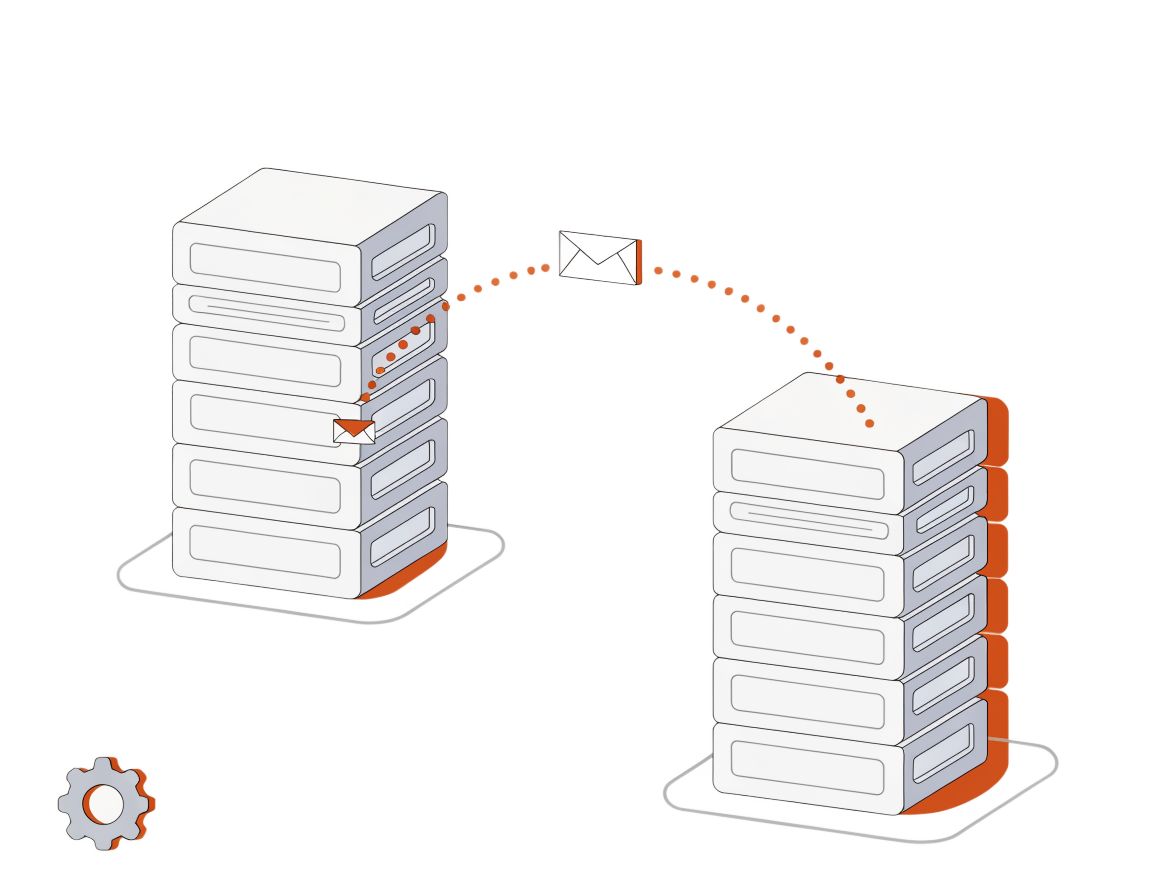
For trader-tier subscriptions and retail fees, Hosted Checkout takes the customer from your app to a wallet-paid invoice in one flow. They pay from their wallet, you receive a confirmation, and your platform activates the tier or records the fee. No code on your payment screen and no card rail to decline the category.
See details
Host-to-Host API — fees and settlements inside your platform
Run your own exchange or desk and the host-to-host API exposes create-invoice, watch-confirmations and signed (HMAC-SHA256) webhook delivery across the supported networks. Your platform drives matching, escrow logic and KYC; Paymos settles the fee and subscription legs and posts confirmations back so your ledger and compliance records stay in step.
See details
Payment Links — OTC desk settlements
For an OTC settlement, generate a payment link with a fixed amount and expiry and send it to the counterparty. They pay from a corporate or institutional wallet, and the settlement closes on confirmation — a clean fit for a desk that wants a real invoice attached to a high-value movement, with no multi-day processor review and no recalled-wire risk.
See detailsExchange and desk flows that run cleanly today
What P2P and OTC patterns work on wallet settlement?
Four flows from real exchange and desk setups — retail fee, OTC settlement, subscription and refund.
Retail trade fee — Hosted Checkout
A retail customer pays a trade or withdrawal fee. They settle it through Hosted Checkout from their wallet, the confirmation reaches your system in minutes, and your platform records the fee. The payment is final on confirmation, so there's no chargeback window opening behind a fee on a trade that already executed.
OTC desk settlement — Payment Link
A high-value OTC settlement with an institutional counterparty. You generate a payment link for the agreed amount; the counterparty pays from a corporate wallet; the settlement closes on confirmation. No recalled-wire risk over a large movement, a real invoice attached for both sides, and the funds are final the moment they clear.
Trader-tier subscription — renewal invoice
A pro trader on a monthly tier for lower fees and advanced tools. Each cycle your system issues a renewal invoice they pay from their wallet — no card to expire, no standing pull, no involuntary lapse. The payment confirms, your platform keeps the tier active, and a genuine cancellation surfaces via webhook rather than a silent decline.
Fee refund or adjustment — outbound transfer
A fee charged in error or an agreed adjustment. You send a refund as an outbound transfer from your Paymos balance back to the customer's wallet, on your own terms and timing. It's final on confirmation, and Paymos charges its percentage only on a settled fee — there's no extra fee layered onto the refund and no reversal landing on you later.
P2P and OTC on stablecoin rails
Frequently asked questions
Does Paymos require my exchange or desk to be registered and licensed?
How are fees final if there's no chargeback mechanism?
How does Paymos fit the Travel Rule and KYC obligations?
Which networks and stablecoins do exchange customers use?
Can Paymos custody funds or act as the exchange escrow?
What happens if a regulator asks you to stop processing for my desk?
Honest disqualifier
When NOT to use Paymos for a P2P or OTC desk
Four cases where an exchange needs infrastructure Paymos doesn't sell.
You want the rail to answer the MSB question
Whether your desk is a money-services business — FinCEN registration, state transmitter licences, Travel Rule scope — is a determination you make with counsel, and the exposure for getting it wrong is entirely yours. Paymos doesn't assess your registration status and doesn't rule on it; it settles fee and OTC legs to your Paymos balance. Scope the perimeter first, then plug in the rail.
You need to cash stablecoins out to a bank account
If your real need is converting stablecoins to fiat and settling into a bank account, Paymos doesn't cash crypto out to a bank — it settles stablecoin transfers to your Paymos balance, and turning them into fiat is something you arrange through your own banking and exchange relationships. Pair the payment rail with those; don't expect it to be the bank or the cash-out your model requires.
You expect Paymos to run matching, escrow or custody
Paymos settles payments; it doesn't match orders, hold customer funds, run escrow between counterparties or perform your KYC. If you're looking for a partner to be the exchange engine or the custodian, that's your platform and your custody stack, not the payment rail. Use Paymos for final fee and settlement movement, and keep the exchange logic and custody where they belong.
Your customers are fiat-first with no wallet
P2P and OTC customers are usually crypto-native, but if your specific product serves fiat-first users who've never held a stablecoin, the wallet rail adds friction at funding. Paymos fits customers who already hold stablecoins; for a fiat-first entry funnel, it's a poor first touch even if the reserve relief and finality appeal further down the flow.
Related flows
Other Adult & High-Risk sub-niches on Paymos
Pricing
1.0% on a settled fee. Nothing held back, nothing reserved
A desk earns on a spread measured in fractions of a point, so anything charged underneath it comes straight out of margin rather than out of a markup. One percentage covers a $5 retail fee and a six-figure OTC settlement alike, acceptance gas included, with no separate transfer charge. Volume and the networks counterparties use are what bring the rate to 0.3%. Ask from your first settlement. MSB-coded acquirers run far higher and sit on a multi-month reserve; gateways headlining near 0.5% land around 1.5–2%+ once swap, transfer and merchant-paid network fees are counted.
See pricing